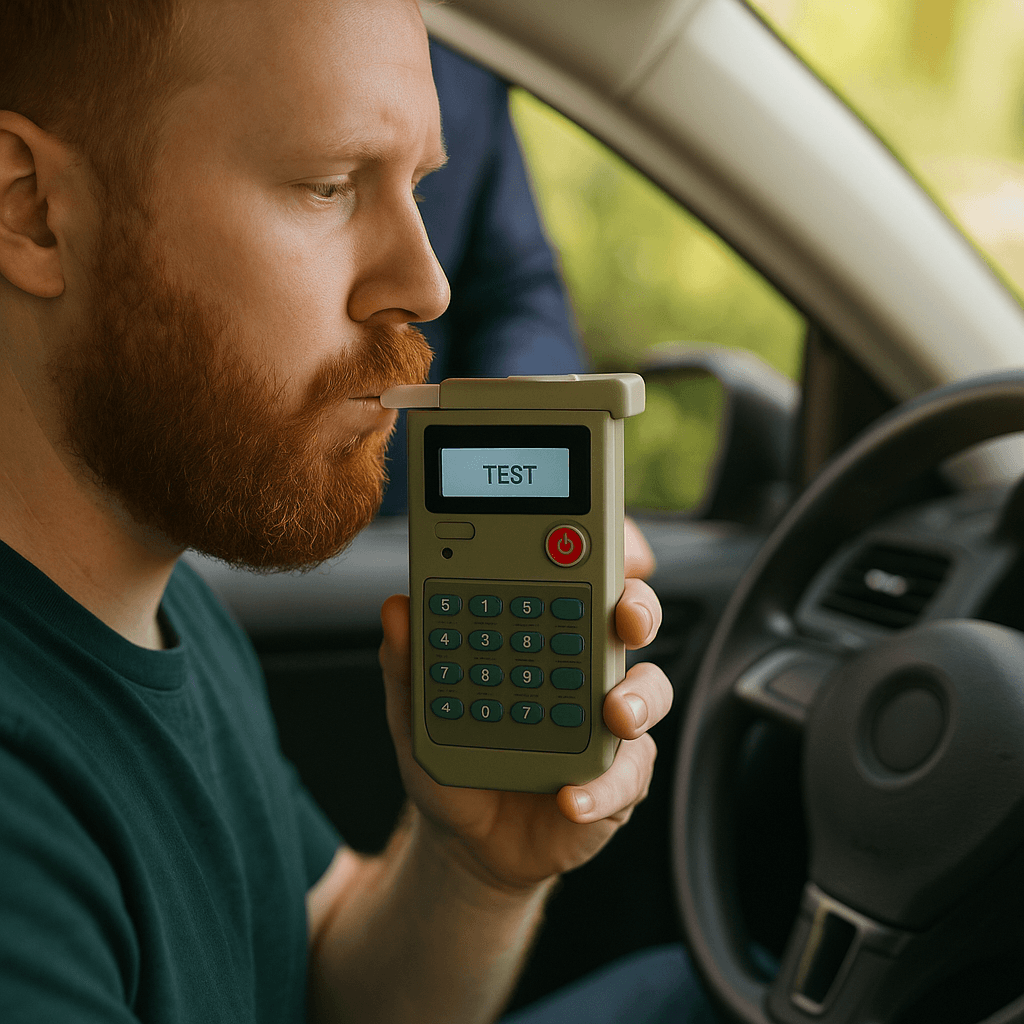
Wisconsin drivers convicted of DWLS lose occupational license eligibility for the remainder of their suspension period and face mandatory SR-22 filing for three years minimum, often extended to five years when the underlying suspension was OWI-related.
Wisconsin DWLS Conviction Permanently Closes Occupational License Access
Wisconsin Statute § 343.10 grants circuit courts authority to issue occupational licenses during suspension or revocation periods. A DWLS conviction under § 343.44 triggers mandatory revocation of any active occupational license and disqualifies you from obtaining a new one for the remainder of your original suspension term. Unlike single-cause suspensions where you petition once and receive a decision, DWLS closes the occupational pathway entirely until your full suspension period ends and you complete reinstatement.
The court order that created your occupational license specified exact driving hours, permitted routes, and approved purposes. Driving outside those parameters — even by five minutes or two blocks — constitutes DWLS under Wisconsin law. The statute does not distinguish between intentional violation and navigation error. If you were stopped outside your authorized window, the prosecutor charges DWLS regardless of underlying intent.
Most drivers assume occupational license violations trigger warnings or modification hearings. Wisconsin law provides no such process. Your occupational license is revoked upon DWLS conviction, and the Department of Transportation receives electronic notification within 48 hours of the court judgment. The physical occupational license document becomes invalid immediately, even if you still possess it.
How DWLS Stacks on Top of Your Original Suspension Cause
Wisconsin treats DWLS as a separate criminal offense with its own suspension period added sequentially to your original cause. If your original OWI suspension was 12 months and you are convicted of DWLS at month four, the DWLS conviction adds 6 to 12 months (first offense misdemeanor range) starting from the DWLS conviction date. You now serve 18 to 24 months total before reinstatement eligibility begins.
The stacking is worse when your original suspension was OWI-related. Wisconsin Statute § 343.44(1)(b) classifies DWLS during an OWI-related suspension or revocation as a Class H felony if you drove with a prohibited alcohol concentration (0.02 BAC or higher under absolute sobriety rules) or if this is your second or subsequent DWLS conviction within five years. Class H felony DWLS carries up to six years imprisonment and a fine up to $10,000. Even misdemeanor DWLS during OWI suspension carries mandatory minimum fines of $300 and suspension extension of six months minimum.
For non-OWI suspensions (points, unpaid fines, failure to appear), first-offense DWLS is a Class B misdemeanor under § 343.44(1)(a), carrying up to 90 days jail and fines up to $1,000. The additional suspension period for Class B misdemeanor DWLS is typically six months but varies by judicial discretion and prior record. Each subsequent DWLS conviction within five years escalates the charge classification and extends the suspension period geometrically.
Compare car insurance rates in your state
Get quotes from licensed carriers — no obligation, no spam, results in minutes.
Get Your Free Quote✓ No Obligation Required✓ Licensed Carriers Only✓ Available Nationwide✓ Free to Compare
SR-22 Filing Requirement Duration After Wisconsin DWLS
Wisconsin requires SR-22 filing for DWLS convictions regardless of whether your original suspension cause required it. The filing period starts from your reinstatement date, not your conviction date. Standard DWLS SR-22 filing period is three years. When DWLS occurred during an OWI-related suspension, the filing period extends to five years measured from reinstatement.
The SR-22 clock does not start during your suspension period. If you are suspended for 18 months total (original cause plus DWLS stacking), then complete reinstatement in month 19, your three-year SR-22 filing obligation runs from month 19 through month 55. Any lapse in SR-22 coverage during that window triggers automatic re-suspension under Wisconsin Statute § 344.64 and resets the three-year clock from the date you refile.
SR-22 filing fees in Wisconsin range from $15 to $50 depending on carrier, assessed at policy inception and annually thereafter. Your premium increase from the DWLS conviction itself typically ranges from 60% to 110% over your pre-suspension rate, significantly higher than the original suspension cause alone because carriers treat DWLS as evidence of pattern behavior rather than isolated incident. Estimates based on available industry data; individual rates vary by driving history, vehicle, coverage selections, and location.
Why Insurance Carriers Treat DWLS Worse Than the Original Cause
Underwriting systems classify DWLS as a compound risk signal: you demonstrated both the behavior that caused the original suspension and willingness to drive illegally during suspension. Actuarial data shows drivers with DWLS convictions have claim frequency rates 180% to 220% higher than drivers with single-cause suspensions, even when the original cause was DUI.
Carriers writing high-risk auto insurance in Wisconsin after DWLS conviction include Progressive, Geico, Dairyland, Bristol West, The General, National General, and GAINSCO. State Farm writes SR-22 after DWLS conviction but typically declines new business applications when DWLS is less than 24 months old. USAA writes SR-22 for eligible members but applies surcharges of 85% to 140% for DWLS within the past three years.
Your best rate outcome after Wisconsin DWLS comes from non-owner SR-22 policies if you do not own a vehicle. Non-owner SR-22 satisfies Wisconsin's proof of financial responsibility requirement and costs $300 to $600 annually, compared to $1,800 to $3,600 annually for standard auto policies with DWLS surcharges applied. Once you complete your suspension period and regain full driving privileges, you convert the non-owner policy to standard coverage or shop competitively.
Reinstatement Cost Stack After Wisconsin DWLS Conviction
Wisconsin assesses a separate $60 reinstatement fee for each suspension cause. DWLS creates a second suspension action distinct from your original cause, triggering a second $60 fee. If your original suspension was OWI-related, you pay $60 for the OWI revocation reinstatement and $60 for the DWLS suspension reinstatement, totaling $120 before any other fees.
OWI-related reinstatements require completion of an AODA assessment and any recommended treatment program before WisDOT processes your application. AODA assessment fees range from $150 to $300 depending on provider. Recommended treatment programs (if assessed) cost $800 to $2,500 depending on program length and intensity. These costs are separate from and in addition to reinstatement fees and SR-22 filing.
Ignition Interlock Device installation is mandatory for most OWI-related reinstatements in Wisconsin under § 343.301. Installation costs $100 to $200, monthly monitoring fees run $70 to $100, and removal costs $50 to $100. IID requirements typically run 12 to 24 months depending on offense count. When DWLS occurred during an OWI suspension, the IID period often extends an additional six months beyond the original requirement. Your total cost stack for OWI plus DWLS reinstatement in Wisconsin: $120 reinstatement fees, $150 to $300 AODA assessment, $800 to $2,500 treatment (if required), $1,100 to $2,600 IID costs over 12 to 18 months, $45 to $150 SR-22 filing fees over three to five years, and premium increases of $1,200 to $2,800 annually for three years. Total five-year cost: $5,500 to $12,000.
What Happens If You Are Caught Driving Again During Stacked Suspension
A second DWLS conviction while already serving suspension for a first DWLS elevates the charge to Class A misdemeanor under § 343.44(1)(ar), carrying up to nine months jail and fines up to $10,000. Wisconsin judges impose mandatory minimum jail sentences of 5 to 30 days for second DWLS convictions, with actual sentences averaging 15 to 45 days depending on circumstances and county.
Third or subsequent DWLS conviction within five years is charged as a Class H felony under § 343.44(1)(b), carrying up to six years imprisonment. At this tier, plea agreements typically include structured jail time (90 days to 12 months), probation with electronic monitoring, and suspension extension of 24 to 36 months beyond the existing term. SR-22 filing requirement extends to five years minimum regardless of original cause.
Habitual Traffic Offender status under Wisconsin Statute § 343.345 applies when you accumulate four DWLS convictions or twelve moving violations within five years. HTO declaration triggers automatic five-year revocation with no occupational license eligibility and mandatory SR-22 filing for five years post-reinstatement. HTO reinstatement requires completion of a driver improvement course, payment of all outstanding fines and fees, proof of insurance via SR-22, and successful completion of written and road tests.
Insurance Strategy After DWLS: Compliance Coverage First, Rate Shopping Later
Your first coverage priority after Wisconsin DWLS conviction is securing a policy that meets SR-22 filing requirements and maintains continuous coverage through your entire filing period. Rate optimization comes second. A lapse of even one day resets your SR-22 clock and triggers re-suspension, costing you another $60 reinstatement fee, another DMV processing cycle, and another gap in driving eligibility.
Start with carriers confirmed to write SR-22 in Wisconsin after DWLS: Dairyland, Bristol West, The General, Progressive, and GAINSCO. Request quotes for liability-only coverage at Wisconsin state minimums ($25,000 per person / $50,000 per accident bodily injury, $10,000 property damage) unless you finance a vehicle. If you do not own a vehicle, request non-owner SR-22 quotes, which cost 40% to 60% less than standard policies.
Once you secure initial coverage and file SR-22, mark your calendar for 12 months post-reinstatement and shop again. Carriers reassess risk annually. Your rate may drop 15% to 30% at first renewal if you maintain clean driving during year one. At 24 months post-reinstatement, you become eligible for standard-tier carriers again (State Farm, Allstate, American Family) if no new violations appear. At 36 months — your SR-22 expiration date — expect rate reductions of 35% to 55% as the DWLS surcharge rolls off and you re-enter preferred-tier underwriting pools.