Washington separates DWLS charges into three tiers based on the original suspension cause. First-degree is a gross misdemeanor carrying up to 364 days in jail; third-degree is the lowest tier. Most drivers don't realize their charge degree determines mandatory minimums and whether their Ignition Interlock License remains valid.
Washington DWLS Degrees: Charge Classification Depends on What Caused Your Original Suspension
Washington does not treat all DWLS cases the same. Your charge degree — first, second, or third — depends entirely on why your license was suspended in the first place. If you were suspended for DUI, physical control, reckless driving, vehicular assault, or vehicular homicide and then drove anyway, you face first-degree DWLS (RCW 46.20.342(1)(a)). If you were suspended for refusing a chemical test under the Implied Consent law or for a habitual traffic offender (HTO) designation and drove during that period, you also face first-degree DWLS (RCW 46.20.342(1)(b)).
Second-degree DWLS applies when your license was suspended for any reason not covered by first or third degree — including accumulating too many points, failing to pay a traffic ticket judgment, or missing child support payments (RCW 46.20.342(2)). Third-degree DWLS is the lowest tier, charged when your license was suspended for failing to respond to a traffic ticket (failure to appear or failure to pay a fine without judgment) or for driving without insurance (RCW 46.20.342(3)). The distinction matters because first-degree carries mandatory jail time, second-degree allows discretionary jail, and third-degree often resolves without custody if no aggravating factors exist.
The Department of Licensing (DOL) and the prosecutor's office determine your charge degree by reviewing your suspension notice at the time you were caught driving. If you had multiple active suspensions at the time of the stop, the highest-tier cause controls the charge degree. Drivers arrested for DWLS often don't learn their degree until arraignment, after the prosecutor has already classified the charge and set the recommended sentence range.
First-Degree DWLS: Gross Misdemeanor with Mandatory Minimum Jail After DUI or HTO Suspension
First-degree DWLS is a gross misdemeanor punishable by up to 364 days in jail and a $5,000 fine (RCW 46.20.342(4)). Washington mandates at least 10 days in jail for a first offense, at least 90 days for a second offense, and at least 180 days for a third or subsequent offense. These minimums cannot be suspended or deferred except in extraordinary circumstances determined by the court. Courts typically impose consecutive jail terms if you have prior DWLS convictions.
If you were driving on an Ignition Interlock License (IIL) when charged with first-degree DWLS, your IIL is automatically revoked and you cannot reapply until you complete the criminal sentence, serve any additional DOL suspension period stacked by the conviction, and satisfy all original reinstatement requirements. The DOL treats a DWLS conviction as proof of noncompliance, extending your underlying suspension and adding a new mandatory suspension period on top. First-degree cases almost always require SR-22 insurance filing even if your original suspension did not, and the filing period typically extends to three years from the DWLS conviction date.
Defense counsel is strongly recommended for first-degree DWLS. Prosecutors rarely reduce gross misdemeanor DWLS charges to lesser offenses unless significant procedural defects exist in the stop or the original suspension notice. Plea negotiations typically focus on reducing jail time through work release, electronic home monitoring, or deferred sentencing programs rather than reducing the charge itself. Courts in King, Pierce, and Snohomish counties maintain sentencing guidelines that typically exceed statutory minimums for repeat DWLS offenders.
Compare car insurance rates in your state
Get quotes from licensed carriers — no obligation, no spam, results in minutes.
Get Your Free Quote✓ No Obligation Required✓ Licensed Carriers Only✓ Available Nationwide✓ Free to Compare
Second-Degree DWLS: Misdemeanor Tier for Points, Unpaid Judgments, and Child Support
Second-degree DWLS is a misdemeanor punishable by up to 90 days in jail and a $1,000 fine (RCW 46.20.342(4)). Washington does not mandate minimum jail time for second-degree DWLS, leaving sentencing to the court's discretion. First-time offenders with no aggravating factors often receive deferred prosecution, suspended sentences, or community service in lieu of custody. Courts impose jail time when the offense involved an accident, multiple priors, or driving during a period when the defendant knew their license was suspended.
The DOL stacks an additional one-year suspension on top of your original suspension period after a second-degree DWLS conviction. This new suspension runs consecutively, not concurrently, meaning you must serve the remaining time on your original suspension plus the full one-year DWLS penalty before you can apply for reinstatement. If you were driving on an IIL, the conviction typically revokes your IIL eligibility for the duration of the new suspension unless the court orders otherwise.
SR-22 filing is typically required after a second-degree DWLS conviction even if your original suspension cause (such as unpaid tickets or child support) did not trigger SR-22. Insurance carriers treat DWLS as a heavier underwriting flag than the original suspension cause, often placing drivers into nonstandard or high-risk pools regardless of the underlying violation. Expect premium increases of 30–60% compared to your pre-suspension rates, and expect those increases to persist for at least three years after filing begins.
Third-Degree DWLS: Lowest Tier for Failure to Respond or Driving Uninsured
Third-degree DWLS is a misdemeanor punishable by up to 90 days in jail and a $1,000 fine (RCW 46.20.342(4)). Courts typically resolve first-time third-degree DWLS cases without jail if you can demonstrate that you have since responded to the ticket or obtained insurance and paid the suspension reinstatement fee. Deferred sentences, suspended sentences, and non-jail dispositions are common for third-degree cases when no accident or prior DWLS history exists.
The DOL does not automatically stack an additional suspension period after a third-degree DWLS conviction if the original suspension was for failure to respond to a traffic ticket. Once you respond to the ticket (by paying the fine or appearing in court) and pay the $75 reinstatement fee, your driving privilege is typically restored without further DOL action tied to the DWLS charge itself. However, if your original suspension was for driving uninsured, the DOL requires proof of current insurance, SR-22 filing for three years, and payment of the reinstatement fee before your license is restored.
Insurance carriers still treat third-degree DWLS as a misdemeanor conviction on your driving record. Even if you avoid jail and the DOL does not extend your suspension, expect underwriting adjustments and premium increases similar to those imposed after a second-degree DWLS conviction. Third-degree DWLS after an uninsured suspension typically triggers SR-22 filing requirements, stacking that cost on top of the premium increase.
How Washington Courts Sentence DWLS: Priors, Aggravators, and Sentencing Alternatives
Washington courts apply sentencing guidelines based on your criminal history score, prior DWLS convictions, and whether aggravating factors existed at the time of the stop. Aggravators include accidents, injuries, property damage, driving under the influence at the time of the DWLS stop, or driving in a school zone. Courts in urban counties (King, Pierce, Snohomish) tend to impose harsher sentences than rural counties for the same charge degree, reflecting higher caseload pressures and stricter local policies.
First-time DWLS offenders with no aggravators often qualify for deferred prosecution, which allows you to complete probation, community service, and other court-ordered conditions in exchange for dismissal of the charge after successful completion. Deferred sentencing does not eliminate the DOL suspension period or the SR-22 filing requirement, but it keeps the conviction off your criminal record if you complete all terms. Repeat DWLS offenders rarely qualify for deferred prosecution and face escalating jail time with each subsequent conviction.
If you are convicted of DWLS while already on probation for another offense, courts may revoke your probation and impose the original suspended sentence in addition to the DWLS penalty. This stacking occurs frequently in cases where the original probation terms included a prohibition on driving without a valid license. Courts also impose longer jail terms when the DWLS stop involved children in the vehicle, commercial vehicle operation, or driving in a construction zone.
What Happens to Your Ignition Interlock License After a DWLS Conviction
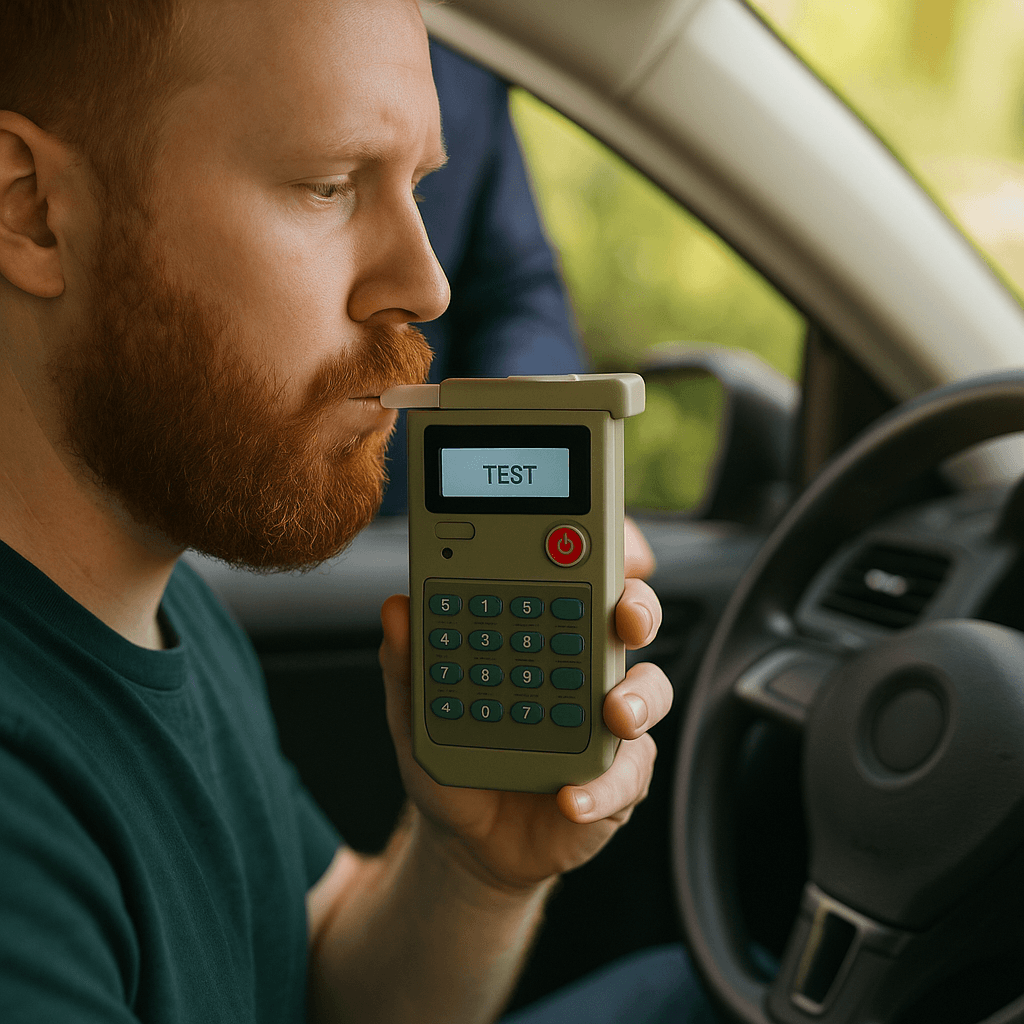
Washington allows most DUI-suspended drivers to apply for an Ignition Interlock License (IIL) immediately after suspension, even on day one in some cases (RCW 46.20.385). The IIL permits unrestricted driving as to time and destination, provided you drive only vehicles equipped with a DOL-approved ignition interlock device (IID). A DWLS conviction while holding an IIL typically results in automatic IIL revocation.
The DOL treats a DWLS conviction as proof that you violated the terms of your IIL by either driving a non-IID-equipped vehicle or driving during a period when your IIL had been administratively suspended for IID noncompliance (such as failing calibration or missing service appointments). The IIL revocation period typically runs for the full length of the new suspension stacked by the DWLS conviction, and you cannot reapply for a new IIL until you complete that period, satisfy all reinstatement requirements, and pay a new $100 IIL application fee.
If your DWLS charge is reduced or dismissed through plea negotiation, your IIL is not automatically reinstated. You must petition the DOL separately to restore your IIL, demonstrating that the criminal case no longer provides grounds for revocation. The petition process typically requires submitting the court's final disposition order, proof of continuous SR-22 filing, and proof that your IID has remained in good standing throughout the criminal case.
Reinstatement After DWLS: Stacked Suspension Periods, SR-22, and Double Fees
Washington stacks the DWLS suspension period on top of your original suspension consecutively, not concurrently. If you had six months remaining on a DUI suspension when you were convicted of first-degree DWLS, the DOL adds the mandatory DWLS suspension (typically one year for first-degree, one year for second-degree) on top of the remaining six months. You must serve the full combined period before you can apply for reinstatement.
SR-22 filing is required for nearly all DWLS convictions, even when the original suspension cause did not trigger SR-22. The filing period begins on the date your license is reinstated, not the date of the DWLS conviction, and typically runs for three years. Carriers treat DWLS as a separate high-risk flag independent of the underlying violation, meaning you may face premium increases exceeding those imposed by the original suspension alone.
Reinstatement requires paying the base $75 reinstatement fee plus any cause-specific fees tied to your original suspension. For example, DUI-related reinstatements require completion of a DOL-approved Alcohol/Drug Information School and payment of the DUI reinstatement fee on top of the DWLS reinstatement fee. Unpaid fines, court costs, and restitution from both the original case and the DWLS case must be satisfied before the DOL will process your reinstatement application.