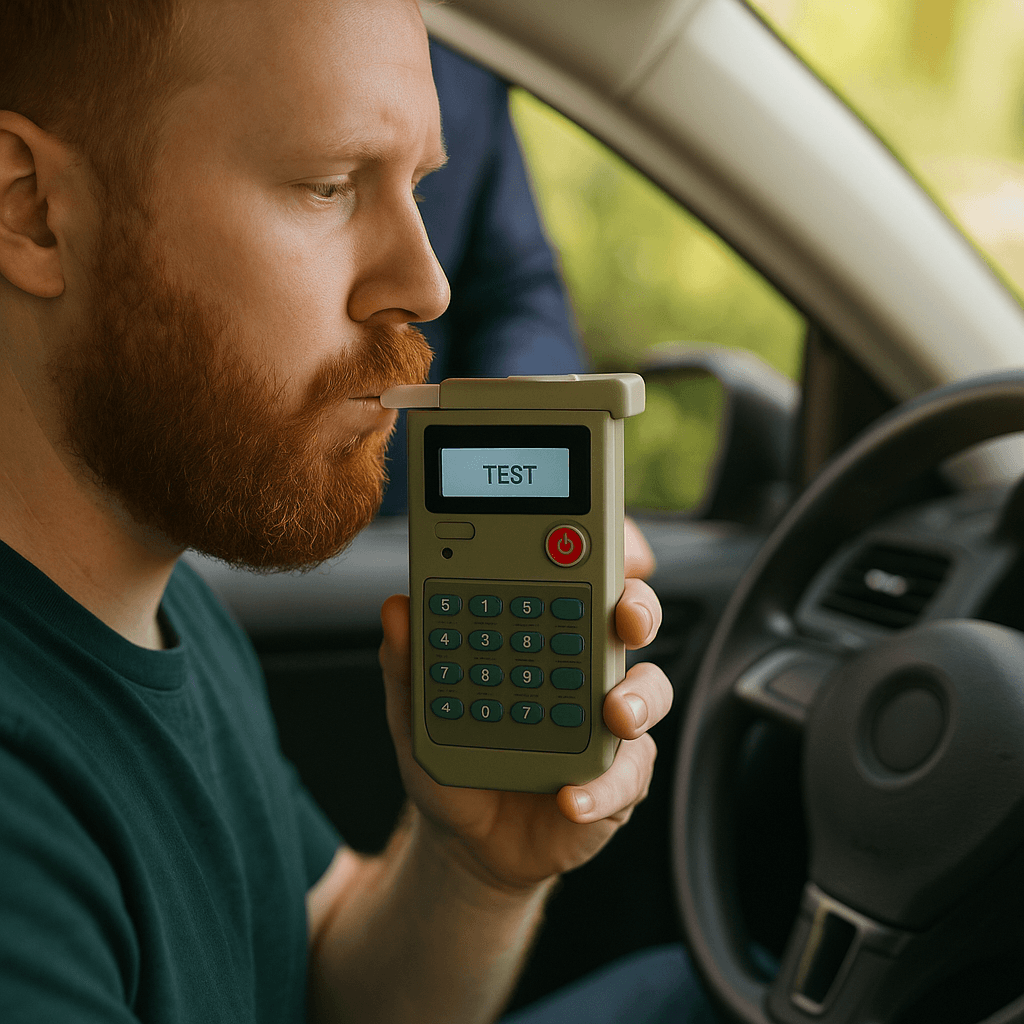
Texas courts routinely deny Occupational Driver License petitions after DWLS convictions—even when the underlying cause would have qualified—because the conviction itself proves you violated court-ordered restrictions or drove during a hard suspension window.
Why a DWLS Conviction Disqualifies Most ODL Petitions in Texas
Texas district and county courts grant Occupational Driver Licenses (ODL) only when they conclude you will comply with the court-defined restrictions. A DWLS conviction—driving while your license was already suspended—is judicial proof you did not comply with the suspension order. Courts view this as predictive: if you drove during a suspension when the penalty was clear, you are likely to violate ODL restrictions that carry the same criminal exposure.
The denial is procedural, not punitive. Texas Transportation Code §521.246 gives courts discretion to deny ODL petitions when the applicant has demonstrated an inability to follow court orders. DWLS is the clearest demonstration. Even if your original suspension cause—unpaid tickets, points accumulation, or a first DUI—would have made you ODL-eligible at the time, the DWLS conviction overwrites that eligibility. You proved you cannot be trusted with limited driving.
This applies statewide, but county variation matters. Urban counties with higher petition volumes (Harris, Dallas, Bexar, Tarrant) have more formalized screening. Rural counties may evaluate case-by-case, but the underlying principle holds: DWLS is a compliance flag that disqualifies you from discretionary relief.
The Conviction Timing Window That Most Drivers Misunderstand
Texas counts the DWLS offense from the date you were stopped and cited, not the date your underlying suspension became effective. If DPS mailed your suspension notice on March 1 with an effective date of March 16, but you were stopped on March 10 still believing your license was valid, the charge stands. Texas Transportation Code §521.457 defines driving while suspended as operating a motor vehicle at any time after receiving notice of suspension, regardless of the effective date.
Notice is presumed three days after DPS mails the suspension order to your address of record. If you moved and did not update your address with DPS within 30 days, the notice is still considered delivered. Courts reject "I never got the letter" defenses unless you can prove DPS mailed to an address you never provided.
The gap between original-cause suspension and DWLS charge also matters for hardship eligibility. If your DWI triggered an Administrative License Revocation (ALR) suspension with a 90-day hard period, and you drove on day 45, you violated the hard suspension. Courts treat hard-period violations as worse than post-eligibility violations. Even after your hard period ends and you become theoretically ODL-eligible, the DWLS conviction from the hard-period violation disqualifies you.
Compare car insurance rates in your state
Get quotes from licensed carriers — no obligation, no spam, results in minutes.
Get Your Free Quote✓ No Obligation Required✓ Licensed Carriers Only✓ Available Nationwide✓ Free to Compare
How Texas Stacks DWLS Suspension on Top of Your Original Cause
A first-offense DWLS conviction in Texas carries a suspension period of 180 days under Texas Transportation Code §521.457, applied in addition to the original suspension period. If your original DUI suspension was 90 days and you were caught driving on day 30, you now serve the remaining 60 days of the DUI suspension plus the full 180-day DWLS suspension consecutively. Your total suspension is 240 days from the DWLS conviction date.
Second-offense DWLS extends the additional suspension to one year. Third-offense DWLS is a felony under §521.457(e) and carries a suspension period of two years stacked on the original. The original cause does not disappear—it remains active and you must satisfy its reinstatement conditions (SR-22 filing, DWI education, ignition interlock compliance) before DPS will even process your DWLS reinstatement.
SR-22 filing is required for DWLS reinstatement even when the original cause did not require it. If your original suspension was for unpaid traffic tickets (no SR-22 typically required), the DWLS conviction triggers a two-year SR-22 filing period under Texas Transportation Code §601.153. You cannot reinstate from either the original suspension or the DWLS suspension until you file SR-22 and maintain it for the full period. Carriers treat DWLS as a heavier underwriting flag than the original cause—expect premiums in the $180–$290/month range for state-minimum liability with SR-22.
Why Most Criminal Defense Attorneys Recommend Hardship Documentation Even When Courts Will Deny
Defense attorneys in Texas routinely advise DWLS defendants to begin preparing ODL documentation—employer affidavits, work schedules, proof of essential household duties—even when courts are likely to deny the petition. The documentation serves two purposes: mitigation at sentencing and appellate preparation if the DWLS charge escalates.
At sentencing, presenting ODL documentation demonstrates to the judge that you understand the severity of the violation and are attempting to comply prospectively. Judges have discretion to reduce jail time or allow deferred adjudication on first-offense misdemeanor DWLS. Documentation showing employment dependency, childcare responsibility, or medical transport need can shift sentencing from 72 hours county jail to probation with community service.
If the DWLS charge involves an accident, injury, or occurs during a DWI-related ALR suspension, it may be charged as a felony under §521.457(e). Felony DWLS cases go to district court, and appellate options expand. Hardship documentation created before the plea agreement or trial can be entered into the record as mitigating evidence. Courts cannot grant ODL relief at the criminal case stage, but the documentation signals cooperation and need.
The Post-Conviction Waiting Period Before DPS Will Consider Reinstatement
Texas DPS will not process any reinstatement application—original cause or DWLS—until the DWLS criminal case is fully resolved and all court-ordered conditions are complete. "Resolved" means conviction, plea agreement, or acquittal entered and finalized. If you are on probation for the DWLS conviction, DPS waits until probation is successfully discharged.
Once the criminal case closes, you serve the stacked suspension periods consecutively. If your original 90-day DUI suspension had 60 days remaining and you received a 180-day DWLS suspension, you serve 240 total days from the DWLS conviction date. DPS begins counting the DWLS suspension only after the original suspension period is satisfied.
SR-22 filing must be active and maintained for the entire combined suspension period. If you file SR-22 on day 1 of your 240-day suspension and the filing lapses on day 200, DPS resets the clock and you start over. Most carriers require payment in full for six-month terms to avoid lapse risk. Splitting payments across the full two-year filing period after DWLS conviction is rarely offered—expect to prepay $1,080–$1,740 per six-month term for continuous coverage.
When ODL Becomes Available Again: The Two-Year Clean-Record Threshold
Texas courts may consider ODL petitions after DWLS conviction only when you have reinstated your license and maintained a clean driving record for a minimum of two years from the reinstatement date. This is not codified in statute but is a nearly universal judicial standard across counties. The reasoning is consistent: you must prove compliance over time before courts will grant discretionary limited-driving privileges again.
If you receive a second DWLS conviction during the two-year waiting period, the clock resets. If you accumulate new moving violations, fail to maintain SR-22 filing, or receive any additional suspension, the clock resets. Courts want sustained compliance, not technical eligibility.
Even after the two-year threshold, ODL approval is not guaranteed. You must demonstrate essential need—employment located outside public transit reach, medical appointments that cannot be rescheduled, or sole-caregiver responsibilities for dependents. Courts no longer accept general convenience arguments after a DWLS conviction. The need must be documented and verifiable, and the court will impose narrower route and time restrictions than it would for a first-time ODL applicant with a clean record.
Why High-Risk Carriers Treat DWLS More Severely Than the Original Cause
Non-standard carriers that specialize in SR-22 filing after DWLS convictions assign DWLS a higher underwriting weight than the underlying suspension cause because it signals decision-making risk, not accident risk. Actuarial models show that drivers who make the decision to drive during suspension are statistically more likely to drive uninsured in the future, miss premium payments, and generate claims while unlicensed.
Carriers writing SR-22 policies in Texas—GAINSCO, Dairyland, Bristol West, The General, Direct Auto, Progressive non-standard—apply a DWLS surcharge on top of the original-cause surcharge. If your base premium for a DUI SR-22 policy would have been $150/month, the DWLS adds another $40–$80/month. The surcharge lasts for the full SR-22 filing period, typically three years for a DUI-plus-DWLS stack.
Some carriers impose payment structure restrictions after DWLS. Monthly payment plans may be unavailable; the carrier requires six-month paid-in-full terms to reduce lapse risk. If you cannot prepay $1,080 for six months of coverage, your only option may be state-assigned risk pools or surplus-lines carriers charging 40–60% more than voluntary-market non-standard rates.