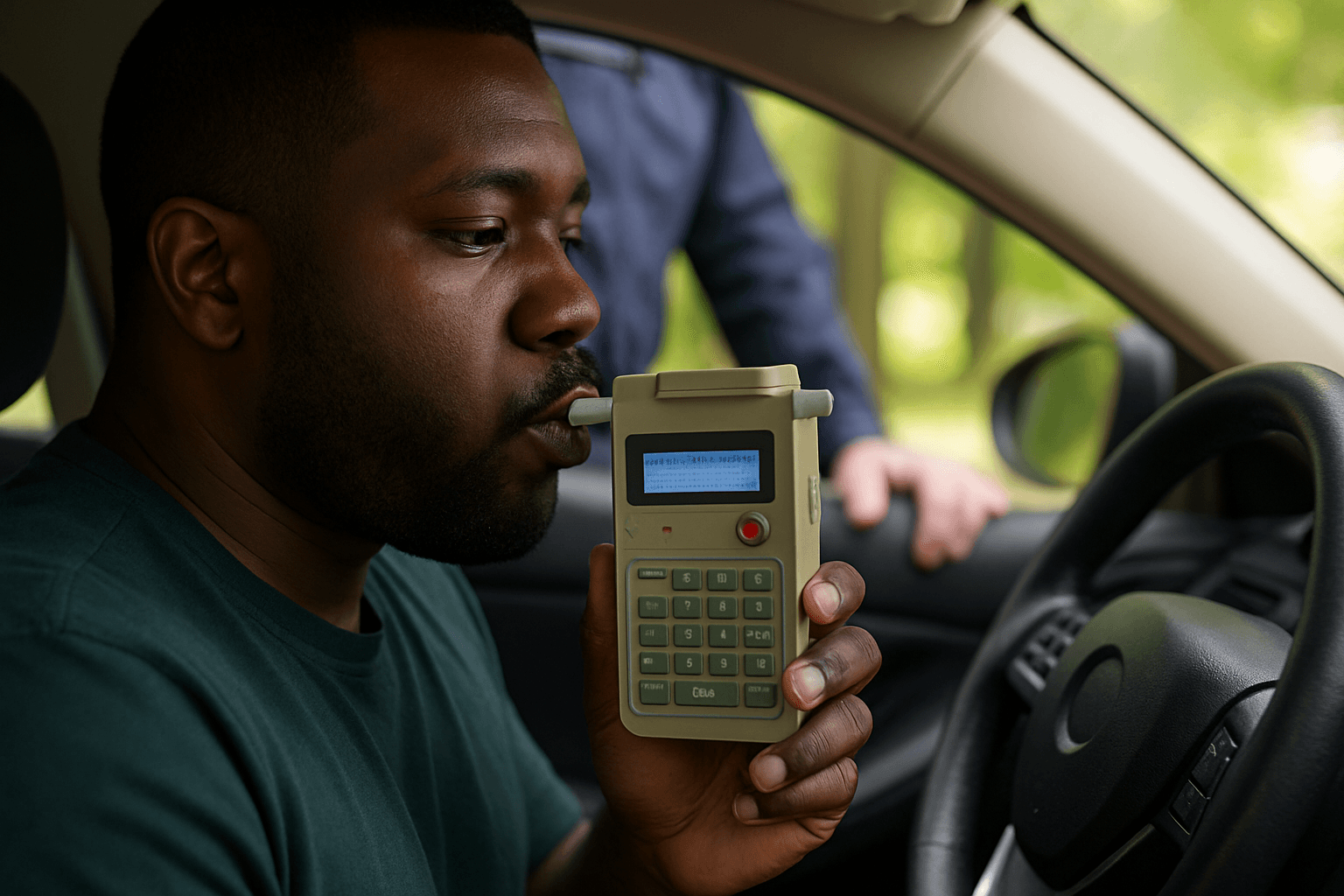
Second and third DWLS convictions in Kentucky carry felony exposure and multi-year suspension stacks that close hardship paths. Here's how the tiers escalate and what options remain.
How Kentucky Counts Repeat DWLS Offenses for Penalty Purposes
Kentucky counts DWLS convictions within a 5-year lookback window from the date of the current offense, not the conviction date. If your first DWLS conviction was finalized four years ago but the arrest happened five years and one month ago, the state counts it as outside the window. The lookback resets on each new arrest date, not when you pay the fine or when probation ends.
Kentucky Transportation Cabinet (KYTC) maintains a centralized driving record that district courts access during sentencing. Prosecutors pull this record to determine which tier applies, and the count includes out-of-state DWLS convictions reported through the Driver License Compact. If you were convicted of driving on suspension in Ohio three years ago, Kentucky counts it when calculating your penalty tier.
The state distinguishes between DWLS (Driving While License Suspended) and DWLR (Driving While License Revoked) for charging purposes, but both feed into the same escalation tiers under KRS 186.620 and KRS 189.990. Revocation is the harsher administrative action—usually reserved for habitual offender declarations under KRS 186.642 or DUI convictions under KRS 189A—but the criminal charge for driving during either status follows the same penalty ladder.
First DWLS Conviction in Kentucky: Baseline Misdemeanor
First-offense DWLS is a Class B misdemeanor under KRS 186.620. Sentence range is 1 to 45 days in jail, though judges often suspend jail time for first offenders with employment or family hardship documentation. Fines run $100 to $200, plus court costs that add another $150 to $250 depending on the county.
Kentucky adds 90 days of administrative suspension on top of whatever suspension you were already serving. If you had 6 months remaining on a DUI suspension when you were caught driving, you now have 9 months. That 90-day stack is mandatory and non-waivable under KRS 186.560, even if the judge suspends jail time.
SR-22 filing is not automatically required after first-offense DWLS unless your underlying suspension already carried an SR-22 mandate. If you were suspended for DUI or uninsured accident involvement, you were already filing SR-22; the DWLS conviction extends the filing period by 90 days to match the suspension stack. If you were suspended for unpaid tickets or child support arrears—triggers that typically don't require SR-22—the first DWLS alone doesn't add SR-22 unless the court specifically orders financial responsibility proof as a probation condition.
Compare car insurance rates in your state
Get quotes from licensed carriers — no obligation, no spam, results in minutes.
Get Your Free Quote✓ No Obligation Required✓ Licensed Carriers Only✓ Available Nationwide✓ Free to Compare
Second DWLS Conviction: Felony Exposure Depends on Original Cause
Second DWLS within five years splits into two tracks based on what triggered your original suspension. If the underlying suspension was for DUI (first, second, or aggravated), refusal of chemical test under KRS 189A.107, or uninsured accident involvement under KRS 304.39-080, the second DWLS becomes a Class D felony under KRS 186.620(3). Sentence range is 1 to 3 years in state prison, though judges retain discretion to probate the sentence with conditions.
If the original suspension was for points accumulation, unpaid tickets, failure to appear, or child support arrears, the second DWLS remains a Class A misdemeanor under KRS 186.620(2). Sentence range is up to 12 months in county jail and fines up to $500, plus court costs. Judges in Jefferson and Fayette counties often impose 30 to 90 days of actual jail time on second-offense misdemeanor DWLS, particularly when employment documentation is weak or the driver missed a prior court appearance.
The suspension stack increases to 180 days on second offense, applied on top of the remaining balance from the original suspension. If you had 4 months left on a points suspension when caught, you now have 10 months. SR-22 filing becomes mandatory for all second-offense DWLS convictions regardless of original cause, with a minimum 3-year filing period under KYTC administrative rules. Carriers treat second DWLS as a major violation flag, and monthly premiums typically start at $180 to $280 for liability-only SR-22 coverage depending on county and age.
Third DWLS Conviction: Automatic Felony and Habitual Offender Review
Third DWLS within five years is a Class D felony under KRS 186.620(3) regardless of the original suspension cause. Sentence range is 1 to 3 years, and judges are far less likely to probate the sentence on third offense. Kentucky Department of Corrections (KDOC) data shows that approximately 40% of third-offense DWLS defendants receive actual prison time rather than probation, particularly in cases involving an accident or injury during the DWLS stop.
Kentucky also triggers a habitual offender review after three DWLS convictions within five years. The Transportation Cabinet evaluates whether to declare you a habitual operator under KRS 186.642, which carries a 5-year license revocation independent of the DWLS suspension stacks. If declared habitual, reinstatement requires a circuit court petition after the 5-year revocation period ends—you cannot use the standard KYTC administrative reinstatement process.
The suspension stack increases to 1 year on third offense, applied on top of any remaining balance. SR-22 filing period extends to 5 years from the third conviction date. If you are declared a habitual offender, the SR-22 period runs concurrently with the 5-year revocation but must remain active through the entire period even if you are not driving. Letting the SR-22 lapse during revocation delays your circuit court petition eligibility and adds another reinstatement fee cycle when you finally apply.
Why Kentucky Hardship Licenses Close After Second DWLS
Kentucky offers a Hardship License through District Court petition under KRS 186.560, available for first-offense DUI suspensions after the 30-day hard period and for certain other suspension causes with court approval. The petition requires proof of employment necessity, proof of SR-22 insurance, and payment of court costs that run $200 to $400 depending on the county.
Second DWLS conviction typically disqualifies you from hardship eligibility for the duration of the stacked suspension. District judges have discretion to deny petitions when a prior DWLS appears on your record, and most do. Jefferson County District Court grants fewer than 15% of hardship petitions filed after second DWLS, per 2023 Kentucky Court of Justice case disposition data. Fayette County grants slightly more—around 25%—but only when the petitioner can show extraordinary hardship (sole caregiver for disabled dependent, documented medical transport need) and a gap of at least 12 months since the last DWLS arrest.
Third DWLS closes hardship eligibility entirely under KYTC administrative rules. Even if a district judge were willing to grant the petition, the Transportation Cabinet will not issue the license once three DWLS convictions appear on your driving record. The only exception is when the third conviction is later vacated on appeal or through post-conviction relief—rare outcomes that require retained counsel and typically take 6 to 18 months to resolve.
SR-22 Filing After Repeat DWLS: Extended Periods and Carrier Limits
Second and third DWLS convictions require SR-22 filing for 3 and 5 years respectively, per KYTC administrative rules. The filing period begins on your conviction date, not your reinstatement date, but the Transportation Cabinet will not process reinstatement until you file the SR-22 certificate. If you are convicted today but wait 6 months to file SR-22, your 3-year or 5-year clock started today—you've already burned 6 months of the mandate without insurance coverage in place.
Carriers underwrite repeat DWLS as a compound major violation, meaning the underwriting flag is heavier than the original suspension cause alone. If your original suspension was for 12 points accumulation (a moderate flag), the second DWLS elevates you to the same underwriting tier as a second DUI. Monthly premiums for SR-22 coverage after second DWLS typically range from $180 to $280 for liability-only policies in Kentucky, depending on county, age, and vehicle type. Jefferson and Fayette counties run 15% to 25% higher than rural counties due to claim frequency.
Not all carriers write SR-22 after repeat DWLS. SR-22 after DWLS conviction requires non-standard or high-risk carriers willing to accept compound violations. Geico, Progressive, and Dairyland write second-offense DWLS in Kentucky but impose surcharges of 60% to 90% over standard rates. Bristol West and National General write third-offense DWLS but require full payment upfront and do not offer monthly installment plans. If you are declared a habitual offender, your carrier pool shrinks further—typically limited to Dairyland, Bristol West, and regional surplus-lines carriers that charge $250 to $400 per month for minimum liability SR-22 coverage.
What Reinstatement Costs After Repeat DWLS Convictions
Kentucky charges a $40 base reinstatement fee under KRS 186.560 for administrative suspensions, but repeat DWLS convictions add layers. Each DWLS conviction carries its own suspension period, and each period requires a separate reinstatement fee when it ends. If you had an original DUI suspension, then a first DWLS 90-day stack, then a second DWLS 180-day stack, you pay the $40 fee three times—once for the DUI period, once for the first DWLS stack, once for the second DWLS stack. KYTC does not consolidate these into a single fee.
Court costs and fines add $300 to $700 per DWLS conviction depending on the county and whether you plead guilty or go to trial. If you hire defense counsel for second-offense felony DWLS, retainer fees in Louisville and Lexington run $2,500 to $5,000 for negotiation and plea work, more if the case goes to trial. Public defenders are available if you qualify financially, but the PD caseload in urban counties often results in minimal pre-trial negotiation—most cases resolve at the first appearance with the prosecutor's initial offer.
SR-22 filing fees range from $25 to $75 depending on the carrier. The SR-22 itself is a certificate, not a policy, but the elevated premium is the real cost. Over a 3-year SR-22 period after second DWLS, total premium cost typically runs $6,500 to $10,000 for liability-only coverage. Over a 5-year period after third DWLS, total cost runs $15,000 to $24,000. Those figures assume no lapses—if your SR-22 lapses during the filing period, KYTC suspends your license again immediately, and you pay another reinstatement fee to restore after you refile.