Washington divides driving while suspended into three criminal tiers based on original cause and prior history. Third-degree is a misdemeanor for most first-time DWLS convictions; second-degree applies when the original suspension was for reckless driving, negligent driving first, or you have a prior DWLS conviction; first-degree is a gross misdemeanor reserved for DUI-based suspensions or multiple priors.
Washington's Three-Tier DWLS Structure: Degree Assignment Based on Original Cause and Prior History
Washington Revised Code 46.20.342 creates three distinct criminal charges for driving while license suspended or revoked. The tier you face depends on what caused your original suspension and whether you have prior DWLS convictions.
Third-degree DWLS (RCW 46.20.342(1)(c)) is a misdemeanor and applies to most first-time offenses where the original suspension was for unpaid tickets, failure to appear, insurance lapse, or points accumulation. Maximum penalty: 90 days jail and $1,000 fine. Most defendants receive a deferred prosecution or suspended sentence with conditions on a first offense.
Second-degree DWLS (RCW 46.20.342(1)(b)) is a gross misdemeanor when the original suspension was for reckless driving under RCW 46.61.500, negligent driving first degree under RCW 46.61.5249, or when you have one prior DWLS conviction of any degree within seven years. Maximum penalty: 364 days jail and $5,000 fine. Courts frequently impose jail time (10–30 days typical range) for repeat offenders at this tier.
First-degree DWLS (RCW 46.20.342(1)(a)) is a gross misdemeanor reserved for driving on a DUI-related suspension (under RCW 46.61.5055) or driving on a Habitual Traffic Offender revocation. Maximum penalty: 364 days jail and $5,000 fine. Mandatory minimum jail sentences apply in some counties for DUI-based first-degree cases. This tier carries the heaviest insurance consequences because it signals compound DUI risk to underwriters.
Jail Exposure and Sentencing Patterns by Degree
Third-degree DWLS sentences vary widely by county and prior record. King County and Snohomish County prosecutors typically offer deferred prosecution agreements on a true first offense: plead guilty, complete probation conditions (community service, reinstatement proof, SR-22 filing), and the conviction is vacated after 12–24 months. Spokane County and Pierce County are stricter and may impose suspended jail sentences (30 days suspended, payable if you violate probation).
Second-degree DWLS almost always involves jail time if you proceed to sentencing. Typical sentences: 10–30 days for a first second-degree conviction, 60–90 days for a second second-degree conviction. Work release is available in most counties if you qualify (stable employment, no violent priors). Courts view second-degree as proof you ignored the first warning.
First-degree DWLS for DUI-based suspensions carries mandatory minimum jail in some jurisdictions. Thurston County imposes a 30-day minimum for first-degree DWLS when the underlying suspension was for a DUI conviction. Clark County uses a 15-day guideline. Habitual Traffic Offender cases (RCW 46.65) carry statutory mandatory minimums: 10 days for a first HTO-based DWLS conviction, 90 days for a second. Defense counsel is not optional at this tier.
Compare car insurance rates in your state
Get quotes from licensed carriers — no obligation, no spam, results in minutes.
Get Your Free Quote✓ No Obligation Required✓ Licensed Carriers Only✓ Available Nationwide✓ Free to Compare
SR-22 Filing Duration After DWLS Conviction
Washington DOL requires SR-22 insurance filing for three years after most DWLS convictions, measured from the conviction date or reinstatement date, whichever is later. This filing period stacks on top of any SR-22 period triggered by your original suspension cause.
If your original suspension was for DUI and already required three years of SR-22, a subsequent first-degree DWLS conviction extends the total filing period to approximately five to six years from the DUI conviction date. DOL tracks both filing obligations separately and enforces the longer duration. If your original suspension did not require SR-22 (e.g., unpaid tickets), the DWLS conviction itself triggers the three-year requirement.
Carriers treat DWLS filings as higher risk than single-cause filings. A driver with a DUI and a first-degree DWLS is underwritten as a repeat impaired driver even if the DWLS incident involved no alcohol. Expect premium increases of 80–140 percent over clean-record baselines for the full SR-22 filing period. Non-standard carriers writing high-risk policies in Washington include Dairyland, Bristol West, The General, Geico (standard tier with surcharge), and Progressive (assigned-risk tier).
SR-22 filing fees in Washington typically range $25–$50 per filing event. Premium impact is the real cost: drivers with a DWLS conviction and clean driving history otherwise pay approximately $140–$210/month for liability-only coverage; drivers with a DWLS plus underlying DUI or reckless conviction pay $190–$320/month. Estimates based on available industry data; individual rates vary by age, vehicle, county, and coverage selections.
Additional Suspension Period Stacked on Top of Original Term
A DWLS conviction adds administrative suspension time on top of your original suspension. Washington DOL imposes an additional one-year suspension for most DWLS convictions under RCW 46.20.342(2). This period begins after the original suspension ends unless you file for early reinstatement under specific hardship provisions.
If you were serving a 90-day suspension for unpaid tickets and were convicted of third-degree DWLS during that period, DOL stacks a one-year administrative suspension starting after the original 90 days expire. Total suspension: 90 days plus one year equals approximately 15 months from the original suspension start date. The one-year period is mandatory and does not reduce for time served.
For first-degree DWLS involving a DUI-based suspension, DOL may impose a two-year additional suspension on top of the original DUI revocation period. RCW 46.20.3101 governs DUI administrative actions and allows DOL to extend revocation periods when a driver is convicted of violating the terms of a restricted license or when a new offense occurs during the revocation period. Courts and DOL operate on separate tracks: the criminal DWLS conviction results in a court sentence (jail, fines, probation), and DOL's administrative action extends the license suspension independent of the court outcome.
Habitual Traffic Offender status (RCW 46.65.020) triggers a seven-year revocation period. If you are designated HTO and then convicted of DWLS while under that revocation, DOL adds an additional year to the seven-year term. The practical reinstatement timeline for an HTO with a stacked DWLS conviction approaches eight to nine years unless you qualify for the four-year reduction pathway under RCW 46.65.070 (requires petition, hearing, and proof of rehabilitation).
Ignition Interlock License Availability After DWLS Conviction
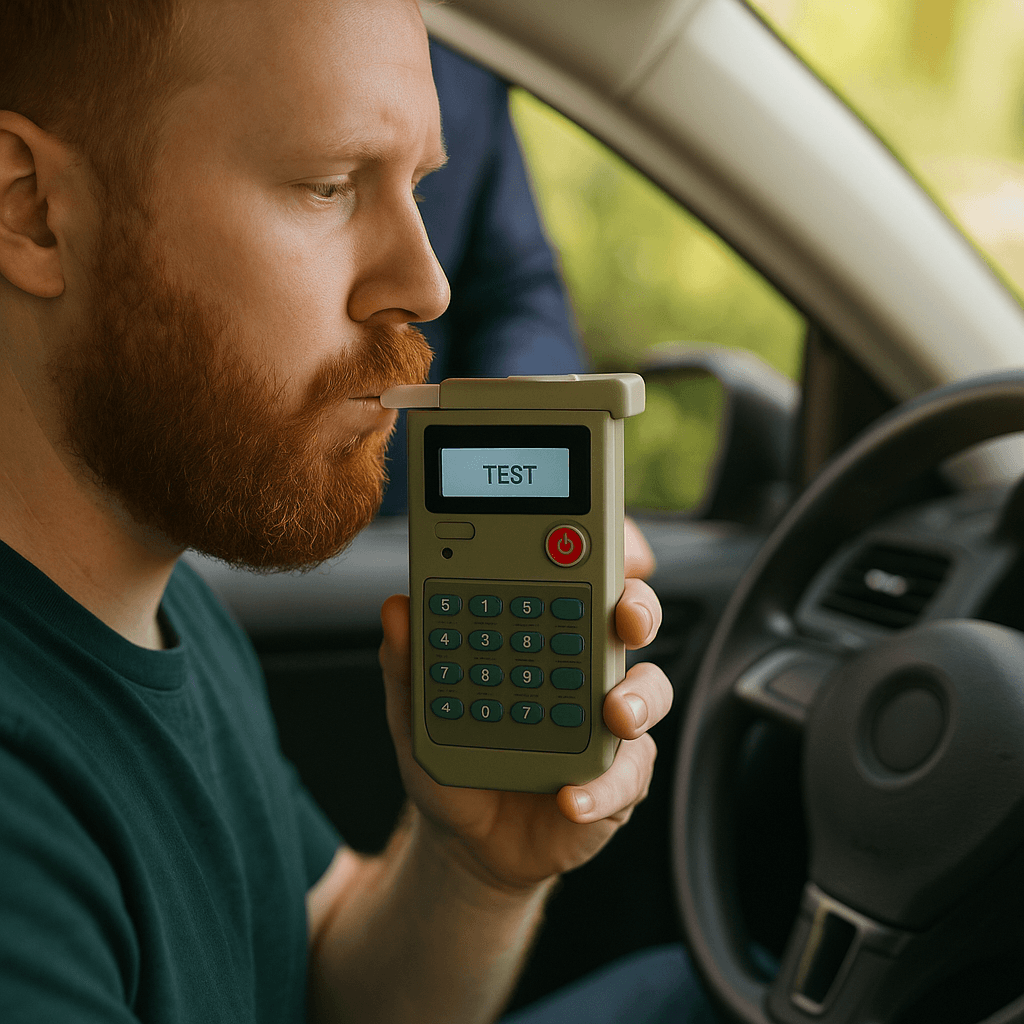
Washington's Ignition Interlock License (IIL) program under RCW 46.20.385 allows drivers with DUI-related suspensions to drive unrestricted (time and route) in an IID-equipped vehicle. The program is not available for most non-DUI DWLS cases.
If your original suspension was for DUI and you were subsequently convicted of first-degree DWLS, you remain eligible for an IIL after serving any mandatory hard suspension period imposed by the court. You must install an approved ignition interlock device with a DOL-certified provider, file SR-22 insurance, and pay the $100 IIL application fee. The IID requirement period is extended by the length of your DWLS-related additional suspension. For example: a first-offense DUI requires IID for one year; a subsequent first-degree DWLS conviction while on IIL extends the total IID period to approximately two to three years.
If your original suspension was for points, unpaid fines, or insurance lapse (non-DUI causes), the IIL program does not apply. Washington does not offer a traditional hardship or occupational license for non-DUI suspensions. After a DWLS conviction on a non-DUI suspension, you must serve the full stacked suspension period with no restricted driving privileges. This creates severe hardship for employment and family transport: most third-degree DWLS defendants cannot drive legally for 12–15 months total after conviction.
Violating IIL terms (driving a non-IID vehicle, tampering with the device, failing a rolling retest) while on an IIL triggers automatic revocation and disqualifies you from reapplying for IIL for the remainder of the suspension period. A DWLS conviction while on IIL counts as a violation and typically results in permanent IIL disqualification until full reinstatement is achieved through serving the entire suspension period.
Reinstatement Process After Serving Stacked Suspension Terms
Reinstatement after a DWLS conviction requires completing both the original suspension cause requirements and the DWLS-specific administrative conditions. The process is linear: satisfy original cause, serve DWLS suspension period, pay all fees, file or maintain SR-22, petition DOL for reinstatement.
For third-degree DWLS (non-DUI original cause): (1) resolve the original suspension cause (pay outstanding tickets, satisfy judgment for uninsured accident, complete payment plan for child support arrears), (2) serve the additional one-year DWLS administrative suspension, (3) pay the $75 base reinstatement fee plus any cause-specific fees (insurance lapse adds $75; unpaid tickets add per-ticket reinstatement fees), (4) file SR-22 insurance and maintain for three years, (5) submit reinstatement application to DOL online or in person. Processing typically takes 7–10 business days if all documentation is in order. Most applicants encounter delays because the original cause was not fully resolved (outstanding ticket balance, incomplete proof of insurance from the lapse date forward).
For first-degree DWLS (DUI-based): (1) complete all DUI-related conditions (alcohol/drug information school or treatment, victim impact panel, ignition interlock device installation and compliance period, SR-22 filing for the original DUI), (2) serve the DWLS-related additional suspension (typically two years for first-degree cases), (3) pay reinstatement fees (base $75 plus DUI-specific reissue fee approximately $170), (4) file or maintain SR-22 for the extended period (five to six years total from DUI conviction date), (5) petition DOL for reinstatement hearing if you have HTO status or multiple priors. Expect 30–45 days from application to final license reissue for complex cases.
Habitual Traffic Offender reinstatement (RCW 46.65.070) requires a formal hearing before a DOL administrative law judge. You must prove you have not committed any traffic violations for the preceding three years, you have maintained valid insurance continuously, and you have completed all court-ordered conditions. Legal representation is strongly recommended. Approval rate without counsel is approximately 40 percent; with counsel approximately 75 percent.
Insurance Impact: Why Carriers Treat DWLS More Severely Than the Original Cause
Underwriters view a DWLS conviction as proof you made a deliberate decision to drive illegally after being notified your privilege was suspended. The insurance industry interprets this as higher risk than the original violation that triggered the suspension.
A driver suspended for accumulating points who then receives a DWLS conviction is flagged as "non-compliant with legal authority" in carrier underwriting models. This flag persists for three to five years and limits your placement options. Standard-tier carriers (State Farm, Allstate, Farmers, Hartford) decline new business or non-renew existing policies when a DWLS conviction appears on the motor vehicle record. You are routed to non-standard carriers who specialize in high-risk placements: Dairyland, Bristol West, The General, National General.
Premium surcharges for DWLS convictions stack on top of surcharges from the original cause. A DUI conviction alone typically increases premiums 90–120 percent over clean-record baseline. Adding a first-degree DWLS conviction on top increases premiums an additional 40–60 percent, resulting in total increases of 130–180 percent over baseline. Monthly cost examples for Washington drivers: clean record with minimum liability coverage $85–$110/month; DUI only $160–$240/month; DUI plus first-degree DWLS $210–$320/month.
SR-22 filing itself does not raise rates. The filing is a certificate your carrier submits to DOL proving you carry at least the state minimum liability limits ($25,000 per person, $50,000 per accident bodily injury, $10,000 property damage per RCW 46.29.090). The premium increase comes from the underlying conviction that triggered the SR-22 requirement. Carriers recalculate your risk tier annually: after three consecutive years with no new violations and continuous SR-22 compliance, you may qualify for standard-tier placement again, reducing premiums by approximately 30–50 percent from the high-risk tier rate.