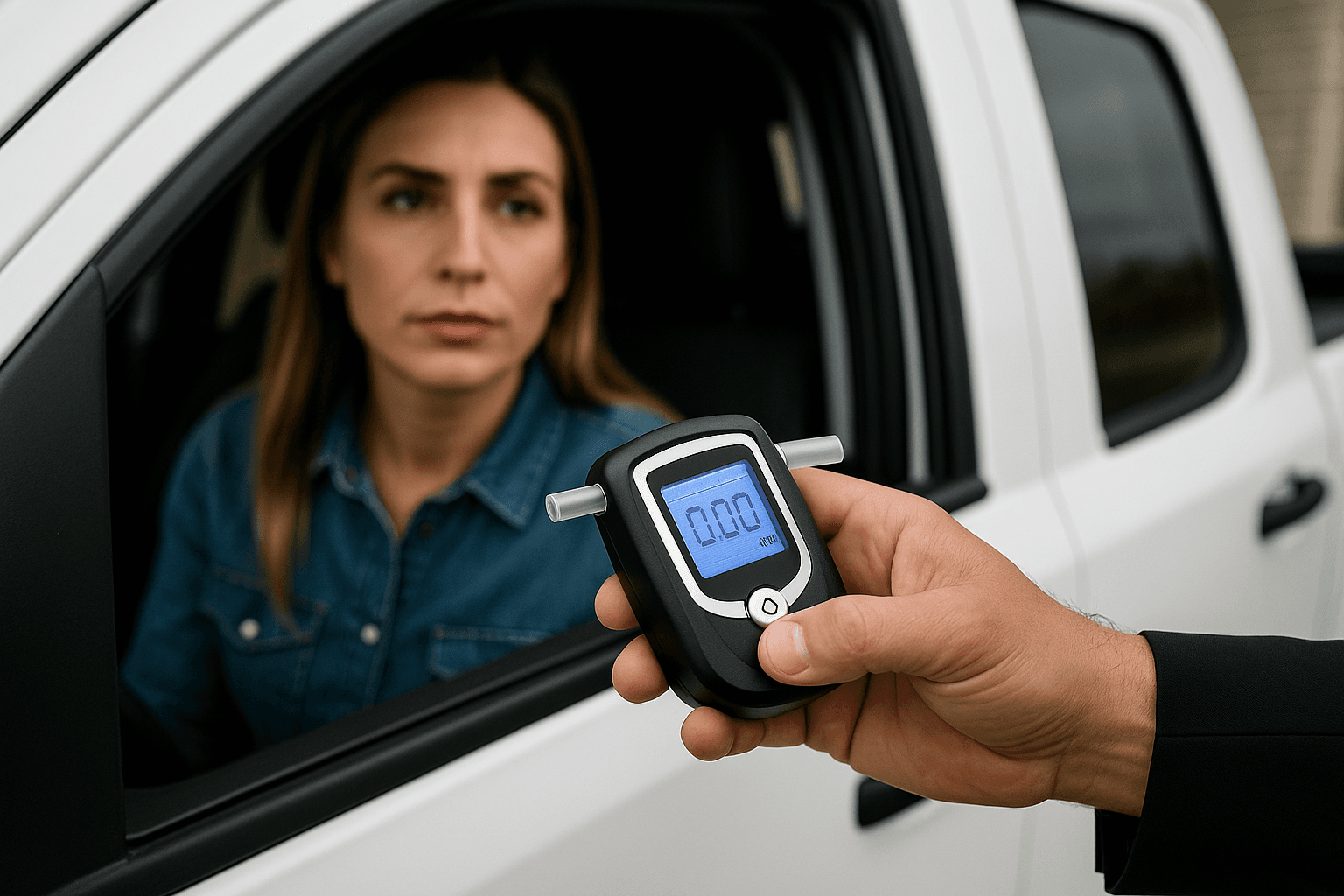
New Mexico judges treat your second or third Driving While Suspended charge differently depending on whether your original suspension was DWI-related, how many prior DWLS convictions appear in the lookback window, and whether you had an active ignition interlock license at the time of the new stop.
How New Mexico Classifies Your Second DWLS Stop Differently If You Had an Ignition Interlock License
New Mexico operates two parallel escalation tracks for repeat Driving While Suspended convictions. The first track governs drivers whose original suspension stemmed from DWI convictions and who were granted an Ignition Interlock License (IIL) under NMSA 1978 §§ 66-5-503 to 66-5-523. The second track governs drivers whose suspensions arose from non-DWI causes — unpaid fines, insurance lapses, points accumulation, or failure-to-appear warrants.
If you were stopped while driving on an IIL, even if your ignition interlock device was functioning and you were within your approved route, the court treats the new stop as a violation of the interlock program conditions. This violation triggers immediate IIL revocation and converts your next DWLS charge into a higher-tier misdemeanor or felony depending on priors. Most drivers assume that having the interlock installed insulates them from DWLS prosecution; it does not. The IIL is a restricted license, and any driving outside court-approved purposes — or any device tampering event flagged in the monthly monitoring report — converts your legal IIL driving into a chargeable offense.
If your original suspension was for a non-DWI cause and you were driving without any valid license or restricted license, New Mexico courts apply a separate escalation schedule. Your first DWLS conviction typically results in a petty misdemeanor with no mandatory jail, a fine of $300 to $500, and an additional 90-day suspension period stacked on top of your original suspension. Your second DWLS conviction within a five-year lookback window becomes a fourth-degree misdemeanor, carrying mandatory minimum jail time of 48 hours (though most judges sentence seven to 30 days), fines of $500 to $1,000, and an additional six-month suspension period. Your third DWLS conviction within the same five-year window escalates to a third-degree misdemeanor or, if your original suspension was DWI-related, a fourth-degree felony.
The critical procedural fact most drivers miss: New Mexico counts the lookback window from the date of each new DWLS stop, not from the date of conviction. If you were stopped for DWLS in January 2023, convicted in March 2023, and stopped again in February 2024, the court calculates the second stop as occurring within the five-year window even though your first conviction had not yet been entered at the time of the second stop. This front-loaded counting accelerates your escalation tier and leaves less time to resolve the underlying suspension before accumulating priors.
Why Your Third DWLS Conviction Becomes a Felony When the Original Cause Was DWI
New Mexico Statutes Annotated 1978 § 66-5-39 governs the criminal penalties for Driving While License Suspended or Revoked. Under subsection (D), a third or subsequent DWLS conviction within five years becomes a fourth-degree felony if your original suspension or revocation resulted from a DWI conviction. This felony tier applies regardless of whether you were granted an IIL and violated its terms, or whether you were driving with no valid license at all.
The felony classification triggers mandatory minimum sentencing under New Mexico's felony DWI statutes. You face a minimum of 18 months in jail (though judges may suspend portions of the sentence and impose intensive supervised probation), fines of $5,000 to $10,000, and permanent revocation of your driving privilege until you complete a residential treatment program approved by the Motor Vehicle Division. Most critically, the felony conviction appears on background checks for employment, housing, and professional licensing applications. The employment barrier is immediate: employers who require driving for any portion of the job will disqualify you, and many employers screen out any felony conviction during initial application review.
If your original suspension was non-DWI-related, your third DWLS conviction within five years typically remains a misdemeanor (either high-level misdemeanor or, in some counties, still classified as third-degree misdemeanor depending on aggravating factors such as accident involvement or reckless manner of driving). This distinction creates a two-tiered escalation system: DWI-origin suspensions escalate faster and carry heavier penalties at each tier than non-DWI suspensions, even when the DWLS conduct itself is identical.
The sentencing differential reflects New Mexico's legislative policy choice to treat DWI recidivism and DWI-program violations as public safety priorities distinct from administrative non-compliance. Courts interpret this policy strictly. Defense counsel often attempt to negotiate downward departures by arguing that the client's IIL violation was technical (driving slightly outside approved hours, for example, rather than driving while intoxicated), but prosecutors in Bernalillo, Doña Ana, and Santa Fe counties rarely agree to reduce charges when the underlying suspension was DWI-related and the driver accumulated multiple DWLS stops.
Compare car insurance rates in your state
Get quotes from licensed carriers — no obligation, no spam, results in minutes.
Get Your Free Quote✓ No Obligation Required✓ Licensed Carriers Only✓ Available Nationwide✓ Free to Compare
How the Motor Vehicle Division Stacks New Suspension Periods on Top of Your Original Suspension
Each DWLS conviction adds a separate suspension period administered by the New Mexico Motor Vehicle Division, distinct from the criminal sentence imposed by the court. Your original suspension — whether for DWI, points accumulation, insurance lapse, or unpaid fines — remains in effect and continues to run even while you serve jail time for the DWLS conviction. The new DWLS suspension period is added consecutively, not concurrently.
For a first DWLS conviction, the MVD typically adds 90 days to your total suspension period. For a second DWLS conviction within five years, the MVD adds six months. For a third or subsequent DWLS conviction, the MVD adds one year, and in cases where the third conviction is classified as a felony due to DWI origin, the MVD imposes a minimum two-year revocation period that cannot be shortened by hardship petition or IIL application during the first 12 months.
The stacking calculation creates a compounding problem for drivers who were close to reinstatement eligibility when the new DWLS stop occurred. For example: you were suspended in January 2023 for a first-offense DWI with a mandatory one-year revocation period. You applied for and received an IIL in March 2023, allowing restricted driving with ignition interlock. In November 2023, you were stopped while driving your IIL vehicle to a destination not approved in your court order — your employer changed your shift schedule and you did not file an amended petition with the court. The prosecutor charges you with DWLS. You are convicted in February 2024. The court sentences you to seven days in jail, a $750 fine, and the MVD adds six months to your suspension period. Your original one-year DWI revocation was set to expire in January 2024; the new six-month DWLS suspension pushes your reinstatement eligibility to July 2024. If you accumulate a third DWLS stop before July 2024, the MVD adds another 12 months, moving your eligibility to July 2025.
The MVD does not automatically notify you of the new total suspension end date. You must contact the MVD Driver Services Bureau directly, provide your driver's license number and case number from the DWLS conviction, and request a written statement of your current suspension status and reinstatement eligibility date. Most drivers discover the stacked suspension periods only when they attempt to reinstate and are told by MVD staff that additional time remains. By that point, the lookback window for a subsequent DWLS charge is still active, and any driving before the new eligibility date resets the escalation cycle.
Why Most Repeat-DWLS Drivers Now Face Extended SR-22 Filing Periods
New Mexico requires SR-22 certificate filing for nearly all DWLS convictions, regardless of whether your original suspension triggered an SR-22 requirement. The filing period is tied to the number of DWLS convictions within the five-year lookback window, not to the severity of the original suspension cause.
For a first DWLS conviction, the MVD typically requires three years of continuous SR-22 filing beginning on the date of reinstatement. For a second DWLS conviction within five years, the filing period extends to four years. For a third or subsequent DWLS conviction, the filing period extends to five years, and if the third conviction was classified as a felony, the MVD may impose a lifetime SR-22 filing requirement with annual review and possible removal after 10 years of violation-free driving.
The SR-22 filing requirement is separate from the suspension period. You cannot file SR-22 until your suspension is lifted and you are eligible for reinstatement. The filing period begins on your reinstatement date, not on your conviction date or suspension start date. This sequencing creates a cash-flow problem for drivers who were already facing multi-year filing periods from the original cause: if your original DWI suspension required three years of SR-22 and you accumulated a second DWLS conviction halfway through that period, the MVD resets your filing clock to four years starting from your new reinstatement date. You do not receive credit for the 18 months of SR-22 filing you completed before the DWLS conviction.
Insurance carriers treat repeat DWLS convictions as severe underwriting flags. Most standard and preferred-tier carriers will not quote coverage for drivers with two or more DWLS convictions within five years. Non-standard carriers such as Bristol West, Dairyland, GAINSCO, National General, Progressive non-standard division, The General, and Acceptance (operating in New Mexico through local agents) will quote coverage but typically price premiums at $180 to $320 per month for state-minimum liability limits with SR-22 endorsement. Drivers who add collision and comprehensive coverage to meet lender requirements for financed vehicles should expect premiums of $280 to $450 per month.
The premium increase is permanent for the duration of the filing period. Carriers do not reduce rates after 12 or 24 months of violation-free driving while the SR-22 filing remains active. Rate reduction occurs only after the filing period expires, the SR-22 certificate is released by the MVD, and you establish a new policy without the SR-22 endorsement. For drivers facing four- or five-year filing periods after repeat DWLS convictions, the total insurance cost over the filing period can exceed $15,000 to $20,000, not including reinstatement fees, court fines, or ignition interlock device rental costs if required.
When New Mexico Courts Close Hardship Eligibility After Repeat DWLS Convictions
New Mexico law allows judges to grant restricted licenses (commonly called hardship licenses, though the statute uses "restricted license" terminology per NMSA 1978 § 66-5-33) for drivers whose suspensions stem from non-DWI causes such as unpaid fines, insurance lapses, or points accumulation. For DWI-related suspensions, the Ignition Interlock Licensing Act provides a parallel restricted-driving mechanism through the IIL program.
Both pathways close — or become significantly harder to obtain — after a second DWLS conviction within the five-year lookback window. District court judges in Bernalillo, Doña Ana, Santa Fe, and San Juan counties routinely deny restricted license petitions when the applicant's driving record shows two or more DWLS convictions, reasoning that the prior restricted license (if one was granted) was violated and that further restricted driving would present an unacceptable compliance risk.
The denial is discretionary, not automatic. Judges evaluate several factors when deciding restricted license petitions after repeat DWLS convictions: whether the prior DWLS stops involved accidents, whether the driver's employment genuinely requires personal driving (as opposed to public transit, rideshare, or employer-provided transport), whether the driver has completed DWI school or other required programs, and whether the driver can demonstrate 12 consecutive months of SR-22 filing and violation-free behavior before applying for the restricted license. Most petitions filed within six months of a second DWLS conviction are denied. Petitions filed 18 to 24 months after the second conviction, with demonstrated compliance and stable employment, have a higher approval rate but still succeed in fewer than 40 percent of cases based on observed outcomes in Bernalillo County Metropolitan Court and Second Judicial District Court filings.
For drivers whose original suspension was DWI-related and who violated IIL terms, re-entry into the IIL program after a DWLS conviction requires a new petition to the district court, proof of ignition interlock device installation at the driver's expense, and completion of a state-approved DWI education program. The MVD will not process IIL reinstatement applications until the criminal DWLS sentence is fully served (including probation) and all court-ordered fines and fees are paid in full. This sequencing can delay IIL reinstatement by 18 to 36 months after the DWLS conviction, depending on sentencing terms and payment plan compliance.
Drivers who are denied restricted license or IIL reinstatement face a binary choice: cease all personal driving until the full suspension period expires and reinstatement is complete, or continue driving unlawfully and accept the risk of a third DWLS charge with felony-tier consequences. The employment pressure is severe — many employers in Albuquerque, Las Cruces, and Farmington metro areas do not operate near public transit lines, and rideshare costs for daily commuting can exceed $400 to $600 per month. Defense attorneys in repeat-DWLS cases often negotiate suspended jail sentences with intensive supervised probation conditioned on the driver finding employment within walking distance or arranging family transport, but compliance rates are low and probation violations are common.
What Happens If You Move Out of State Before Your New Mexico DWLS Case Resolves
New Mexico participates in the Driver License Compact and the Non-Resident Violator Compact, which means your DWLS conviction and suspension status follow you to most other states. If you move to another state before your New Mexico suspension is resolved and attempt to obtain a driver's license in your new state, the new state's DMV will query the National Driver Register and discover the active New Mexico suspension. The new state will deny your application and may report the application attempt to New Mexico as an additional violation.
If you already hold a valid license from another state and are stopped in New Mexico for DWLS, New Mexico prosecutors can charge you under NMSA 1978 § 66-5-39 even though your out-of-state license is valid in your home state. The charge is based on your suspended New Mexico driving privilege, not on the validity of your other state's license. This creates a compliance trap for drivers who moved out of New Mexico after an initial DWI suspension but before reinstatement, obtained a license in their new state, and later returned to New Mexico for work or family reasons.
If you are convicted of DWLS in New Mexico and then move to another state, your new state will typically honor the New Mexico suspension and impose a mirrored suspension on your new state license until you provide proof of New Mexico reinstatement. This process can take six to 12 months depending on the new state's administrative procedures and whether the new state requires separate reinstatement fees or SR-22 filing. You cannot shorten your New Mexico suspension by moving to another state. You cannot obtain a valid license in another state while your New Mexico suspension remains active. The only procedural path is to resolve the New Mexico suspension fully — serve all suspension periods, pay all fines and reinstatement fees, file SR-22 in New Mexico for the required period, and obtain a reinstatement letter from the New Mexico MVD — before applying for a license in your new state.
How to Compare High-Risk Coverage Options When You Have Multiple DWLS Convictions
After a second or third DWLS conviction, your insurance options narrow significantly. Most standard carriers such as State Farm, Allstate, and Farmers will not quote new policies for drivers with two or more DWLS convictions within five years. Your practical options are non-standard carriers that specialize in high-risk drivers and SR-22 filings.
In New Mexico, the following carriers actively write policies for drivers with repeat DWLS convictions: Bristol West (available through independent agents, requires broker contact for quotes), Dairyland (online quotes available at dairylandinsurance.com, underwrites up to three DWLS convictions if at least 18 months have passed since the most recent), GAINSCO (online quotes and agent network, focuses on non-standard auto including DWLS), National General (online quotes, underwrites repeat DWLS but may require higher down payments), Progressive non-standard division (online quotes at progressive.com, separate underwriting tier from Progressive standard), and The General (online quotes at thegeneral.com, specializes in post-conviction coverage).
When comparing quotes, request identical coverage limits and deductibles from each carrier so you can isolate the premium difference. State-minimum liability in New Mexico is $25,000 per person, $50,000 per accident for bodily injury, and $10,000 for property damage. Most carriers quote this as 25/50/10 coverage. If you finance your vehicle, your lender will require collision and comprehensive coverage with deductibles typically ranging from $500 to $1,000.
Premium estimates for repeat-DWLS drivers in New Mexico with state-minimum liability and SR-22 endorsement typically fall between $180 and $320 per month, depending on age, county, vehicle type, and number of DWLS convictions. Drivers under age 25 or over age 70 pay the high end of this range. Drivers in Bernalillo County (Albuquerque metro) pay 15 to 20 percent more than drivers in rural counties due to higher claim frequency and uninsured motorist rates. Adding collision and comprehensive pushes monthly premiums to $280 to $450.
Do not accept the first quote you receive. Non-standard carriers price risk differently — one carrier may weight your most recent conviction heavily while another focuses on total conviction count over the five-year window. Request quotes from at least three carriers before selecting coverage. Verify that each quote includes the SR-22 endorsement and that the policy effective date matches or precedes your reinstatement date; the MVD will not process reinstatement until it receives electronic confirmation of SR-22 filing from your carrier.