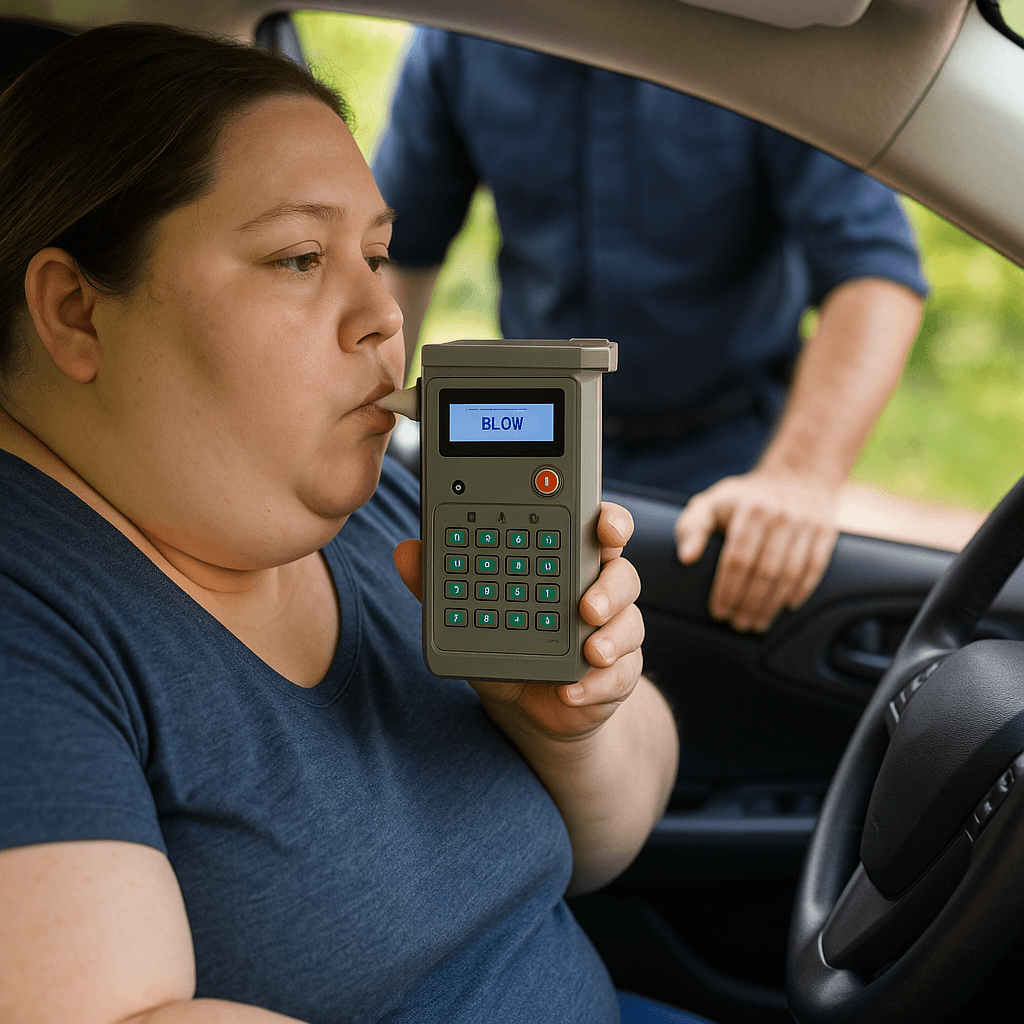
Maryland escalates driving while suspended charges from misdemeanor to felony after your second conviction, and each tier adds mandatory jail time, extended suspension, and longer SR-22 filing. The stacking is automatic — your court date won't reset the clock.
Why Maryland's Second DWLS Conviction Triggers Felony Exposure
Maryland Transportation Article §16-303 classifies driving on a suspended license as a misdemeanor carrying up to one year in jail and a $1,000 fine for a first offense. Your second conviction within five years elevates exposure to two years and $2,000. The third conviction — still within that five-year window — becomes a felony under certain conditions, particularly when the underlying suspension stemmed from a DUI or refusal to submit to a breath test under §16-205.1.
The five-year lookback period begins on the date of your first DWLS conviction, not the date of your original suspension. If you were convicted of DWLS in March 2023 and get caught again in April 2024, you are now in second-offense territory. The court has discretion on jail but often imposes at least 30 days for a second offense. Judges in Montgomery, Prince George's, and Baltimore City routinely impose the upper end of sentencing guidelines because DWLS signals disregard for a prior court order.
Maryland does not separate restricted-license violations into a lighter category. If your Restricted License under the Ignition Interlock System Program allows driving to work only, and you drive to a grocery store, that violation is prosecuted identically to driving on a fully suspended license. The MVA treats both as DWLS, and the mandatory minimum suspension stacking applies.
How the Suspension Period Stacks on Top of Your Original Cause
A first DWLS conviction adds 60 days of additional suspension on top of whatever period remained from your original cause. A second conviction adds 120 days. A third adds 180 days. These periods run consecutively, not concurrently — if you had 90 days left on a DUI suspension when you were caught driving, the 60-day DWLS penalty starts after those 90 days end.
Maryland's MVA does not prorate or credit time served on the original suspension toward the DWLS penalty. If your original suspension was for 90 days and you were caught driving on day 85, you still owe the full 60-day DWLS stack starting on day 91. The MVA's position is that the additional suspension is punitive, not administrative, so early compliance with the original suspension does not mitigate the new penalty.
The Ignition Interlock System Program complicates this further. If you were enrolled in IISP to avoid serving a full DUI suspension and then got a DWLS conviction, the MVA will terminate your IISP participation and impose the full original DUI suspension period plus the DWLS stack. You lose the benefit of the interlock alternative. For a first DUI with a BAC of 0.15 or higher, that means 180 days of hard suspension plus the 60-day DWLS penalty — 240 days total before you can apply for reinstatement.
Compare car insurance rates in your state
Get quotes from licensed carriers — no obligation, no spam, results in minutes.
Get Your Free Quote✓ No Obligation Required✓ Licensed Carriers Only✓ Available Nationwide✓ Free to Compare
Why SR-22 Filing Duration Extends After a DWLS Conviction
Maryland requires SR-22 filing for three years after a DUI conviction under Transportation Article §17-106. A DWLS conviction while that SR-22 period is active does not replace the three-year clock — it extends it. The MVA treats the DWLS as a new major violation requiring its own three-year SR-22 filing period, and that period begins on the date of your DWLS conviction, not your reinstatement date.
If you were two years into a DUI-related SR-22 filing period when you were convicted of DWLS, you now owe three more years starting from the DWLS conviction date. The original DUI SR-22 period does not pause or merge — the MVA applies the longer of the two filing requirements, which in practice means you will carry SR-22 for roughly four years total (the remaining year from the DUI plus the new three-year DWLS period). Carriers receive notification of the DWLS conviction from the MVA via the Maryland Insurance Verification Exchange, and most will increase your premium immediately upon receiving that flag.
Non-owner SR-22 policies are available if you do not own a vehicle, but Maryland requires the policy to meet the state's minimum liability limits of $30,000 per person, $60,000 per accident for bodily injury, and $15,000 for property damage. Carriers writing non-owner SR-22 in Maryland after a DWLS conviction include Progressive, Geico, and Dairyland. Expect monthly premiums between $90 and $160 depending on your underlying violation history and county of residence. Estimates based on available industry data; individual rates vary.
What Happens to Hardship Driving Privileges After DWLS
Maryland allows drivers with certain suspensions to apply for a Restricted License through the MVA or via a contested case hearing before the Office of Administrative Hearings. The restricted license permits driving to work, school, medical appointments, and other essential purposes as specified in the restriction order. A DWLS conviction while on a restricted license terminates that privilege immediately, and the MVA will not consider a new restricted license application until you have served the full DWLS suspension stack and reinstated your full license.
OAH hearing officers have discretion to deny restricted license applications when the applicant's driving history includes a DWLS conviction. Even if you were initially eligible for a restricted license based on your original DUI or points-based suspension, the DWLS conviction signals enforcement risk, and hearing officers frequently deny applications on that basis alone. Montgomery County and Prince George's County OAH hearing officers apply this standard more strictly than jurisdictions in Southern Maryland or the Eastern Shore.
If your restricted license was revoked due to a DWLS conviction, you will need to wait until your combined suspension period ends, pay the reinstatement fee, file SR-22, and complete any alcohol education or treatment programs required for your original DUI before the MVA will process a full reinstatement. The practical effect is that most drivers convicted of DWLS after losing restricted license privileges serve the full suspension period without any hardship allowance.
Why Maryland Prosecutors Treat DWLS After DUI as Felony-Adjacent
Maryland does not have a separate vehicular felony statute for DWLS alone, but prosecutors in Baltimore City, Montgomery County, and Prince George's County routinely charge third-offense DWLS as a felony under certain aggravating circumstances. These include: DWLS committed while the underlying suspension was for DUI or refusal to test, DWLS involving an accident with injury, DWLS with a BAC above 0.08 at the time of the stop, or DWLS while operating a commercial vehicle.
The State's Attorney has discretion to elevate a third DWLS conviction to a felony charge if the combined facts demonstrate a pattern of disregard for court orders and public safety. The felony classification carries up to three years in prison and a $3,000 fine, and a conviction creates a permanent criminal record that cannot be expunged under Maryland's limited expungement statutes. Even if the judge suspends most of the sentence, the felony conviction remains on your record and affects employment background checks, professional licensing, and eligibility for certain housing programs.
Defense counsel in Maryland often negotiate plea agreements that keep the charge at the misdemeanor level in exchange for guilty pleas with supervised probation and extended SR-22 filing. If you are facing a third DWLS charge, hiring an attorney with experience in Maryland traffic court is not optional — the stakes are too high to proceed pro se, and public defenders in District Court traffic dockets are often overloaded and cannot devote sufficient time to complex DWLS cases.
How Much It Costs to Clear a Repeat DWLS and Reinstate
Maryland's base reinstatement fee is $45 for most administrative suspensions, but a DWLS conviction triggers additional fees. The MVA assesses a $50 administrative processing fee for each DWLS conviction, and if your underlying suspension required SR-22, the MVA charges a $20 SR-22 compliance fee at reinstatement. Court costs for a DWLS conviction range from $150 to $300 depending on jurisdiction, and if you hire an attorney, expect fees between $1,500 and $3,500 for a first or second DWLS defense.
SR-22 filing fees vary by carrier but typically cost $25 to $50 upfront, and the premium increase from the DWLS conviction itself averages $60 to $120 per month over the three-year filing period. If your underlying suspension was for DUI and you are required to complete an alcohol education program, that program costs $200 to $400 depending on provider. If your DUI involved a BAC of 0.15 or higher and you are required to install an ignition interlock device, installation costs $100 to $150 and monthly monitoring fees run $70 to $100.
The total cost to resolve a second DWLS conviction in Maryland, reinstate your license, and maintain SR-22 coverage for three years typically exceeds $8,000. That figure includes court costs, attorney fees, reinstatement fees, SR-22 filing, premium increases, and any required alcohol education or interlock costs. The cost escalates significantly if you serve jail time and lose employment income during the suspension period.
What to Do If You Are Facing a Repeat DWLS Charge
Hire a Maryland traffic attorney before your first court date. DWLS charges are criminal, not civil, and a conviction creates a permanent record. An attorney can negotiate with the State's Attorney to reduce the charge, defer sentencing pending completion of alcohol education or community service, or argue for probation before judgment (PBJ) in cases where the underlying suspension was not DUI-related. PBJ is not available for DUI-related DWLS in Maryland, but it remains an option for DWLS stemming from points accumulation or unpaid fines.
Do not drive again until your license is fully reinstated. Maryland State Police and local law enforcement share MVA suspension data in real time, and officers can verify your suspension status during any traffic stop. A third DWLS conviction within five years carries mandatory jail time in most jurisdictions, and judges have limited discretion to suspend that sentence. The risk of felony exposure and incarceration is not worth the convenience of driving to work or running errands.
Once your suspension period ends, gather the required documentation before visiting the MVA: proof of SR-22 filing from your carrier, proof of completion of any required alcohol education or treatment programs, your ignition interlock compliance certificate if applicable, and payment for all reinstatement fees. The MVA will not process your reinstatement application until every requirement is satisfied, and incomplete applications restart the processing timeline. Verify current reinstatement requirements at mva.maryland.gov before scheduling your appointment.