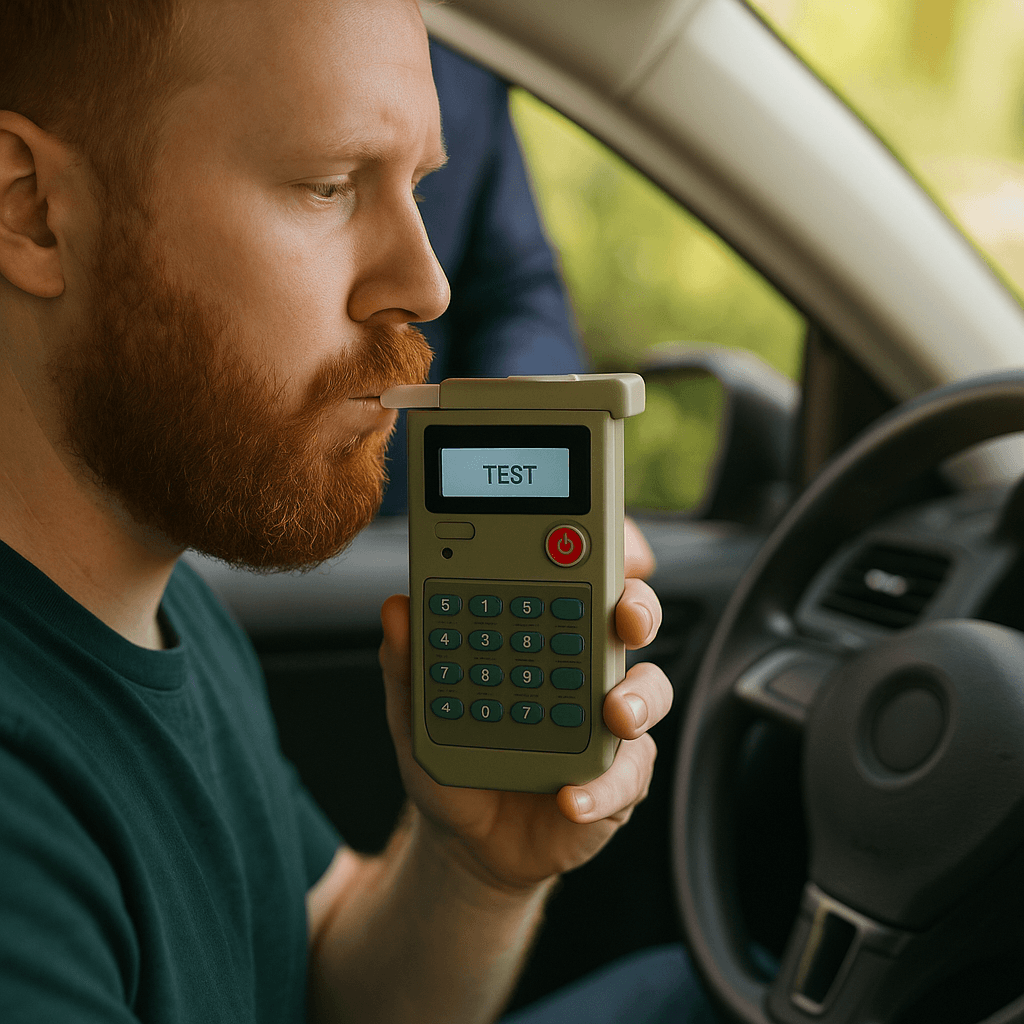
Oregon treats driving while suspended as a separate criminal offense that stacks suspension time, triggers mandatory SR-22, and often closes hardship permit eligibility. The compound charge changes your reinstatement path entirely.
What a DWLS Conviction Does to Your Oregon Driving Privileges
Oregon adds 90 days to 1 year of additional suspension on top of your original suspension period when you are convicted of Driving While Suspended under ORS 811.175. The original suspension continues to run, and the DWLS penalty stacks on top once the original term ends. If your original suspension was for a first-offense DUII with a 90-day hard period, a DWLS conviction during that 90-day window adds another suspension term that begins after day 90. The DMV does not run these concurrently.
The conviction itself is a Class A misdemeanor for first offense, carrying potential jail time of up to 364 days and fines up to $6,250. Second and subsequent DWLS offenses within five years escalate to enhanced penalties. Most Oregon counties prosecute DWLS aggressively because it demonstrates willful disregard of the original suspension order.
Your hardship permit eligibility changes immediately. Oregon's Hardship Permit program under ORS 807.240 allows restricted driving during most suspension types, but DWLS convictions trigger additional barriers. The DMV now requires proof that you understand the severity of the compound offense before approving any restricted driving privilege, and ignition interlock installation becomes mandatory regardless of your original suspension cause.
Why Insurance Carriers Treat DWLS Worse Than the Original Suspension
Underwriters view DWLS as a behavioral flag separate from the underlying violation that caused your suspension. The original suspension may have been for unpaid tickets or an insurance lapse. The DWLS conviction signals that you chose to drive anyway, which correlates statistically with higher claim frequency regardless of the original cause.
SR-22 filing is required for three years after DWLS conviction in Oregon, even if your original suspension did not require it. The filing fee ranges from $15 to $50 depending on carrier, but the premium increase is where the real cost appears. Drivers with clean records before the DWLS typically see monthly premiums increase from $85 to $140 per month to $190 to $280 per month once the DWLS appears on their MVR. Drivers who already carried SR-22 for the original suspension see smaller increases, typically $40 to $70 per month, because they were already rated in the high-risk tier.
Non-standard carriers like Bristol West, Dairyland, GAINSCO, and The General write DWLS coverage in Oregon, but expect stricter underwriting requirements than you faced for the original suspension. Many require full payment upfront or limit payment plans to three months. Standard carriers like State Farm or Allstate may non-renew your policy once the DWLS conviction appears, even if they previously accepted the original suspension.
Compare car insurance rates in your state
Get quotes from licensed carriers — no obligation, no spam, results in minutes.
Get Your Free Quote✓ No Obligation Required✓ Licensed Carriers Only✓ Available Nationwide✓ Free to Compare
How Oregon's Hardship Permit Changes After DWLS
Oregon's Hardship Permit allows restricted driving for employment, medical appointments, school, and essential household needs during most suspension types. After a DWLS conviction, the DMV applies additional scrutiny to every hardship application. You must demonstrate that you understand the original suspension was valid, that you accept responsibility for driving during that suspension, and that you have a verifiable essential need that cannot be met through alternative transportation.
Ignition interlock device installation is now required for the entire hardship permit period, regardless of whether your original suspension was alcohol-related. This requirement appears in ORS 813.602 and applies to all DWLS convictions where a hardship permit is sought. The IID must remain installed for the duration of the hardship permit and typically for 90 days to 1 year after full reinstatement, depending on whether your original suspension was DUII-related. Monthly IID costs run $70 to $100 for rental, monitoring, and calibration.
Route and time restrictions become stricter after DWLS. The DMV defines approved routes based on your stated essential need and prohibits deviation. A hardship permit issued after DWLS for work purposes restricts you to the direct route between your home and workplace during the hours your employer verifies in writing. Medical appointments require advance DMV approval, and many county DMV offices require 48-hour notice before adding a temporary route variance. Violating these restrictions triggers automatic revocation without hearing.
What the Reinstatement Process Looks Like With a DWLS Conviction
You must resolve the DWLS criminal charge before the DMV will process any hardship or reinstatement application. This means appearing in court, accepting a plea or going to trial, and completing any sentence imposed. If the court orders DUII education classes or community service as part of the DWLS sentence, those must be completed and proof filed with the DMV before reinstatement eligibility begins.
The reinstatement fee for the DWLS suspension is $75, separate from any reinstatement fee required for your original suspension. If your original suspension was DUII-related, expect a combined reinstatement fee of $175 to $250 depending on the specific charges. The DMV does not waive or reduce these fees for financial hardship.
SR-22 filing must be in place before the DMV will issue a hardship permit or process full reinstatement. The three-year SR-22 clock starts from the date of DWLS conviction, not the date you file the certificate. If your original suspension already required SR-22, the DWLS conviction typically extends the filing period by one to two years, meaning you may carry SR-22 for four to five years total. Letting the SR-22 lapse at any point during this period triggers automatic re-suspension and requires starting the reinstatement process from the beginning.
Why DWLS After DUII Suspensions Carries the Heaviest Consequences
Oregon's DUII administrative suspension under ORS 813.410 carries a hard 30-day suspension period during which no driving is permitted. If you are caught driving during this 30-day window, the DWLS charge is prosecuted as knowingly violating a DUII suspension, which triggers enhanced sentencing under ORS 811.182. The court may impose mandatory minimum jail time of 48 hours to 10 days depending on whether this is your first or subsequent DWLS offense.
The DMV treats DUII-related DWLS as a separate basis for extended suspension. The original DUII suspension may have been 90 days for a BAC failure or 1 year for a refusal. The DWLS conviction adds 90 days to 1 year on top, and the combined suspension period is not eligible for hardship driving until both the DUII hard suspension and the DWLS hard suspension are served consecutively. Many drivers facing this scenario serve 120 to 150 days total before any restricted driving is possible.
Ignition interlock requirements extend significantly. Oregon's IID requirement for DUII convictions is typically 1 year for first offense. Adding a DWLS conviction during the DUII suspension period extends the IID requirement by an additional 6 months to 1 year, meaning you may drive with an IID for 18 to 24 months total. The DMV will not remove the IID requirement until both the DUII and DWLS suspension periods are fully served and all reinstatement conditions are met.
How to Find Coverage That Meets Oregon's SR-22 Requirement After DWLS
Non-standard carriers write the majority of post-DWLS policies in Oregon because standard carriers either decline DWLS risks outright or price them out of reach. SR-22 after DWLS conviction requires filing proof of financial responsibility with the Oregon DMV electronically, which most non-standard carriers handle automatically once you purchase a policy.
Liability-only coverage is the most affordable option during the SR-22 filing period. Oregon requires $25,000 per person and $50,000 per accident for bodily injury, plus $20,000 for property damage. Adding personal injury protection and uninsured motorist coverage as required by state law increases monthly premiums by $30 to $60 depending on carrier. Full coverage with collision and comprehensive is available but typically costs $300 to $450 per month for drivers with DWLS convictions.
Comparing quotes from multiple non-standard carriers produces the widest rate variation. Bristol West, Dairyland, GAINSCO, and The General all operate in Oregon and accept DWLS risks, but their underwriting criteria differ. One carrier may decline a DWLS conviction within the past 12 months while another accepts it with a surcharge. Getting quotes from three to five carriers before choosing coverage ensures you see the full available rate range. Estimates based on available industry data; individual rates vary by driving history, vehicle, coverage selections, and location.