Ohio courts deny most LDP petitions after a DWS conviction because the second offense proves you violated the original suspension terms. The path forward exists, but you face a longer hard suspension, extended SR-22 filing, and a court that starts from skepticism rather than sympathy.
Why Ohio Courts Deny LDP Petitions After a DWS Conviction
Ohio courts deny Limited Driving Privileges after a Driving While License Suspended (DWS) conviction because the second charge proves you violated the original suspension order. The court that suspended your license issued an order prohibiting you from driving. When you drove anyway and were caught, you demonstrated you cannot comply with court-ordered restrictions. That's the judicial reasoning that closes the LDP door for most drivers in the immediate aftermath of a DWS conviction.
The original suspension cause matters less than the DWS itself. Whether your license was suspended for OVI, unpaid fines, insurance lapse, or points accumulation, the DWS conviction signals noncompliance. Ohio Revised Code 4510.11 defines DWS as a first-degree misdemeanor for most first offenses, with mandatory court appearance and potential jail time up to six months. Courts have broad discretion to deny LDP petitions when the applicant's driving record includes a recent DWS conviction.
The hard suspension period after DWS conviction typically extends six months to one year beyond the original suspension term, depending on the original cause and whether this is your first DWS or a repeat offense. During this extended hard suspension period, Ohio courts rarely grant LDP petitions. The BMV does not grant LDP—courts do. If the sentencing court for your DWS conviction imposed additional suspension time, that court controls your LDP eligibility during the new suspension period. If your DWS was prosecuted separately from the original suspension cause, you may need to petition two different courts to address both suspensions.
When LDP Eligibility Opens After a DWS Conviction in Ohio
LDP eligibility after a DWS conviction reopens once you complete the hard suspension period imposed by the sentencing court and demonstrate compliance with all reinstatement requirements tied to the original suspension cause. Most Ohio courts require the DWS hard suspension to run consecutively to the original suspension, meaning the clock doesn't start on eligibility until both periods are satisfied.
For a first-offense DWS conviction with no aggravating factors, expect a minimum six-month hard suspension before any court will consider an LDP petition. If your original suspension was OVI-related, the hard suspension period may extend to one year or more because Ohio law stacks OVI suspension periods with subsequent violations. Ohio Revised Code 4510.022 governs ignition interlock requirements for OVI offenders seeking LDP—after a DWS conviction on top of an OVI suspension, expect the court to mandate interlock as a condition of any future LDP grant, even if interlock wasn't required for the original OVI suspension alone.
Once the hard suspension period expires, you may petition the appropriate court for LDP. The petition goes to the court that sentenced you for the DWS charge if the DWS suspension is the controlling period, or to the court of common pleas in your county of residence if the original administrative suspension is still active. You will need proof of SR-22 insurance filed with the Ohio BMV, proof of employment or essential need (school, medical appointments, court-ordered treatment), proof of ignition interlock installation if OVI-related, and payment of all court fines and BMV reinstatement fees. The court has discretion to grant or deny the petition based on your compliance history and the severity of the original cause.
Compare car insurance rates in your state
Get quotes from licensed carriers — no obligation, no spam, results in minutes.
Get Your Free Quote✓ No Obligation Required✓ Licensed Carriers Only✓ Available Nationwide✓ Free to Compare
How SR-22 Filing Duration Extends After a DWS Conviction
SR-22 filing after a DWS conviction in Ohio typically extends three to five years from the date of the DWS conviction, not from the original suspension cause. If you were already required to file SR-22 for the original suspension (OVI, insurance lapse, multiple violations), the DWS conviction resets the filing clock and adds additional years to your total SR-22 obligation.
Ohio BMV requires SR-22 for most DWS convictions regardless of the original suspension cause. Even if your original suspension for unpaid fines did not require SR-22, the DWS conviction triggers the requirement. The BMV tracks SR-22 compliance electronically through the Ohio Insurance Verification System. If your SR-22 policy lapses for any reason—nonpayment, cancellation, switch to a carrier that doesn't report properly—the BMV receives notification within 24 hours and suspends your driving privileges immediately. After a DWS conviction, there is no grace period for SR-22 lapses.
The extended SR-22 filing period increases your total insurance cost significantly. High-risk carriers in Ohio charge $85–$140/month for minimum liability coverage with SR-22 endorsement after a DWS conviction. Over a five-year filing period, that's approximately $5,100–$8,400 in premiums alone, not including the SR-22 filing fee (typically $25–$50 depending on carrier). Estimates based on available industry data; individual rates vary by driving history, vehicle, coverage selections, and location. Carriers treat DWS as a higher underwriting risk than the original suspension cause because it demonstrates a pattern of noncompliance.
Why Insurance Carriers Treat DWS More Severely Than the Original Cause
Insurance carriers view Driving While License Suspended as a more serious underwriting risk than most original suspension causes because the offense demonstrates intentional disregard for legal restrictions. A driver who accumulates points through multiple speeding tickets made repeated poor decisions. A driver who was caught driving on a suspended license made a conscious choice to ignore a court or BMV order prohibiting all driving. Underwriting algorithms penalize intentional noncompliance more heavily than poor judgment or neglect.
Most standard-tier carriers (State Farm, Allstate, Nationwide) will non-renew policies after a DWS conviction appears on the driving record. You will be moved to the non-standard or high-risk market, where carriers like Acceptance Insurance, Bristol West, Dairyland, Direct Auto, GAINSCO, The General, and National General specialize in drivers with serious violations. Non-standard carriers charge higher premiums and offer fewer coverage options. You will not qualify for good-driver discounts, multi-policy bundling, or most other discount programs until the DWS conviction ages off your record (typically three years minimum, five years in most underwriting models).
Some carriers will deny coverage entirely after a DWS conviction, especially if the DWS charge included an accident, injury, property damage, or was your second or third DWS within five years. If you cannot find a carrier willing to write you a standard policy with SR-22 endorsement, you may need non-owner SR-22 insurance, which covers you as a driver but not any specific vehicle. Non-owner policies cost less than owner policies ($35–$65/month in Ohio for minimum liability) but require you to borrow or rent vehicles rather than owning your own. Many drivers after DWS conviction use non-owner SR-22 to maintain compliance during the hard suspension period, then switch to owner coverage once LDP or full driving privileges are restored.
What Happens If You Get Another DWS While Waiting for LDP Eligibility
A second DWS conviction in Ohio escalates from a first-degree misdemeanor to a fourth-degree felony if the second offense occurs within three years of the first DWS conviction. Felony DWS carries mandatory jail time (minimum 30 days, maximum 18 months), mandatory vehicle immobilization or forfeiture, and a permanent criminal record. The BMV will extend your total suspension period by an additional one to three years, depending on the circumstances of the second DWS arrest.
Felony DWS after an OVI-related suspension triggers the harshest penalties in Ohio's suspension structure. If your original suspension was for OVI and you have now been convicted of two DWS offenses, Ohio Revised Code 4510.14 permits the court to order permanent license forfeiture. Permanent forfeiture means no hardship license, no occupational privileges, no reinstatement—ever. Most courts do not impose permanent forfeiture on a second DWS unless aggravating factors are present (accident, injury, refusal to stop, BAC over legal limit at the time of the second DWS arrest), but the statute permits it and some judges use it.
After a second DWS conviction, SR-22 filing duration extends to five years minimum, sometimes ten years if the court orders extended proof-of-financial-responsibility filing as part of the sentence. Reinstatement fees stack—each suspension carries its own $40 base fee, plus additional fees for the specific violation. A driver with an original OVI suspension, a first DWS conviction, and a second DWS conviction may owe $200–$400 in reinstatement fees to the BMV before any driving privileges are restored. Insurance becomes nearly impossible to obtain through standard or even non-standard markets. Most drivers at this stage rely on state-assigned risk pools or go without coverage entirely, which perpetuates the cycle.
How to Petition for LDP After Completing Your Hard Suspension Period
Once your DWS hard suspension period expires, you may petition the appropriate Ohio court for Limited Driving Privileges. The petition must be filed with the court that has jurisdiction over your suspension: the sentencing court if the DWS suspension is still active, or the court of common pleas in your county of residence if the original administrative suspension is the controlling period. Ohio does not use a uniform statewide LDP application form. Each court has its own petition format, filing fee, and procedural requirements.
Your petition must include proof of SR-22 insurance filed with the Ohio BMV, proof of employment or essential need (affidavit from employer, school enrollment records, medical appointment documentation, court-ordered treatment program proof), proof of ignition interlock installation if the original suspension was OVI-related, receipts showing payment of all court fines and BMV reinstatement fees, and a detailed driving schedule that specifies permitted routes, times, and purposes. The court will not approve vague requests. "I need to drive to work" is insufficient. "I need to drive from 123 Main Street, Columbus, to 456 Employer Road, Columbus, Monday through Friday, 7:00 AM departure and 5:30 PM return, via Route 71 and Route 270" is the specificity level required.
The court may schedule a hearing on your LDP petition. Expect the prosecutor or BMV representative to argue against granting privileges if your DWS conviction is recent or if your driving record includes multiple violations. Bring documentation proving you have completed all court-ordered requirements: DUI education classes, community service, probation terms, restitution payments. If ignition interlock is required, bring the installation receipt and the device's compliance report showing no violations. The court's decision is discretionary. Even if you meet all statutory requirements, the judge may deny the petition based on the severity of your driving history or concerns about public safety. If denied, you may refile after 30–90 days, depending on the court's local rules.
What LDP Restrictions Look Like After a DWS Conviction in Ohio
Limited Driving Privileges granted after a DWS conviction in Ohio carry more restrictive conditions than LDP granted for original suspension causes without a DWS conviction. The court typically limits permitted purposes to work, school, medical appointments, court-ordered treatment, and religious services. Discretionary purposes like grocery shopping, childcare, or social activities are rarely approved after a DWS conviction because the court views the DWS as evidence you will exceed any restrictions granted.
Time restrictions are narrower after a DWS conviction. The court may limit your driving to specific hours (for example, 6:00 AM to 7:00 PM) rather than granting 24-hour privileges, even if your work schedule requires night shifts or weekend hours. Route restrictions are specific and non-negotiable. The court order will list permitted addresses and approved routes. Deviating from the approved route—even for a legitimate emergency—violates the LDP terms and subjects you to immediate arrest for DWS. Most courts require drivers with LDP after DWS conviction to carry the court order in the vehicle at all times and present it to any officer who stops them.
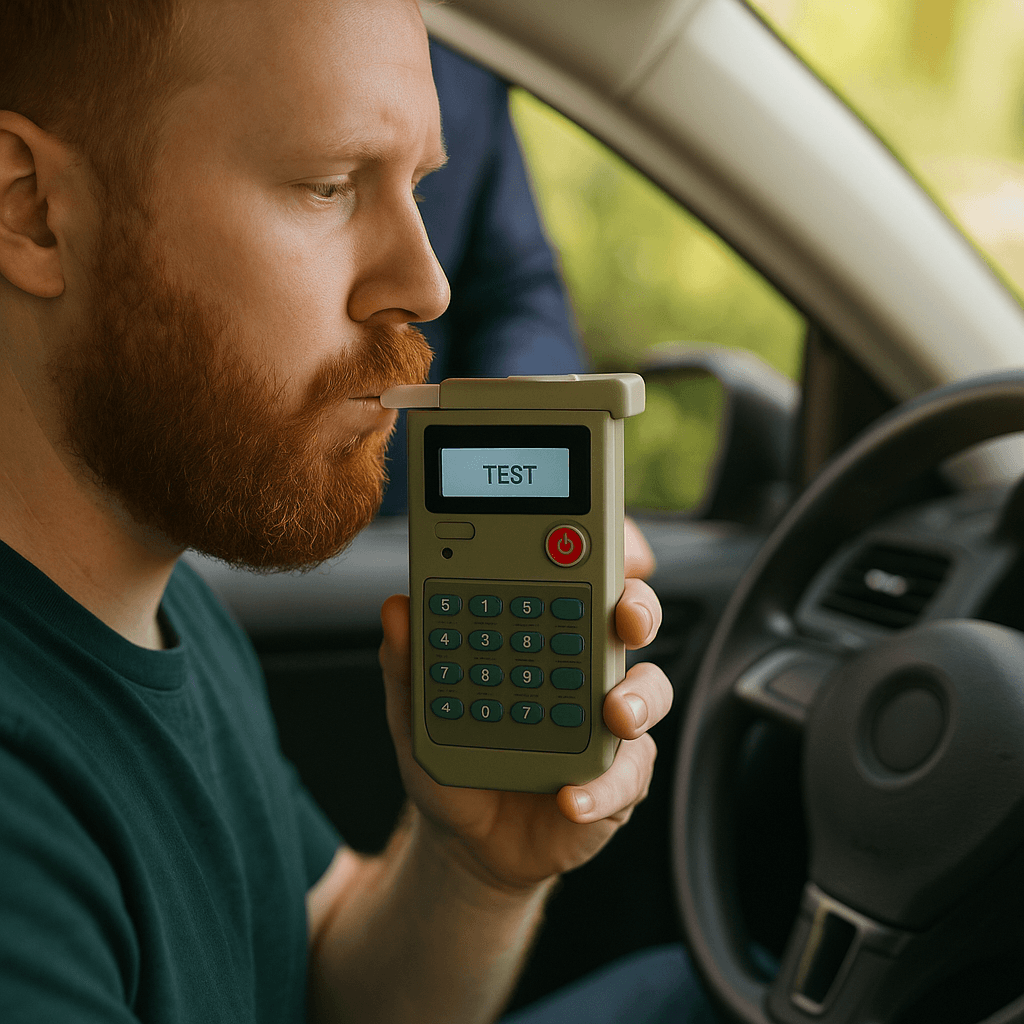
Ignition interlock is almost always required for LDP granted after a DWS conviction on top of an OVI suspension. The device must be installed in any vehicle you operate, including employer-owned vehicles if you drive for work. The interlock vendor reports all violations (failed breath tests, missed rolling retests, tampering attempts) to the court electronically. A single violation may result in immediate LDP revocation and extension of your total suspension period. After a DWS conviction, courts have zero tolerance for noncompliance. If the LDP order specifies interlock and you are caught driving a vehicle without an interlock device installed, that's a new DWS charge—and this time it's a felony.