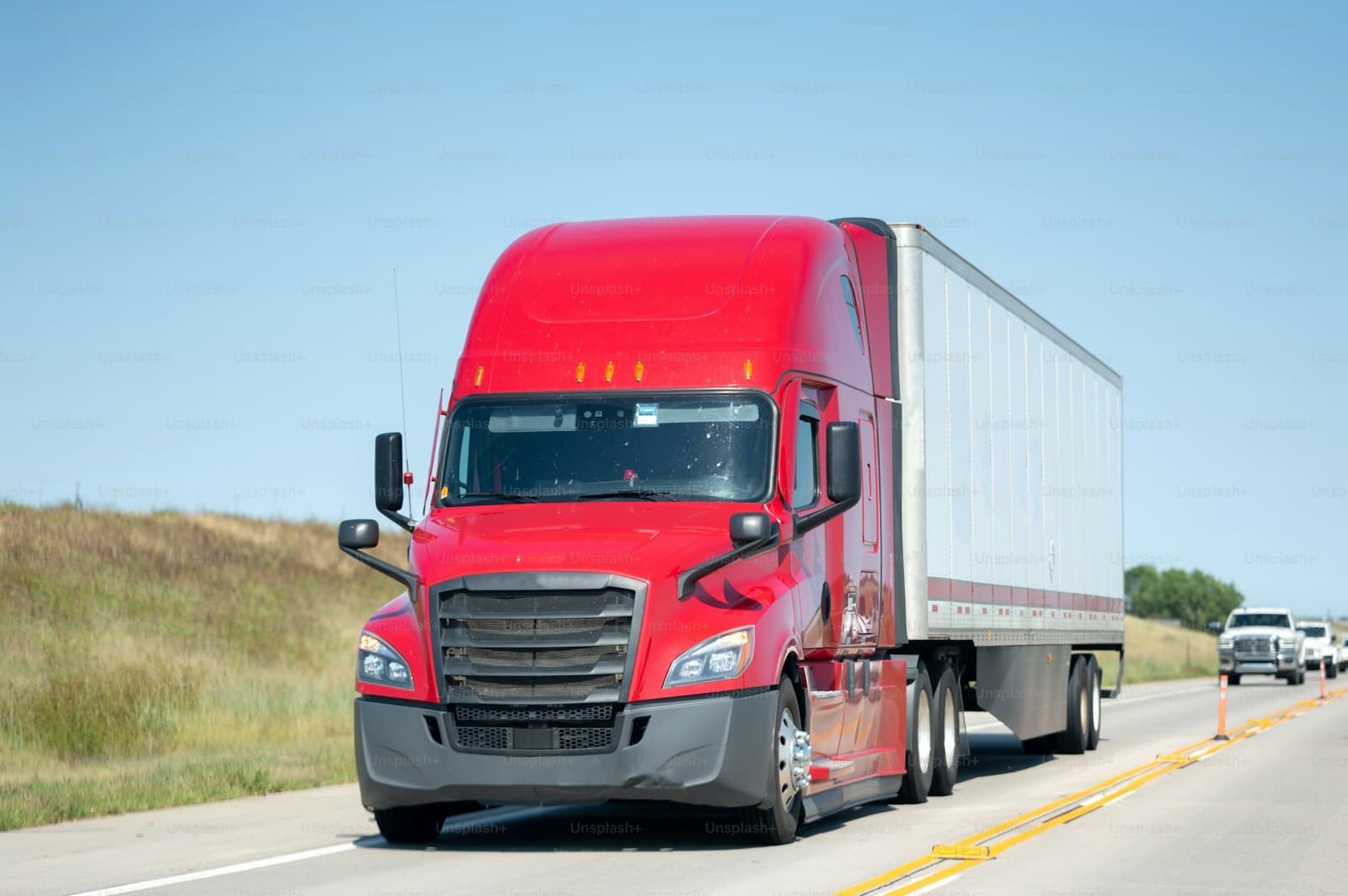
Federal Motor Carrier Safety Regulations disqualify commercial drivers from interstate operation for any DWLS conviction—regardless of whether the underlying suspension was work-related. Your CDL remains technically valid, but you cannot legally operate CMVs during the disqualification period, which stacks on top of your state license suspension.
Federal Disqualification vs State CDL Status: Why Both Apply Simultaneously
A DWLS conviction triggers two separate disqualifications for commercial drivers: your state license suspension (Class D personal driving privilege) and a federal CDL disqualification under 49 CFR 383.51. The state suspension affects your personal driving privileges. The federal disqualification prohibits you from operating commercial motor vehicles in interstate commerce, regardless of whether your state physically revokes your CDL card.
Most states do not physically confiscate your CDL card during the disqualification period. The card remains in your wallet, but the Federal Motor Carrier Safety Administration prohibits you from legally operating CMVs. Employers check the Commercial Driver's License Information System (CDLIS) before assigning loads—your disqualification appears there immediately, even if your state has not updated your physical credential.
The federal disqualification period runs concurrently with your state suspension for the DWLS conviction, but does not substitute for it. You must serve both: the state suspension for your personal driving privilege, and the federal disqualification for commercial operation. Reinstatement requires satisfying state requirements first, then waiting for FMCSA clearance to appear in CDLIS before you can legally drive CMVs again.
How Long Federal CDL Disqualification Lasts After DWLS
Federal regulations impose a minimum 60-day disqualification for a first DWLS conviction under 49 CFR 383.51(b)(7), classified as a serious traffic violation. This 60-day federal floor applies even if your state's DWLS suspension is shorter. If your state imposes a 30-day suspension for first-offense DWLS, you still cannot operate CMVs for 60 days due to the federal rule.
Second DWLS convictions within three years trigger a 120-day federal disqualification. Third convictions within three years result in a minimum 1-year disqualification. These periods stack on top of any underlying cause disqualification—if your original suspension was for a DUI (which already carries a 1-year CDL disqualification), the DWLS conviction adds its own separate disqualification period that runs consecutively, not concurrently.
State CDL sanctions may exceed federal minimums. Some states impose lifetime CDL revocation for certain DWLS scenarios involving commercial vehicle operation. The longer period controls—if your state revokes your CDL for 5 years, the federal 60-day floor becomes irrelevant because you cannot satisfy state reinstatement requirements until the 5-year period ends.
Compare car insurance rates in your state
Get quotes from licensed carriers — no obligation, no spam, results in minutes.
Get Your Free Quote✓ No Obligation Required✓ Licensed Carriers Only✓ Available Nationwide✓ Free to Compare
Why the Underlying Suspension Cause Determines Total Disqualification Length
The DWLS conviction disqualification stacks on top of the original suspension cause. If your personal license was suspended for DUI, you face a 1-year federal CDL disqualification for the DUI itself under 49 CFR 383.51(b)(2). The DWLS conviction for driving during that suspension adds a separate 60-day disqualification under 49 CFR 383.51(b)(7). These periods run consecutively in most states—your total disqualification becomes 1 year plus 60 days.
Certain underlying causes trigger permanent CDL disqualification when combined with DWLS. If your original suspension was for refusing a chemical test (1-year disqualification), and you drove commercially during that suspension, some states interpret the DWLS as evidence of unfitness and impose lifetime CDL revocation. Federal law permits states to impose sanctions more severe than federal minimums.
Non-CMV DWLS convictions still trigger federal disqualification. Even if you were caught driving your personal vehicle (not a CMV) while your Class D license was suspended, the DWLS conviction appears on your driving record and disqualifies you from operating CMVs for 60 days minimum. The federal rule does not distinguish between personal-vehicle and commercial-vehicle DWLS—both are serious traffic violations that prohibit CMV operation.
State-Specific CDL Downgrade and Revocation Policies After DWLS
States apply different CDL retention policies during DWLS suspensions. California, Texas, and Florida allow CDL holders to retain their commercial credential during the disqualification period, but stamp the record with a prohibition against CMV operation. Ohio, Pennsylvania, and Illinois automatically downgrade your license class to Class D (personal) when any suspension takes effect, requiring you to retest for the CDL endorsement after reinstatement.
Some states impose CDL-specific sanctions for non-CMV DWLS. Georgia revokes your CDL entirely if you receive a DWLS conviction, even if the underlying suspension was for unpaid personal-vehicle tickets and you never drove commercially. Arizona suspends your CDL for twice the length of your personal license suspension when DWLS is involved. Wisconsin adds a mandatory 6-month CDL disqualification on top of the federal 60-day minimum for any DWLS conviction.
Reinstatement procedures vary by whether your state downgraded or retained your CDL. If your state physically revoked your CDL, you must retake the written knowledge test and skills test after satisfying suspension requirements. If your state retained your CDL but flagged it as disqualified, reinstatement involves clearing the CDLIS prohibition—no retesting required, but employers cannot legally dispatch you until the federal system shows your disqualification has ended.
Employer Notification and the CDLIS Reporting Timeline
Your employer receives notice of your DWLS conviction through the Commercial Driver's License Information System within 10 business days of court disposition in most states. FMCSA regulations at 49 CFR 383.31 require employers to check CDLIS annually for all CMV drivers and immediately upon learning of a conviction. The conviction appears on your MVR and in CDLIS simultaneously—there is no grace period.
Most carriers terminate immediately upon learning of a DWLS conviction. Federal regulations at 49 CFR 391.15 prohibit motor carriers from allowing disqualified drivers to operate CMVs. Employers who knowingly allow disqualified drivers to operate face fines up to $16,000 per violation and potential loss of operating authority. Even if you are willing to work in a non-driving role, most carriers terminate employment to avoid liability exposure.
Some states allow employers to petition for restricted CDL operation during disqualification in limited circumstances. Minnesota and North Dakota permit intrastate-only restricted CDL privileges for drivers whose livelihood depends on commercial operation, but only if the underlying suspension cause was not alcohol- or drug-related. These programs do not override the federal disqualification—you can operate only within state borders under state law, but FMCSA still prohibits interstate operation.
Reinstatement Process: State Clearance Does Not Equal Federal Clearance
You must complete state license reinstatement before applying for federal CDL clearance. State reinstatement involves paying the DWLS fine, serving the full suspension period for both the original cause and the DWLS conviction, and filing SR-22 proof of financial responsibility (required for DWLS in nearly all states regardless of the original suspension cause). Only after your state issues a valid Class D license can you address the federal CDL disqualification.
Federal clearance requires proof of state reinstatement and a clean CDLIS record. FMCSA does not issue reinstatement letters. Your disqualification ends automatically when the period expires, but the prohibition flag in CDLIS must clear before employers can legally dispatch you. Most states update CDLIS within 5 business days of reinstating your driving privilege, but some take 30 days or longer.
SR-22 filing duration typically extends for 3 years after DWLS reinstatement. California, Texas, and Florida require continuous SR-22 coverage for 3 years from the date you satisfy the suspension, not from the date of conviction. If your SR-22 lapses at any point during the 3-year period, your state suspends your license again, triggering a new federal CDL disqualification. High-risk insurers that specialize in CDL driver coverage typically charge $180–$280 per month for SR-22 policies after DWLS, significantly higher than the $90–$150/month range for standard DWLS filers without commercial credentials.
How DWLS Affects CDL Reinstatement Costs and Insurance
CDL reinstatement after DWLS costs significantly more than personal license reinstatement. Most states charge a base reinstatement fee for the original suspension cause ($100–$500), a separate DWLS reinstatement fee ($200–$1,000), and a CDL reissuance fee ($50–$100) if your state downgraded or revoked your commercial credential. Texas, for example, charges $125 for DUI reinstatement, $100 for DWLS reinstatement, and $61 for CDL reissuance—total $286 before SR-22 filing fees.
Insurance carriers treat DWLS as a more severe underwriting flag than the underlying suspension cause. A CDL holder with a single DUI conviction typically sees premiums increase 80–120%. The same driver with a DUI plus DWLS conviction faces premium increases of 150–250% because the DWLS signals disregard for legal restrictions. Most standard carriers decline to write policies for CDL holders with DWLS convictions, forcing drivers into the non-standard high-risk market.
Some insurers exclude commercial vehicle coverage entirely after DWLS. Even if you regain your CDL, your personal auto policy may carry an exclusion stating the insurer will not cover any loss while you are operating a vehicle for hire or commercial purposes. This exclusion can remain in effect for 3–5 years after reinstatement, requiring you to secure separate commercial liability coverage through a specialty carrier at significantly higher premiums.