New York's Aggravated Unlicensed Operation charge converts your existing suspension into a criminal conviction that closes or delays access to a Restricted Use License. The AUO tier determines whether hardship driving remains possible.
How AUO Conviction Changes Your Path to Restricted Driving in New York
You were caught driving with a suspended license in New York. The officer issued you a citation for Aggravated Unlicensed Operation under VTL §511. Now you face a criminal charge on top of your existing suspension, and the Restricted Use License you were planning to apply for is suddenly harder to obtain.
New York classifies AUO into three tiers: third degree (misdemeanor, one prior suspension point on record or current suspension), second degree (misdemeanor, three or more suspensions within 18 months or one suspension for DWI-related cause), and first degree (felony, 10+ suspensions or driving while intoxicated with a suspended license). Your tier determines whether the DMV and judges will consider you eligible for a Restricted Use License during the new stacked suspension period.
The AUO conviction adds a mandatory suspension period on top of your original cause. Third-degree AUO does not carry a mandatory additional suspension, but judges often impose discretionary suspension as part of sentencing. Second-degree AUO triggers a minimum additional suspension. First-degree AUO carries up to four years of additional revocation. These periods stack with your original suspension cause. If you were suspended for 90 days for insurance lapse and convicted of second-degree AUO, you now serve the original 90 days plus the AUO-triggered period before reinstatement eligibility opens.
Why NY DMV Treats AUO as Disqualifying Evidence for Restricted Use License
New York DMV has broad administrative discretion in granting or denying Restricted Use License applications. The agency does not publish mechanical eligibility criteria. Instead, DMV weighs prior conduct, number of prior suspensions, and evidence of compliance with original suspension terms.
An AUO conviction signals to DMV that you violated the terms of your suspension. You drove when legally prohibited from driving. This creates a compliance record problem that did not exist before the AUO charge. Judges and DMV hearing officers view this as evidence you cannot be trusted to honor the route and time restrictions a RUL imposes.
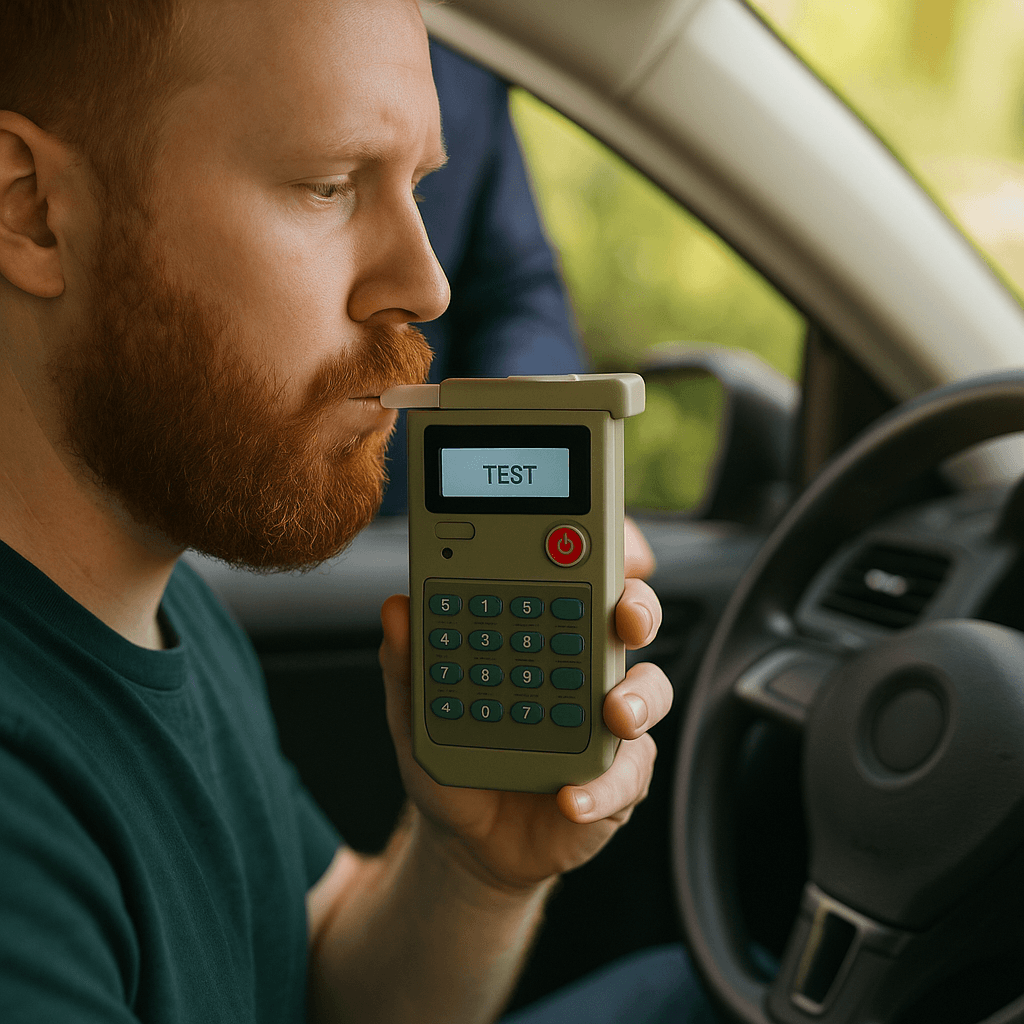
For DWI-related suspensions combined with AUO, the pathway becomes especially narrow. Leandra's Law (VTL §1198) mandates ignition interlock installation for all DWI convictions, including as a condition of any Restricted Use License during the interlock period. Judges routinely deny RUL petitions when the applicant has an AUO conviction during a DWI suspension, reasoning that someone who drove while suspended will drive outside RUL restrictions. Multiple DWI offenses combined with AUO often result in extended hard revocation periods with no conditional or restricted driving available for years.
Compare car insurance rates in your state
Get quotes from licensed carriers — no obligation, no spam, results in minutes.
Get Your Free Quote✓ No Obligation Required✓ Licensed Carriers Only✓ Available Nationwide✓ Free to Compare
The Three-Phase Timeline After AUO Conviction
Resolve the AUO criminal charge first. You will likely need defense counsel, especially for second-degree or first-degree AUO. The criminal conviction determines the additional suspension period and creates the compliance record DMV will review when you later apply for a Restricted Use License. Conviction outcomes vary: some result in plea bargains to lesser charges, some in conditional discharge with no additional suspension, most in a guilty finding with stacked suspension and fines.
Serve the stacked suspension period. Your original suspension cause (DUI, insurance lapse, unpaid fines, FTA, points) imposed an initial period. The AUO conviction adds time on top. Until both periods are satisfied or you reach the point where restricted driving applications are accepted, you cannot legally drive at all. New York does not offer early application windows for RUL during a stacked AUO suspension in most cases. The hard period must elapse.
Apply for the Restricted Use License after the hard suspension window. You will need Application form MV-500 series, proof of employment or necessity for driving, proof of insurance verified directly by DMV through the Insurance Information and Enforcement System, and suspension clearance or eligibility confirmation from DMV. The application fee is $25, though this figure should be verified against the current NY DMV fee schedule. If your suspension was DWI-related, you must also complete the NY Impaired Driver Program and install an ignition interlock device before RUL eligibility opens. NY DMV does not publish standard processing times for RUL applications. Actual turnaround varies significantly by regional DMV office and case complexity.
Why Insurance Carriers Flag AUO More Heavily Than Original Suspension Cause
Underwriters treat AUO conviction as a separate and heavier risk flag than the suspension cause that preceded it. You now carry two marks on your motor vehicle record: the original trigger (DUI, lapse, points) and the AUO conviction itself. Both appear in carrier underwriting queries and both increase premium.
AUO signals to the carrier that you drove illegally while aware of the suspension. This is a different risk profile than a driver who was suspended but complied with the suspension terms. Non-standard and high-risk carriers price AUO separately from the underlying cause. Expect premium increases in the range of $190 to $280 per month for liability-only coverage after AUO conviction, depending on your original suspension cause and county. Estimates based on available industry data; individual rates vary by driving history, vehicle, coverage selections, and location.
New York does not use SR-22 filings. Insurance verification for financial responsibility and reinstatement is handled entirely through direct DMV-to-carrier electronic verification via the Insurance Information and Enforcement System. When you apply for reinstatement after serving your stacked suspension, the DMV verifies your coverage directly with the carrier. No SR-22 form is used. You must maintain continuous coverage for the entire post-reinstatement monitoring period, typically three years after AUO conviction. A lapse during this period triggers automatic suspension notices under VTL §319.
The Documentation Burden for RUL After AUO Conviction
Judges and DMV hearing officers require proof you will comply with RUL restrictions this time. The application burden is heavier after AUO than it would have been if you had applied before the AUO charge. You need employer affidavit on company letterhead confirming work schedule and address, court order from the sentencing judge if applicable, proof of Impaired Driver Program enrollment or completion if your suspension was DWI-related, ignition interlock installation receipt if required, and proof of insurance verified through IIES.
Route documentation must be specific. List exact addresses for work, school, medical appointments, and any other approved purpose. Include estimated travel times and frequencies. Vague route descriptions are grounds for denial. New York restricts RUL driving to specific purposes defined by DMV: travel to and from work, school, medical appointments, and other court or DMV-approved essential activities. General-purpose driving is not permitted under a RUL. Violations of route or time restrictions result in automatic revocation without warning.
If your RUL application is denied, you receive a written explanation. Common denial reasons after AUO conviction: insufficient necessity documentation, evidence of non-compliance during the suspension period, unresolved fines or fees from the original suspension or the AUO conviction, inadequate proof of insurance, multiple prior suspensions or revocations on record. You may reapply, but each application carries the $25 fee and processing delays. Most drivers with AUO convictions who are eventually granted RULs had to apply twice.
Cost Stack: Criminal Defense, Fines, Extended Coverage, and Reinstatement
AUO conviction costs more than the original suspension alone. Criminal defense counsel for second-degree AUO typically costs $1,500 to $3,500, depending on county and case complexity. First-degree AUO defense costs significantly more because it is a felony charge. Court fines for AUO conviction range from $200 to $500 for third-degree, $500 to $1,000 for second-degree, and $1,000 to $5,000 for first-degree, plus mandatory surcharges.
The base reinstatement fee in New York is $50, but AUO conviction does not increase this fee directly. However, if your original suspension was for insurance lapse, you also owe civil penalties under VTL §319: $750 for a first lapse up to 90 days, $1,500 for a second lapse within 36 months, plus the $50 suspension termination fee. These are separate from the AUO fines. If unpaid fines or fees from the original suspension remain, those must be cleared before reinstatement eligibility opens.
Insurance premium increase is the largest long-term cost. AUO conviction extends your elevated-premium period by two to three years compared to a driver who served the original suspension without an AUO charge. Monthly premiums for liability-only coverage in New York after AUO conviction typically range from $190 to $280 per month. Over the three-year post-reinstatement monitoring period, total insurance cost is approximately $6,840 to $10,080. This is on top of the criminal fines, counsel fees, reinstatement fees, and any IID costs if your suspension was DWI-related.