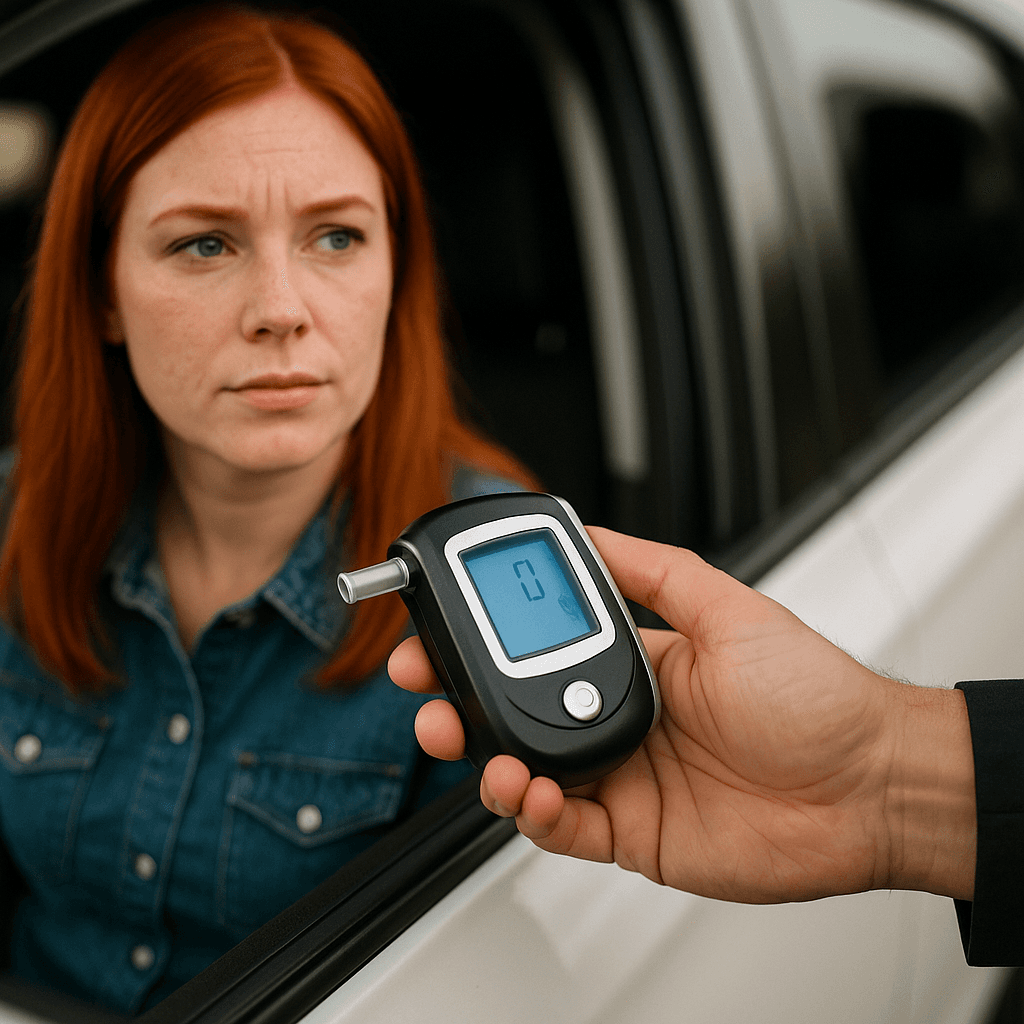
Most states allow first-offense DWLS defendants to plead to lesser charges like Exhibition of License or No Valid License, but procedural windows close fast and availability depends heavily on original suspension cause and whether you drove during a hard-suspension period.
Why Plea-to-Lesser Matters for DWLS Charges
A plea to a lesser charge converts your Driving While License Suspended charge into a non-moving violation or reduced misdemeanor that carries lighter penalties and avoids the insurance underwriting flag that makes DWLS so expensive. Most states offer Exhibition of License, No Valid License, or Failure to Display as plea options for first-offense DWLS defendants with no accident involved and no suspension for DUI.
The prosecutorial calculus centers on original suspension cause. If your license was suspended for unpaid tickets or points accumulation, prosecutors typically offer plea-to-lesser. If your license was suspended for DUI, refusal, or reckless driving, most district attorneys' offices classify your DWLS as aggravated by policy and refuse reduction. Knowing this before your arraignment shapes whether you hire counsel or handle it pro se.
Plea-to-lesser outcomes also change SR-22 filing duration. A DWLS conviction triggers 2-3 years of SR-22 in most states. A plea to Exhibition of License or Failure to Display often eliminates the SR-22 requirement entirely, saving approximately $1,200-$2,400 over the filing period depending on state.
Which States Allow Plea-to-Lesser for First-Offense DWLS
Texas, Florida, Georgia, North Carolina, Illinois, Ohio, Michigan, Indiana, Wisconsin, Missouri, Oklahoma, Tennessee, and Arizona routinely allow first-offense DWLS defendants to plead to Exhibition of License or No Valid License when the original suspension was for non-DUI causes. Prosecutors in these states treat DWLS as a procedural violation rather than a public-safety threat when no accident occurred and the suspension wasn't alcohol-related.
California Vehicle Code allows reduction to No Valid Operator's License (VC 12500) for first-offense DWLS under VC 14601.1(a) when the original suspension was for failure to appear or unpaid fines. Colorado, Oregon, and Washington prosecutors offer Failure to Display in DWLS cases where the defendant produces proof they've since reinstated their license before the court date. New York and Pennsylvania allow conditional reduction when the defendant enrolls in a state-approved reinstatement program before plea negotiation.
States that rarely or never allow plea-to-lesser for DWLS: Virginia, New Jersey, Massachusetts, Maryland, Connecticut, and Rhode Island. These jurisdictions classify DWLS as a strict-liability offense and prosecute all tiers as charged. If you're facing DWLS in these states, expect no reduction offer at arraignment unless you retained counsel who negotiated pre-filing.
Compare car insurance rates in your state
Get quotes from licensed carriers — no obligation, no spam, results in minutes.
Get Your Free Quote✓ No Obligation Required✓ Licensed Carriers Only✓ Available Nationwide✓ Free to Compare
How Original Suspension Cause Controls Plea Eligibility
Prosecutors tier DWLS cases by what triggered your original suspension. Three tiers control nearly all plea-to-lesser outcomes: non-safety suspensions (unpaid fines, failure to appear, child support), points-based suspensions, and alcohol/drug-related suspensions.
Non-safety suspensions produce the highest plea-to-lesser approval rate. If your license was suspended for unpaid tickets, failure to appear in court, or child support arrears, most prosecutors view the DWLS as administrative rather than criminal and offer Exhibition of License or No Valid License as plea options. You'll typically pay a fine between $200-$500, serve no jail time, and avoid the SR-22 filing requirement. The conviction shows on your criminal record but not your driving record in most states.
Points-based suspensions occupy the middle tier. If your license was suspended for accumulating too many points through moving violations, prosecutors sometimes offer plea-to-lesser and sometimes refuse depending on how recent the underlying violations were and whether any involved accidents. Expect the prosecutor to check your full driving abstract before making an offer. If your points came from speeding tickets more than a year old, you'll likely get a reduction offer. If your points came from recent reckless driving or hit-and-run, expect no offer.
Alcohol and drug-related suspensions close the plea-to-lesser window entirely in most states. If your license was suspended for DUI, refusal to submit to chemical testing, or drug-offense conviction, district attorneys' offices classify your DWLS as aggravated DWLS by policy. No plea reduction will be offered at arraignment. Defendants facing aggravated DWLS should hire defense counsel immediately because the charge carries mandatory minimum jail time in Florida, Georgia, Virginia, Arizona, and several other states.
Hard-Suspension Period vs Post-Eligibility DWLS
Most states distinguish between driving during a hard-suspension period (when no hardship or restricted license is available) and driving after you became eligible to apply for hardship driving but didn't. The distinction changes plea-to-lesser availability dramatically.
Hard-suspension periods are the first 30, 60, or 90 days after a DUI or refusal suspension during which state law prohibits any driving whatsoever, including for work or medical purposes. If you were caught driving during this window, prosecutors classify your DWLS as willful disregard and refuse reduction. Ohio, Michigan, Indiana, and Wisconsin specifically bar plea-to-lesser for DWLS during hard suspension by statute. Courts in these states must sentence DWLS-during-hard-suspension as a minimum Class A misdemeanor with 3-10 days mandatory jail.
Post-eligibility DWLS occurs when you drove after the hard-suspension period ended but before you applied for or obtained a hardship license. This is still DWLS, but prosecutors view it as procedural non-compliance rather than safety disregard. If you can show at arraignment that you've since applied for hardship driving privileges and paid your reinstatement fees, most prosecutors offer plea-to-lesser to Exhibition of License with time-served or fine-only sentencing. The court interprets your post-arrest reinstatement effort as proof you weren't intentionally evading the suspension system.
The timing window matters more than most defendants realize. If you were arrested for DWLS 35 days into a DUI suspension with a 30-day hard period, bring documentation of the suspension start date and hard-period end date to your arraignment. This single timeline proof converts your case from willful-disregard tier to procedural-violation tier in prosecutor evaluation.
What Happens to Your Insurance After Plea-to-Lesser
A plea to Exhibition of License or No Valid License eliminates the DWLS conviction from your driving record in most states, but it still appears on your criminal record. Insurance underwriters pull both. Whether your premium increases depends on how your carrier classifies the reduced charge.
Carriers treat Exhibition of License as a non-moving violation. This means it doesn't add points to your insurance record and doesn't trigger the same underwriting surcharge that a DWLS conviction would. You'll still see a rate increase because the carrier knows you were driving on a suspended license, but the increase is typically 20-30% rather than 80-150% over three years. Non-standard carriers like Bristol West, Acceptance, and The General classify Exhibition of License the same way they classify Failure to Display: a compliance issue, not a risk-behavior flag.
SR-22 filing requirements depend entirely on your original suspension cause, not the DWLS charge or its plea-reduced version. If your original suspension required SR-22 (DUI, uninsured motorist violation, reckless driving in most states), you still must file SR-22 to reinstate. The plea reduction doesn't erase the original filing requirement. If your original suspension did not require SR-22 (unpaid fines, failure to appear, child support), the plea to Exhibition of License means you won't trigger a new SR-22 requirement from the DWLS case itself. Verify with your state DMV before assuming you're clear.
Some carriers non-renew policies automatically after any suspended-license-related charge regardless of plea outcome. If you're with a standard carrier like State Farm, Allstate, or Nationwide when the DWLS arrest occurs, expect a non-renewal notice at your next policy term even if you pled to Exhibition of License. Standard carriers classify any suspended-license event as grounds for non-renewal under their underwriting guidelines. You'll need to move to a non-standard carrier that specializes in post-violation coverage to maintain continuous insurance during your reinstatement process.
When Prosecutors Refuse Reduction and What To Do
Prosecutors refuse plea-to-lesser in three scenarios: your DWLS occurred during a hard-suspension period, your original suspension was for DUI or refusal, or you have prior DWLS convictions on record. If any of these apply, expect the prosecutor to proceed with the DWLS charge as filed.
When reduction is refused, most defense attorneys pursue a deferred adjudication or pretrial diversion agreement instead. Deferred adjudication allows you to plead guilty or no contest with sentencing delayed for 6-12 months while you complete probation conditions: reinstate your license, pay fines, complete any required alcohol or drug counseling, and avoid new arrests. If you successfully complete the probationary term, the court dismisses the DWLS charge and it doesn't appear as a conviction on your record. Texas, Georgia, North Carolina, Tennessee, and Florida courts routinely offer deferred adjudication for first-offense DWLS when plea-to-lesser isn't available.
Pretrial diversion programs work similarly but occur before any plea is entered. The prosecutor agrees to hold your case in abeyance for 6-12 months while you complete reinstatement and pay program fees (typically $300-$600). If you complete the program, the prosecutor dismisses the charge entirely and you avoid both conviction and criminal record entry. Illinois, Michigan, Ohio, and Indiana offer pretrial diversion for first-offense DWLS defendants with no prior criminal history. Eligibility windows close fast—most programs require enrollment within 30 days of arraignment.
If your case doesn't qualify for deferred adjudication or pretrial diversion, hire defense counsel to negotiate sentencing recommendations. Even when the DWLS charge proceeds as filed, experienced counsel can often negotiate a recommendation for probation-only sentencing instead of jail, especially for first-offense defendants who've already reinstated their license by the time of sentencing. Courts interpret pre-sentencing reinstatement as mitigating evidence of rehabilitation.
State-by-State Plea Reduction Rules for Common Jurisdictions
Florida allows reduction to No Valid Driver License for first-offense DWLS when the original suspension was for failure to pay traffic fines or child support. Prosecutors in Miami-Dade, Broward, Orange, and Hillsborough counties offer this plea routinely at arraignment. Florida does not allow reduction for DWLS when the original suspension was for DUI—this is charged as DWLS with Knowledge under Florida Statutes 322.34(2) and carries mandatory 10-day jail minimum on first offense.
Texas prosecutors reduce first-offense DWLS to Exhibition of License in approximately 70% of cases where no accident occurred and the original suspension wasn't DUI-related. Travis, Harris, Dallas, Bexar, and Tarrant county courts treat Exhibition of License as a Class C misdemeanor with fine-only sentencing between $200-$500. If your DWLS occurred during a DUI hard-suspension period, Texas prosecutors charge it as a separate Class B misdemeanor and refuse reduction.
Georgia allows plea to No License on Person for first-offense DWLS under OCGA 40-5-121 when the defendant produces proof of valid license at the time of the stop (license was suspended without their knowledge due to administrative error). This is a narrow window but extremely valuable—No License on Person is a non-criminal traffic citation with $25 fine. Fulton, DeKalb, Cobb, and Gwinnett county courts use this reduction when DMV records show the suspension notice was mailed to an outdated address.
California Vehicle Code 12500 (No Valid Operator's License) is the standard plea reduction for VC 14601.1(a) DWLS when the original suspension was for failure to appear or unpaid fines. Los Angeles, Orange, San Diego, and Riverside county prosecutors offer VC 12500 plea at arraignment. The conviction doesn't add points to your driving record and doesn't trigger SR-22 filing requirement. California does not allow reduction for VC 14601.2 (DWLS for DUI) or VC 14601.5 (habitual traffic offender).