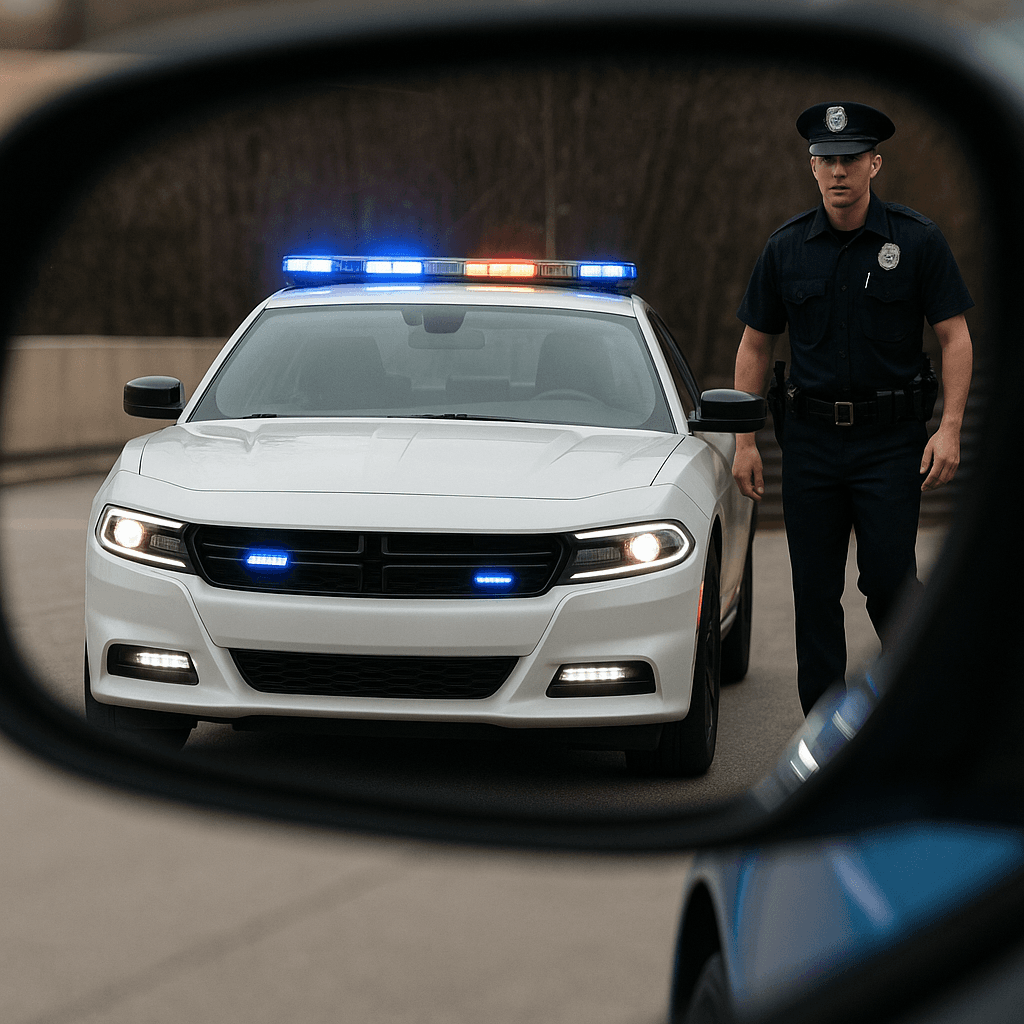
Most states require driver-improvement courses after license reinstatement, not before. If you completed one before your DWLS conviction hoping to shorten your suspension, it won't count toward your reinstatement requirement in 38 states.
When Driver-Improvement Courses Actually Count After a DWLS Conviction
Driver-improvement programs completed before your DWLS conviction typically receive zero credit toward reinstatement in most states. The course must be completed after the suspension period ends and after all reinstatement fees are paid. Thirty-eight states require proof of course completion as a mandatory reinstatement condition for DWLS convictions, but only courses completed within 90 days before your reinstatement application submission date qualify for credit.
The timing trap catches drivers in three scenarios. First, drivers who completed a defensive driving course to reduce points before the DWLS charge discover the course doesn't satisfy the post-conviction requirement. Second, drivers who complete a course during their suspension period find the certificate rejected because reinstatement fees weren't paid yet. Third, drivers who complete the course more than 90 days before applying for reinstatement must retake it because the certificate expired.
California, Florida, Texas, and Ohio explicitly state in their administrative codes that driver-improvement credit resets to zero after a DWLS conviction. The original suspension cause and any prior remedial actions are treated as separate events. Your reinstatement pathway starts from the DWLS conviction date, not the original suspension date.
State-by-State Program Availability and Requirements After DWLS
Seventeen states mandate DMV-administered driver-improvement courses after DWLS convictions: California, Florida, Texas, Ohio, Illinois, Michigan, North Carolina, Georgia, Virginia, Pennsylvania, Tennessee, Indiana, Wisconsin, Missouri, Alabama, Louisiana, and South Carolina. These programs run 4 to 12 hours depending on state and typically cost $50 to $150. You cannot substitute a private defensive driving course for the DMV program in these states.
Twenty-one states allow private provider courses approved by the state DMV or Department of Public Safety: Arizona, Colorado, Oregon, Washington, Nevada, New Mexico, Kansas, Oklahoma, Arkansas, Mississippi, Kentucky, West Virginia, Maryland, New Jersey, Connecticut, Massachusetts, Iowa, Nebraska, Montana, Idaho, and Utah. Course fees range from $25 to $100. You must verify the provider appears on your state's approved list before enrolling or the certificate won't be accepted.
Twelve states offer online driver-improvement options that satisfy DWLS reinstatement requirements: Florida, Texas, California, Arizona, Nevada, Indiana, Virginia, North Carolina, Tennessee, Missouri, Oklahoma, and Oregon. Online courses must be completed in one sitting in Texas and Oklahoma. Florida and California allow multi-session completion over 30 days. Verify your state accepts online completion before paying.
Five states require in-person classroom attendance regardless of DWLS circumstances: Illinois, Michigan, Ohio, Pennsylvania, and Wisconsin. These states cite the compound-offense nature of DWLS as justification for mandatory instructor interaction. Remote attendance was permitted during 2020-2022 pandemic periods but has since been discontinued.
Compare car insurance rates in your state
Get quotes from licensed carriers — no obligation, no spam, results in minutes.
Get Your Free Quote✓ No Obligation Required✓ Licensed Carriers Only✓ Available Nationwide✓ Free to Compare
How DWLS Affects Course Content and Difficulty Compared to Standard Programs
Standard driver-improvement courses cover traffic law review, collision prevention, and defensive driving techniques. DWLS-specific programs add three mandatory modules not present in basic courses: understanding suspension consequences, license status verification requirements, and insurance compliance obligations. The DWLS curriculum runs 2 to 4 hours longer than standard courses in states that differentiate.
Florida's DWLS-track Advanced Driver Improvement course requires 12 hours versus 4 hours for the basic course. Texas DPS adds a 3-hour suspension-consequences module to the standard 6-hour Driving Safety Course for DWLS reinstaters. Ohio BMV requires DWLS drivers to complete both the standard Remedial Driving Instruction course and a separate 4-hour License Suspension Impact seminar.
Course failure rates are higher for DWLS-track programs. Florida ADI has a 22% first-attempt failure rate compared to 8% for basic ADI. The final exam requires 80% minimum in most states, up from 70% for standard courses. You can retake the exam once without repeating the full course in most states. A second failure requires re-enrollment and paying the full course fee again.
Cost Breakdown: Course Fees, Certificates, and Processing Charges
DMV-administered courses charge $50 to $150 for tuition. Florida charges $75 for the 12-hour ADI course. Texas charges $25 for the 6-hour DSC plus $20 for certificate processing. California charges $50 for the 8-hour Traffic Violator School plus $15 DMV processing. Ohio charges $150 for the combined RDI and suspension seminar.
Private provider courses cost $25 to $100 depending on state approval requirements and delivery format. Online courses typically cost $10 to $20 less than in-person versions. Oregon-approved providers charge $40 to $65 for online completion. Arizona-approved providers charge $30 to $50. Some providers charge separate certificate printing fees of $10 to $15.
Certificate delivery timing affects reinstatement speed. Electronic certificates submitted directly to DMV by the course provider arrive within 3 to 5 business days in most states. Paper certificates mailed to you for manual submission take 10 to 14 days. If you need faster processing, ask the provider if expedited electronic submission is available for an additional $15 to $25 fee.
Why Some States Don't Require Driver-Improvement After DWLS
Twelve states do not mandate driver-improvement courses for DWLS reinstatement: Alaska, Hawaii, Maine, New Hampshire, Vermont, Rhode Island, Delaware, Wyoming, North Dakota, South Dakota, Minnesota, and New Mexico. These states either treat DWLS as purely a legal compliance failure rather than a skill deficiency, or they require extended hard-suspension periods instead of remedial education.
Alaska and Hawaii impose 90-day minimum hard suspensions for first-offense DWLS with no hardship or occupational license available during that period. The states consider the suspension itself sufficient deterrent. Vermont and New Hampshire add 30 to 60 days to the underlying suspension period but don't require course completion. Rhode Island requires proof of insurance and payment of reinstatement fees but no driver education.
Wyoming and the Dakotas require attendance at a DMV administrative hearing after DWLS conviction. The hearing officer determines whether additional education is warranted based on your driving record and the circumstances of the DWLS stop. If ordered, you complete a standard 6-hour defensive driving course, not a DWLS-specific program.
How to Verify Your State's Specific Requirements and Avoid Rejection
Check your state DMV or DPS website under reinstatement requirements, not under driver improvement generally. The reinstatement section lists DWLS-specific conditions. Thirty-one states publish separate DWLS reinstatement checklists that differ from standard suspension reinstatement guides. Search for "[state] DWLS reinstatement requirements" or "driving while suspended reinstatement" on your state agency site.
Call your state's driver license reinstatement unit directly and reference your DWLS conviction date and case number. Ask three questions: whether driver improvement is required for your offense tier, which course providers or programs satisfy the requirement, and what certificate delivery method the agency accepts. Write down the representative's name and the date you called. If your certificate is later rejected, this documentation helps appeal the decision.
Do not enroll in any course until you verify it appears on your state's approved provider list. California maintains an updated Traffic Violator School list at dmv.ca.gov. Texas maintains a DSC provider directory at tdlr.texas.gov. Florida publishes approved ADI providers monthly. Unapproved courses will not issue certificates your DMV accepts, and you'll forfeit the course fee.
Insurance Implications: How Course Completion Affects SR-22 Filing and Premiums
Completing a driver-improvement course does not reduce your SR-22 filing period after a DWLS conviction. The filing duration is set by statute based on the offense. Most states require 3 years of continuous SR-22 filing after DWLS reinstatement. Course completion satisfies reinstatement conditions but does not shorten the filing window.
Some carriers offer premium reductions of 5% to 10% after driver-improvement course completion, but the reduction applies only after your first policy renewal following reinstatement. The discount is smaller for DWLS drivers than for clean-record drivers taking the same course. Progressive and State Farm apply a maximum 5% discount for DWLS reinstaters who complete approved courses. GEICO does not offer course-completion discounts for drivers with DWLS convictions on record.
SR-22 insurance after DWLS conviction remains significantly more expensive than standard SR-22 filings. Average monthly premiums range from $180 to $290 depending on your state and the original suspension cause. The driver-improvement course certificate may help during underwriting review but won't offset the DWLS surcharge most carriers apply for the first two years.