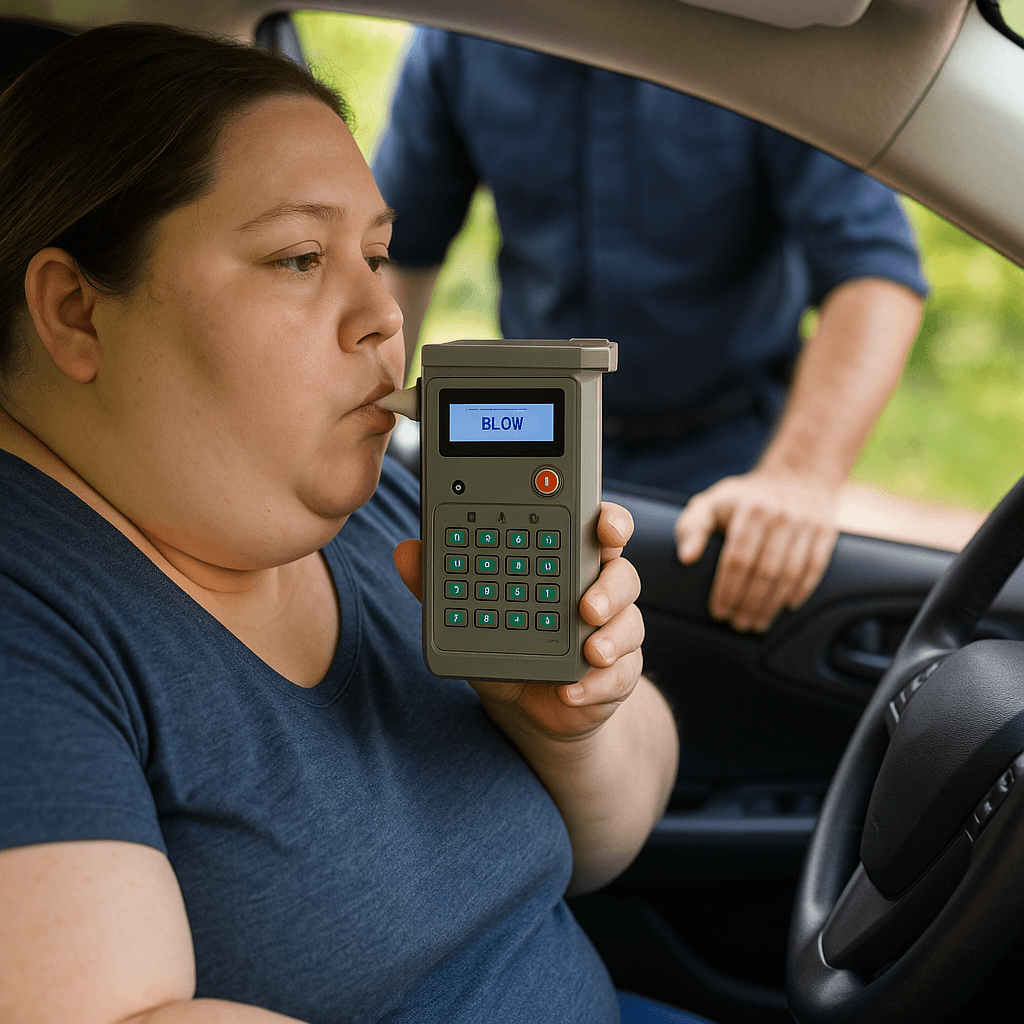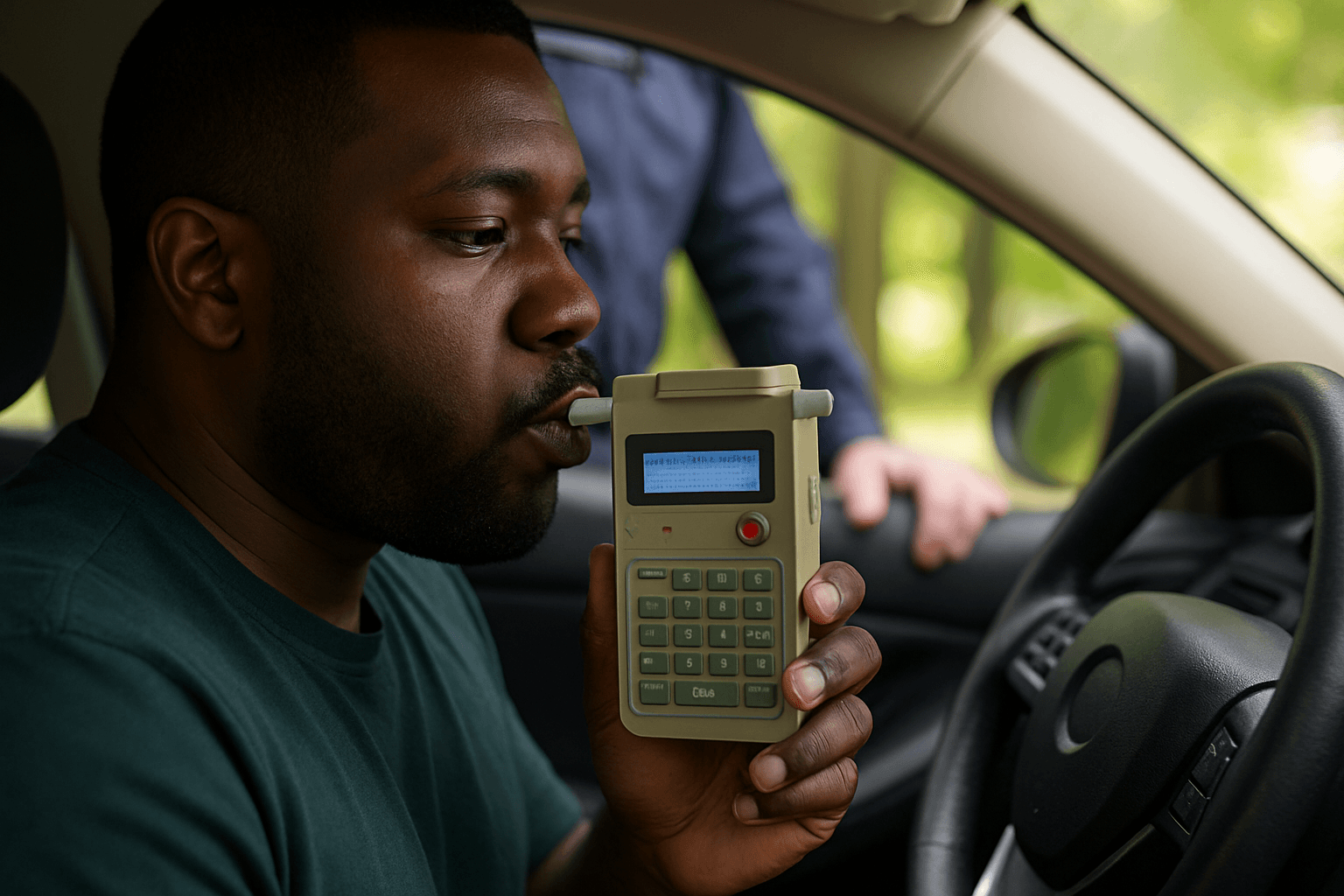
Michigan charges DWLS under MCL 257.904 as a misdemeanor with up to 93 days jail for first offense, felony with priors. Your original suspension period extends, SR-22 filing is now mandatory for 3 years, and hardship eligibility narrows.
What MCL 257.904 Actually Charges When You're Caught Driving Suspended
Michigan prosecutes driving on a suspended license under MCL 257.904, which makes it a misdemeanor to operate a vehicle when you know or should know your license is suspended, revoked, or denied. First offense carries up to 93 days in jail, a fine up to $500, or both. The statute doesn't distinguish between suspension types for charging purposes—whether your license was suspended for unpaid tickets, points accumulation, OWI conviction, or insurance lapse, the DWLS charge itself follows the same criminal framework.
The knowledge element matters for prosecution. If you received formal notice from the Secretary of State (Michigan's licensing authority, not a DMV) that your license was suspended, prosecutors can prove knowledge through certified mail receipts or SOS records showing the suspension notice was sent to your address of record. Courts generally presume knowledge if the suspension letter was mailed to the address on file, even if you claim you never saw it.
Michigan does elevate DWLS to a felony under specific circumstances: if you have two or more prior DWLS convictions within 7 years, or if the current DWLS occurred while your license was revoked (not merely suspended) for certain serious offenses including OWI, vehicular manslaughter, or fleeing and eluding. Felony DWLS under §257.904(3)(b) carries up to 2 years in prison and a fine up to $1,000. This felony threshold applies regardless of whether the underlying violation that caused the original revocation was itself a misdemeanor or felony.
How Michigan's Secretary of State Extends Your Suspension After DWLS
The SOS treats a DWLS conviction as a separate administrative violation that extends your existing suspension period. Michigan uses a concurrent extension model for most DWLS cases: the additional suspension time runs alongside your criminal sentence, not after it ends. For example, if you had 90 days remaining on an insurance-lapse suspension and you're convicted of DWLS with 60 days of probation, the SOS typically adds 90-180 days to your suspension period starting from the date of the DWLS conviction. This added time runs concurrently with your probation, so you're not waiting until probation ends to start counting the extension.
The extension duration varies by the original suspension cause and whether the DWLS is your first or a repeat offense. First-time DWLS after a non-alcohol administrative suspension (points, unpaid fines, insurance lapse) typically adds 90-180 days. DWLS while suspended for OWI adds significantly more time and triggers automatic referral to DAAD (Driver Assessment and Appeal Division) for a hearing before any restricted license can be considered. Repeat DWLS within 7 years compounds these periods.
You cannot reinstate until both the original suspension period and the DWLS extension are fully served. The reinstatement fee—Michigan's base fee is $125 for administrative suspensions—must be paid at the end of the combined period, not midway through. If your original suspension required SR-22 filing and you let it lapse, the DWLS conviction resets the 3-year SR-22 clock from the date of reinstatement, not from the original suspension date.
Compare car insurance rates in your state
Get quotes from licensed carriers — no obligation, no spam, results in minutes.
Get Your Free Quote✓ No Obligation Required✓ Licensed Carriers Only✓ Available Nationwide✓ Free to Compare
Why Restricted License Eligibility Narrows After a DWLS Conviction
Michigan offers a Restricted License for many suspension types, allowing driving to work, school, medical appointments, court-ordered programs, and alcohol/drug treatment during the suspension period. The application process involves either a court hearing or direct application to the SOS, depending on suspension cause. DWLS conviction closes or severely restricts this pathway.
For OWI-related suspensions, Michigan requires a BAIID (Breath Alcohol Ignition Interlock Device) for restricted driving. A DWLS conviction during the OWI suspension period typically results in the SOS denying restricted license applications entirely for the duration of the DWLS extension. The rationale: you demonstrated non-compliance by driving while suspended, which weighs against granting the privilege of restricted driving. Even after the DWLS extension period ends, the DAAD hearing required for OWI reinstatement will consider the DWLS conviction as evidence of poor judgment and risk.
For non-alcohol administrative suspensions (points, insurance lapse, unpaid tickets), a DWLS conviction doesn't automatically eliminate restricted license eligibility, but it makes approval substantially harder. SOS administrative hearings require proof of need (employment letter, medical documentation, school enrollment) and proof of Michigan no-fault insurance with SR-22 filing. The hearing officer now has a DWLS conviction on record showing you drove illegally, which undercuts your claim that you'll comply with restricted license conditions. Approval rates drop significantly, and conditions become stricter—narrower time windows, enumerated routes only, mandatory check-ins.
Michigan's Sobriety Court participants may have a separate restricted license track with different conditions, but DWLS while enrolled in Sobriety Court is treated as a program violation and typically results in immediate termination from the program, closing that pathway entirely.
SR-22 Filing Requirement and Cost Stack After DWLS
DWLS convictions trigger mandatory SR-22 filing in Michigan, even if your original suspension cause did not require it. The SR-22 is a certificate of financial responsibility filed by your insurance carrier with the Secretary of State, proving you maintain Michigan's no-fault liability minimums: $50,000 bodily injury per person, $100,000 bodily injury per accident, and $10,000 property damage, plus PIP (personal injury protection) coverage or a valid PIP opt-out with qualifying health coverage.
The SR-22 filing period after DWLS is 3 years from the date of reinstatement, not from the date of conviction. If your original suspension already required SR-22 and you were partway through the 3-year period when the DWLS occurred, the clock resets. For example, if you had completed 18 months of a 3-year SR-22 requirement and then were convicted of DWLS, you now owe a full new 3-year period starting from your next reinstatement date.
SR-22 filing itself costs approximately $25-$50 as a one-time carrier processing fee, but the insurance premium increase is where the real cost hits. Carriers classify DWLS as a major violation for underwriting purposes, often more severe than the original suspension cause. A driver reinstating after insurance-lapse suspension might see rates increase 40-60%. That same driver with a DWLS conviction added typically sees rates increase 80-120% or more. Non-standard carriers (Bristol West, Direct Auto, National General) may be the only option, with monthly premiums in the $180-$280 range for liability-only coverage.
If you let SR-22 coverage lapse during the 3-year filing period, the carrier notifies the SOS within 10 days, and your license is automatically re-suspended. You must then restart the entire SR-22 clock from zero after paying a new reinstatement fee.
Criminal Defense Considerations for MCL 257.904 Charges
DWLS is a criminal charge, not merely an administrative penalty. You face jail time, criminal fines, a misdemeanor or felony record depending on priors, and the collateral consequences that follow. Many drivers attempt to handle the charge without counsel because they believe the facts are simple—they drove, their license was suspended, there's no defense. This calculus misses several points an attorney can address.
First, knowledge can be contested. If the SOS suspension notice was sent to an outdated address because you failed to update your license after moving, or if the suspension took effect during a narrow window when you hadn't yet received notice, an attorney can argue lack of actual knowledge. Michigan courts require the prosecution to prove you knew or should have known your license was suspended. "Should have known" is a lower bar, but still requires evidence beyond the SOS having mailed a letter.
Second, necessity can be raised as an affirmative defense in limited circumstances—if you drove to avoid imminent serious harm (medical emergency, fleeing domestic violence, transporting a child in acute distress). This defense rarely succeeds, but when it does, it results in acquittal rather than a plea with reduced penalties.
Third, plea negotiations can reduce exposure. Prosecutors in Michigan district courts often reduce first-offense DWLS to "No Operator's License on Person" (a civil infraction under MCL 257.311) or another lesser charge, avoiding the misdemeanor conviction and the automatic SOS extension. This outcome is far more common when a defendant is represented by counsel, has documented proof of steps toward reinstatement, and can show the DWLS was isolated rather than habitual.
Attorney fees for misdemeanor DWLS defense typically range $750-$1,500 in Michigan district courts, depending on county and case complexity. Felony DWLS defense costs significantly more, often $3,000-$6,000, and the stakes justify the expense—avoiding a felony record protects employment, housing, and professional licensing eligibility in ways that far exceed the attorney fee outlay.
What Reinstatement Actually Requires After Serving the DWLS Extension
Reinstatement after DWLS involves satisfying multiple layers: resolving the criminal charge, serving the combined suspension period (original plus DWLS extension), clearing the original cause of suspension, filing SR-22, and paying the reinstatement fee. Each layer has its own timeline and failure points.
The criminal charge must close first. If you're sentenced to probation, you must complete it without violation. If restitution or court fines are part of the sentence, they must be paid in full. The court clerk's office will provide a case disposition document showing the case is closed—you'll need this for the SOS reinstatement application.
The original suspension cause must be resolved according to its own requirements. If suspended for unpaid tickets, all fines and costs must be paid and the court must notify the SOS that compliance is complete. If suspended for insurance lapse, you must file SR-22 and maintain it without gap for the full 3-year period. If suspended for points accumulation, the points must age off or you must complete a driver improvement course if required. If suspended for OWI, you must complete all court-ordered treatment, pass a DAAD hearing, and typically install BAIID.
The DWLS extension period must be served in full with no additional violations. If you're caught driving again during the extension, you face a new DWLS charge, a new extension, and escalation to felony tier if it's your second or third DWLS.
SR-22 filing must be active and continuous. The carrier files the certificate with the SOS electronically. If you switch carriers during the 3-year period, the new carrier must file a new SR-22 before the old carrier cancels, or the SOS will suspend your license again for lapse.
The $125 reinstatement fee is due at the end of the suspension period and must be paid at an SOS branch or online before your license is reinstated. This is the base fee for administrative suspensions; additional fees may apply if your suspension involved multiple causes or repeated violations. Payment of the fee does not automatically reinstate your license—the SOS reviews your file to confirm all conditions are satisfied, which can take 5-10 business days.
Insurance Options When Standard Carriers Decline After DWLS
Most preferred and standard-tier carriers (State Farm, Auto-Owners, USAA) will non-renew or decline to quote after a DWLS conviction. The violation is coded as a major risk factor, and many underwriting guidelines exclude drivers with DWLS convictions within the past 3-5 years from standard-tier eligibility. This leaves non-standard carriers as the primary market.
Non-standard carriers operating in Michigan include Bristol West, Direct Auto, National General, Progressive (non-standard tier), and Geico (high-risk tier). These carriers specialize in drivers with violations, suspensions, and compliance-filing requirements. Rates are higher—monthly premiums for liability-only coverage with SR-22 filing typically range $180-$280 depending on age, county, vehicle, and the specifics of your violation history.
Non-owner SR-22 policies are an option if you don't own a vehicle but need to satisfy the SR-22 requirement to reinstate your license. These policies cost less than standard auto policies because they don't cover a specific vehicle—typical cost is $35-$60/month in Michigan. Non-owner SR-22 is common for drivers who lost their vehicle during the suspension period or who rely on public transit and occasional borrowed vehicles.
Shop at least three non-standard carriers before committing. Rates vary widely based on how each carrier weights DWLS in their underwriting model. Some carriers treat DWLS as equivalent to DUI; others treat it as less severe than DUI but more severe than at-fault accidents. The carrier that quoted lowest for your original suspension may not quote lowest after adding DWLS to your record.