North Dakota separates DWLS charges into tiers based on your original suspension cause and whether you had any prior DWLS convictions. The tier determines whether you face a Class B misdemeanor, Class A misdemeanor, or a felony charge — each with different jail exposure, fine ranges, and added suspension periods that stack on top of your original suspension.
How North Dakota Classifies Driving While License Suspended
North Dakota uses a tiered charge system for DWLS that depends on why your license was suspended originally and whether you have prior DWLS convictions. If your original suspension was for DUI/DWI, a first DWLS offense is a Class A misdemeanor carrying up to 360 days in jail and a $3,000 maximum fine. For all other suspension causes — points, unpaid tickets, insurance lapse, failure to appear — a first DWLS offense is a Class B misdemeanor carrying up to 30 days in jail and a $1,500 maximum fine.
A second or subsequent DWLS conviction, regardless of the original suspension cause, elevates the charge. If the second DWLS is within seven years of the first and involved a DUI suspension, it becomes a Class C felony carrying a maximum of 5 years imprisonment and a $10,000 fine. For non-DUI suspension causes, the second DWLS is typically a Class A misdemeanor. The seven-year lookback applies to the date of the first DWLS conviction, not the arrest date.
The gap between Class B and Class A matters immediately. Most first-time DWLS offenders in non-DUI suspension categories avoid jail entirely if they plead guilty and resolve the underlying suspension, but DWLS-after-DUI cases carry higher bail and judges impose suspended jail sentences requiring strict probation. A suspended 90-day jail sentence is common for first-offense DWLS-after-DUI — any violation of probation triggers the full sentence. If you drove because you needed to work, that does not lower the charge tier.
Added Suspension Period and How It Stacks
A DWLS conviction in North Dakota triggers an additional suspension period that runs consecutively after your original suspension ends. For a first Class B misdemeanor DWLS, the court may impose an additional suspension of up to 90 days. For a Class A misdemeanor DWLS, the additional suspension is typically 180 days to 1 year. Felony DWLS convictions carry a minimum 1-year additional suspension, often longer.
The stacked suspension does not replace your original suspension — it extends it. If you were serving a 6-month DUI suspension and are convicted of DWLS-after-DUI as a Class A misdemeanor, you now face the remainder of the original 6 months plus an additional 180 days minimum. That brings your total suspension period to at least 12 months from the date of the DWLS conviction, assuming you had already served part of the original suspension.
North Dakota does not allow concurrent credit. If you were arrested for DWLS partway through your original suspension, the time already served on the original suspension counts toward that suspension only, not the new DWLS suspension. Some drivers assume that because they were already suspended, the DWLS charge won't extend the total suspension period — that is incorrect. The court imposes the additional suspension as a new penalty layered on top of the underlying suspension you violated by driving.
Compare car insurance rates in your state
Get quotes from licensed carriers — no obligation, no spam, results in minutes.
Get Your Free Quote✓ No Obligation Required✓ Licensed Carriers Only✓ Available Nationwide✓ Free to Compare
Whether a Temporary Restricted License Is Still Available After DWLS
North Dakota offers a Temporary Restricted License (TRL) for drivers serving suspensions caused by DUI, points, and certain other triggers, but a DWLS conviction typically closes or severely restricts that pathway. If you had not yet applied for a TRL when you were caught driving under suspension, most judges deny TRL applications until you resolve the DWLS charge and serve part of the stacked suspension. If you already had a TRL and violated its terms by driving outside approved routes or hours, the TRL is revoked immediately and you are ineligible to reapply during the DWLS penalty period.
Even after the DWLS charge is resolved, reinstatement of TRL eligibility depends on the underlying suspension cause and whether the DWLS was charged as a misdemeanor or felony. For Class B misdemeanor DWLS convictions where the original suspension was for points or non-payment, some drivers become eligible for a TRL after serving a minimum hard suspension period — typically 30 to 60 days of the stacked suspension. For DWLS-after-DUI and felony DWLS cases, TRL eligibility is often deferred until the full stacked suspension is served.
When TRL eligibility is restored, the requirements are stricter than they were for the original suspension. North Dakota mandates ignition interlock installation on any TRL issued after a DUI-related suspension, and DWLS convictions extend the interlock requirement period by 6 months to 1 year. Drivers who had a TRL revoked for DWLS face doubled application fees and must provide additional documentation proving employment or essential need — the court no longer accepts general affidavits. The message is procedural: DWLS forfeits most hardship benefits until you demonstrate compliance by serving the penalty period.
SR-22 Filing Requirement and Extended Duration
A DWLS conviction in North Dakota triggers SR-22 financial responsibility filing in almost all cases, even if your original suspension did not require it. For example, if your license was suspended for unpaid tickets and that suspension did not require SR-22, the subsequent DWLS conviction now requires SR-22 for 3 years from the date of license reinstatement after the DWLS conviction. If your original suspension was for DUI and already required 3 years of SR-22, the DWLS conviction extends that filing period by an additional 1 to 2 years, depending on the charge tier.
SR-22 is not a type of insurance — it is a state-mandated continuous proof-of-insurance filing that your carrier submits electronically to the North Dakota Department of Transportation (NDDOT). If your policy lapses or is canceled for any reason during the filing period, the carrier notifies NDDOT immediately and your license is re-suspended within days. There is no grace period. Drivers who let SR-22 coverage lapse during a DWLS-related filing period face a new suspension and must restart the filing clock from zero when they reinstate.
The cost of SR-22 insurance after a DWLS conviction is higher than SR-22 for the original suspension cause alone. Most carriers treat DWLS as a more severe underwriting flag than the underlying violation because it signals willful non-compliance. Monthly premiums for minimum-liability SR-22 coverage after a DWLS conviction in North Dakota typically range from $140 to $240 per month, depending on the original suspension cause, your age, and the county where you live. Estimates based on available industry data; individual rates vary by driving history, vehicle, coverage selections, and location.
A small number of carriers write SR-22 policies for drivers with DWLS convictions. In North Dakota, carriers confirmed to write SR-22 after DWLS include Progressive, Geico, Bristol West, The General, and National General. State Farm writes SR-22 but may decline DWLS cases depending on the charge tier and prior record. USAA writes SR-22 for members but restricts eligibility for felony DWLS convictions. Non-owner SR-22 policies are available for drivers who do not own a vehicle and need to satisfy the filing requirement to reinstate their license — this is the lowest-cost option if you can delay purchasing a vehicle until after reinstatement.
Criminal Defense Options and Why They Matter for Your License
A DWLS charge in North Dakota is a criminal offense, not a traffic infraction, and a conviction results in a permanent criminal record. Many drivers plead guilty at arraignment without understanding that a guilty plea locks in the stacked suspension period, the extended SR-22 filing requirement, and the insurance surcharge for the next 3 to 5 years. Hiring a criminal defense attorney before the arraignment often produces better outcomes, particularly for Class A misdemeanor and felony DWLS charges.
Defense strategies depend on the facts of the stop and the status of your original suspension. If you were stopped while your hardship license was active but drove outside approved hours or routes, an attorney may negotiate a probation-based sentence that avoids jail and limits the additional suspension period to the minimum. If your original suspension had already ended but you had not yet paid the reinstatement fee, some prosecutors dismiss the DWLS charge once proof of reinstatement is provided — this is not guaranteed but has been successful in non-DUI suspension cases. If you were never properly notified of the suspension, a defense attorney challenges the charge on due-process grounds; North Dakota statute requires that suspension notices be mailed to your address of record, and if NDDOT cannot prove delivery, the DWLS charge may be dismissed.
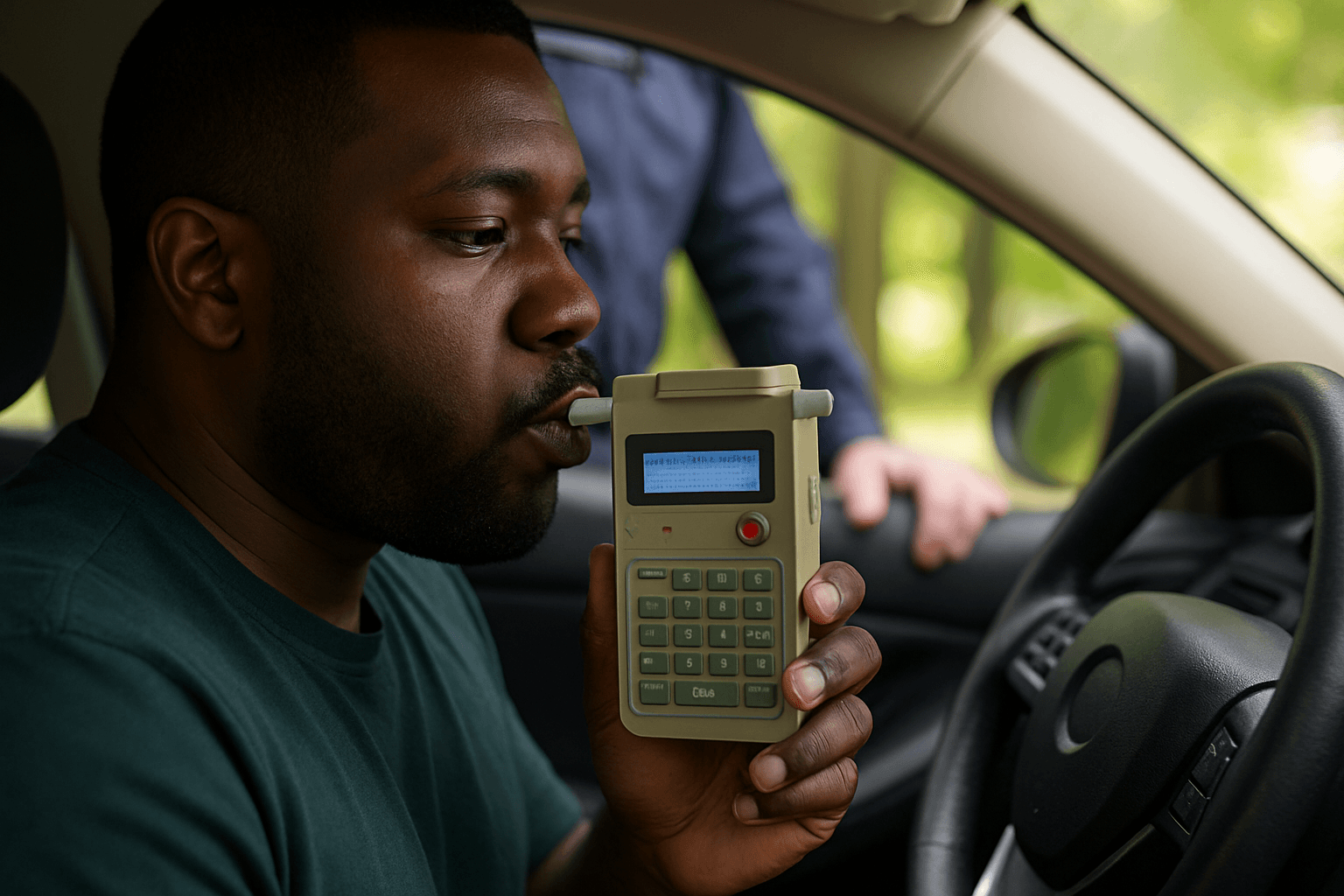
For drivers facing felony DWLS charges due to multiple priors, defense counsel often negotiates a plea to a lesser charge in exchange for mandatory ignition interlock installation, supervised probation, and participation in the state's 24/7 sobriety program. The 24/7 sobriety program requires participants to submit to twice-daily alcohol breath tests at a sheriff's office or wear a continuous alcohol monitoring bracelet. Participation is burdensome but avoids the mandatory minimum 30-day jail sentence that applies to felony DWLS convictions in many North Dakota counties. The licensing impact of a reduced charge is substantial: a Class A misdemeanor plea instead of a felony reduces the stacked suspension period from 1 year minimum to 180 days and lowers the SR-22 filing extension from 2 years to 1 year.
Reinstatement Cost Stack and Timeline
Reinstating your license after a DWLS conviction in North Dakota requires resolving the DWLS criminal charge, serving the stacked suspension period, satisfying all underlying suspension requirements, filing SR-22 proof of insurance, and paying reinstatement fees. The base reinstatement fee in North Dakota is $50, but this applies separately to each suspension action on your record. If your original suspension was for DUI and you now have a DWLS conviction, you owe $50 for the original DUI suspension and $50 for the DWLS suspension — $100 total.
If your original suspension required completion of a DUI evaluation, treatment program, or victim impact panel, those requirements do not disappear when the DWLS suspension is added. You must complete all original-cause requirements plus any new requirements imposed as part of the DWLS sentence. For DUI-related DWLS cases, most courts require proof of chemical dependency evaluation completion and enrollment in any recommended treatment program before they will approve license reinstatement. The evaluation costs $150 to $250; treatment programs range from $500 to $2,000 depending on the level of care recommended.
Ignition interlock installation is mandatory for all DUI-related TRL and post-reinstatement licenses in North Dakota. The device costs $75 to $150 to install and $70 to $100 per month to maintain. If your DWLS conviction extended your interlock requirement period from 1 year to 2 years, the additional cost is approximately $900. The SR-22 filing fee itself is $25 to $50 one-time, but the insurance premium surcharge over the 3-year filing period is the larger expense — typically $3,000 to $5,000 above standard rates.
Total reinstatement cost for a first-offense DWLS-after-DUI case in North Dakota, including all fees, evaluation, treatment, interlock, SR-22 filing, and the premium difference over 3 years, typically ranges from $5,500 to $9,000. For drivers with felony DWLS convictions, add another $2,000 to $4,000 for extended interlock and SR-22 filing periods. These are not installment-plan figures — reinstatement fees, evaluation costs, and interlock installation must be paid in full before NDDOT processes the reinstatement application.
What to Do Right Now If You Are Facing a DWLS Charge
If you have been arrested or cited for driving under suspension in North Dakota, do not plead guilty at your first court appearance without consulting an attorney. A guilty plea closes all negotiation pathways and locks in the full stacked suspension, extended SR-22filing, and insurance surcharge. Request a continuance at arraignment to give yourself time to consult defense counsel and review your options.
Gather documentation of your current license status, the original suspension notice, any hardship license paperwork, proof of SR-22 insurance if you had it, and the police report from the DWLS stop. If you were driving to work or for another essential purpose, obtain a letter from your employer or medical provider documenting the necessity — this does not eliminate the charge but can be used in sentencing negotiations to reduce jail time or limit the additional suspension period. If your original suspension was for unpaid fines or child support arrears and you have since paid those amounts, obtain receipts showing payment — resolving the underlying cause often results in lighter DWLS sentencing.
Contact a North Dakota criminal defense attorney who handles DWLS cases before your arraignment. Attorney fees for Class B misdemeanor DWLS representation typically range from $1,000 to $2,500; Class A misdemeanor cases range from $2,000 to $4,000; felony DWLS cases start at $5,000. Many attorneys offer payment plans. If you cannot afford an attorney, request a public defender at your arraignment — North Dakota provides appointed counsel for all criminal charges carrying potential jail time.
Once the criminal charge is resolved, contact NDDOT Driver License Division to confirm the exact stacked suspension end date, the reinstatement fee total, and whether any additional requirements apply. Do not assume the court's sentencing paperwork is accurate — court clerks often miscalculate suspension end dates when multiple suspension periods overlap. Obtain an official NDDOT driving record abstract to confirm your eligibility date before paying reinstatement fees or filing SR-22. The abstract costs $3 and can be ordered online through the NDDOT Driver License Division portal.