You were stopped in another state while your home-state license was suspended. Now you face a DWLS charge in the arrest state, and your home state will likely extend your suspension when the conviction reports. Here's how cross-jurisdictional enforcement actually works.
How Interstate License Status Verification Works at Traffic Stops
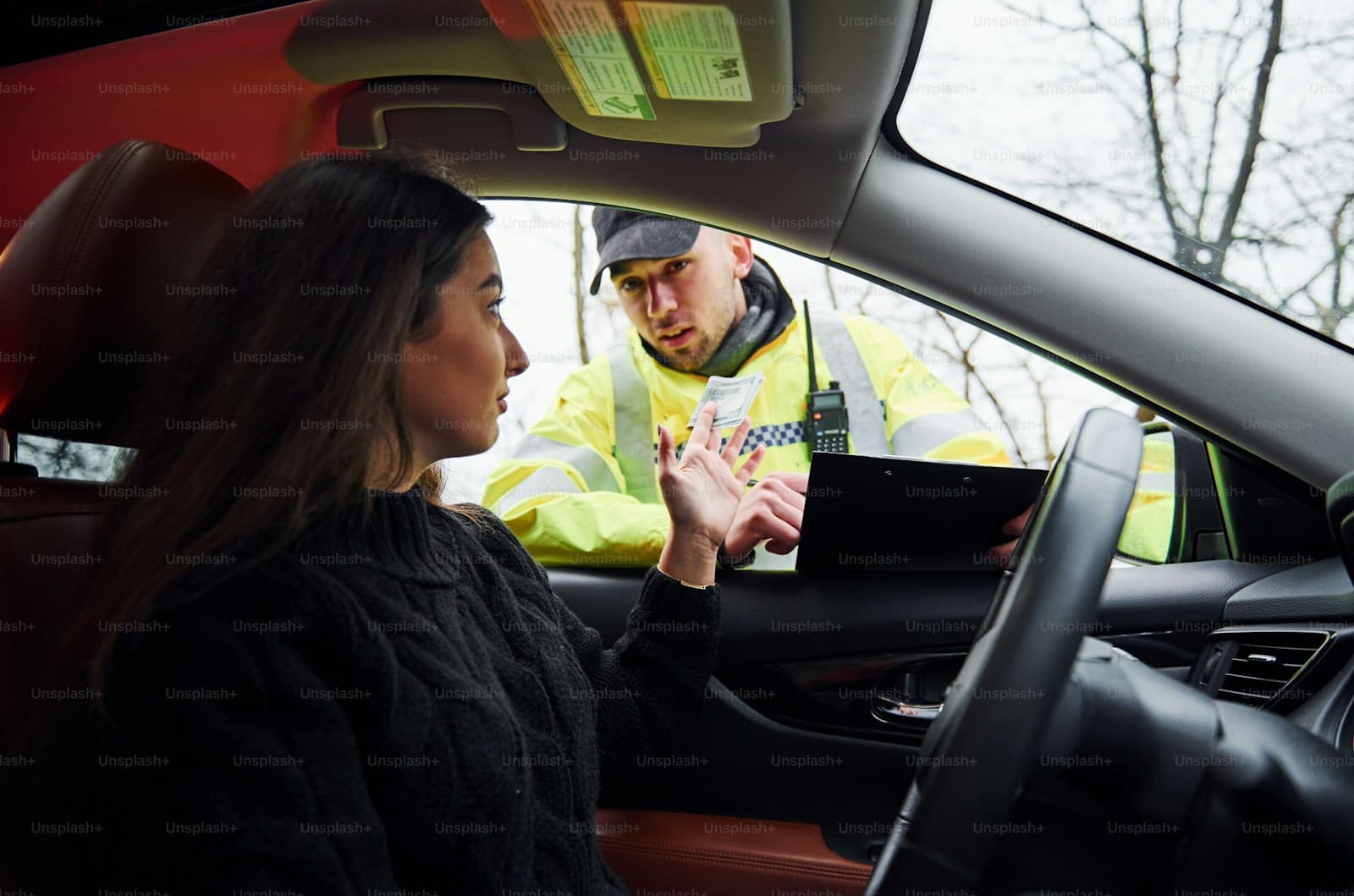
When an officer runs your license during a traffic stop in any state, the query reaches your home state's DMV through the National Driver Registry and the Commercial Driver License Information System. Both systems return your real-time suspension status within seconds, regardless of whether you're driving in your home state or across the country. The officer sees the suspension flag immediately, even if you weren't aware the suspension had taken effect or if you received no physical notice at your address.
The arrest state treats your out-of-state suspension exactly as it would treat its own resident driving on a suspended license. You face criminal charges under that state's DWLS statute, not your home state's law. If you're stopped in Georgia while your Florida license is suspended, you're charged under Georgia's O.C.G.A. § 40-5-121, which carries different penalties, bail requirements, and court procedures than Florida's 322.34. The officer will typically impound the vehicle on scene if you're the only licensed driver present.
Your home state receives notification of the arrest within 24 to 72 hours through the same CDLIS system. Most states flag the out-of-state DWLS arrest as a reportable event and begin administrative suspension extension proceedings before the criminal case in the arrest state is even adjudicated. This creates parallel timelines: you must resolve the criminal charge in the arrest state while simultaneously addressing the administrative consequences in your home state.
Which State Prosecutes the Criminal DWLS Charge
The arrest state has exclusive criminal jurisdiction. If you were physically stopped and arrested in Tennessee while your Ohio license was suspended, Tennessee prosecutors file the DWLS charge in Tennessee court under Tennessee law. Ohio does not prosecute you for the traffic stop itself—that's not how interstate enforcement works. You must either appear in the Tennessee court on the assigned date or retain Tennessee counsel to appear on your behalf. Failure to appear in Tennessee generates a bench warrant in Tennessee and an additional FTA charge, which Tennessee then reports to Ohio as a new violation.
Most states classify first-offense DWLS as a misdemeanor when no aggravating factors are present. Aggravating factors include: the underlying suspension was for DUI, the stop involved an accident with injury, or you have prior DWLS convictions in any state. These factors elevate the charge to a higher-class misdemeanor or a felony in many jurisdictions. For example, Illinois treats DWLS as a Class A misdemeanor for first offense but escalates to a Class 4 felony if the underlying suspension was DUI-related. Georgia's statute makes a second DWLS within five years a high and aggravated misdemeanor with mandatory minimum jail time.
You cannot transfer the criminal case to your home state. The arrest state retains jurisdiction until the case is resolved through plea, trial, or dismissal. Some defendants attempt to ignore the out-of-state charge, assuming distance protects them—this generates an active warrant, prevents license reinstatement in the home state, and creates a federal NCIC entry that appears on background checks and triggers arrest during any future traffic stop nationwide.
Compare car insurance rates in your state
Get quotes from licensed carriers — no obligation, no spam, results in minutes.
Get Your Free Quote✓ No Obligation Required✓ Licensed Carriers Only✓ Available Nationwide✓ Free to Compare
How Your Home State Responds to the Out-of-State Conviction
When the arrest state's court enters a DWLS conviction, that conviction is reported to your home state's DMV through the Driver License Compact and the Non-Resident Violator Compact. Forty-five states are members of the Driver License Compact, which requires states to treat out-of-state traffic convictions as if they occurred at home. Your home state receives the conviction record typically within 30 to 90 days of sentencing, though reporting delays of six months are not uncommon in some jurisdictions.
Your home state then applies its own penalty schedule for DWLS convictions. If you're a Florida resident convicted of DWLS in Alabama, Florida's DHSMV will extend your existing suspension period under Florida Statutes § 322.34, which mandates an additional suspension for driving while suspended. The extension is not optional—it's triggered automatically when the conviction posts to your Florida driving record. Florida adds one year for a first DWLS conviction, two years for a second, and up to five years for a third.
This creates the compounding problem most drivers miss: you serve the criminal sentence in the arrest state (fines, possible jail, probation), then you serve the extended administrative suspension in your home state after you return. If your original Florida suspension was six months for unpaid tickets and you were convicted of DWLS in Alabama three months into that period, Florida extends the suspension by one year from the conviction date. Your total suspension is now at least 15 months, assuming no additional violations. The DWLS conviction also typically triggers an SR-22 filing requirement in your home state, even if the original suspension cause did not require SR-22.
Whether You Can Get a Hardship License After Out-of-State DWLS
Most states close hardship license eligibility after a DWLS conviction, particularly when the DWLS involved driving in another state. The logic: you demonstrated willingness to drive illegally across state lines, which undermines the restricted-driving framework hardship programs depend on. States that allow hardship licenses after DWLS typically impose mandatory waiting periods and require proof that no additional violations occurred during the extended suspension.
In Texas, an occupational driver's license is unavailable for 90 days after a DWLS conviction under Transportation Code § 521.2475. After the 90-day absolute prohibition, you may petition, but approval requires showing you did not drive at all during the waiting period and that you have installed an ignition interlock device if the underlying suspension was alcohol-related. If you pick up a second DWLS during the waiting period, eligibility closes for two years. Illinois imposes a similar framework: no RDP eligibility for 12 months after DWLS if the underlying suspension was for DUI, and six months for other causes.
If you are granted a hardship license after out-of-state DWLS, the permit typically includes GPS monitoring or mileage reporting requirements that were not part of standard hardship licenses. Some states require you to submit monthly odometer photos and route logs to verify compliance with the approved driving purposes. Violating the terms of a post-DWLS hardship license—driving outside approved hours, driving for unapproved purposes, or failing to report—results in immediate revocation and typically triggers felony charges in states where hardship-license violation is separately prosecutable.
How Long the Suspension Extension Lasts and What It Costs
Suspension extension duration varies by your home state's DWLS penalty statute, not the arrest state's. If you're a California resident convicted of DWLS in Nevada, California applies its Vehicle Code § 14601 penalty schedule: two additional years for a first DWLS conviction if the underlying suspension was for DUI, one year if the underlying cause was non-DUI. Nevada's sentence (which might include six months of license restriction) does not override California's administrative extension. You serve both: Nevada's criminal penalty first, then California's administrative extension after you return home and attempt reinstatement.
Reinstatement fees stack. You pay the original reinstatement fee for the underlying suspension cause plus an additional DWLS-specific reinstatement fee in most states. In Florida, the base reinstatement fee is $45 to $75 depending on cause, but a DWLS conviction adds a mandatory $500 reinstatement fee under § 322.251. If the DWLS involved an accident, Florida imposes an additional $100 penalty on top of the $500 DWLS fee. These fees are separate from the criminal fines imposed by the arrest state's court, which can range from $500 to $2,500 depending on classification and priors.
SR-22 filing duration is extended in nearly all states. If your original suspension required three years of SR-22, the DWLS conviction typically adds one to two years to that filing period, meaning you now file SR-22 for four to five years total. Some states restart the SR-22 clock entirely from the DWLS conviction date. Premiums increase substantially: carriers treat out-of-state DWLS as a higher underwriting risk than in-state DWLS because it signals you were willing to drive across state lines while suspended. Expect annual premiums in the $3,000 to $6,000 range for the first two years post-reinstatement, depending on your underlying violation profile and the number of DWLS convictions on record.
What to Do Immediately After an Out-of-State DWLS Arrest
Retain criminal defense counsel in the arrest state within 72 hours of release. Out-of-state defendants face higher bail, stricter release conditions, and harsher plea offers because prosecutors assume you will not return for trial. A local attorney can often negotiate a plea that avoids jail time, reduces the charge to a non-moving violation (eliminating the CDLIS report to your home state), or structures payment plans that prevent bench warrants for unpaid fines. Public defenders in the arrest state are available only if you qualify financially and only if you appear in person at arraignment—do not assume PD representation is automatic.
Contact your home state's DMV within one week to confirm your suspension status and determine whether the arrest has already triggered an extension. Many states begin administrative proceedings as soon as the arrest is reported, before conviction. Ask specifically whether your hardship license eligibility has been affected and what additional suspension time will apply if the arrest state conviction is entered. This call establishes a timeline for reinstatement planning and identifies any holds or additional fees already imposed.
Do not drive at all in any state until the criminal case is resolved and your home state confirms your license is reinstated. A second DWLS arrest while the first case is pending elevates charges to felony in most states and closes hardship eligibility for years. If you must travel for work or family obligations, use rideshare, public transit, or arrange a licensed driver. The cost of transportation alternatives for six to twelve months is substantially lower than the cost of a second DWLS conviction, which typically includes mandatory jail time even for first-time offenders when the second arrest occurs before the first case closes.
How Insurance Responds to Cross-Jurisdictional DWLS Convictions
Carriers receive notification of the DWLS conviction through the same CDLIS reporting system your home state uses. The conviction appears on your driving record in your home state even though it occurred elsewhere, and carriers treat it as a home-state violation for underwriting and rating purposes. If your policy was active at the time of the out-of-state arrest, expect a mid-term cancellation notice within 30 to 60 days of the conviction posting. Non-renewal is more common than cancellation: the carrier allows the current policy to expire, then declines to renew.
You will be moved to the non-standard or assigned-risk market in nearly all cases. Standard carriers (State Farm, Allstate, Progressive standard tier) do not write new policies for drivers with recent DWLS convictions. Non-standard carriers that specialize in high-risk drivers—Bristol West, Freeway, Infinity, Acceptance—will write coverage, but premiums reflect the elevated risk profile. Rates in the non-standard market for a driver with DWLS plus the underlying suspension cause typically start at $250 to $500 per month for minimum liability limits, and $400 to $700 per month if SR-22 filing is required.
SR-22 filing is required in your home state, not the arrest state, unless you move your residency. If you're a Georgia resident convicted of DWLS in Tennessee, you file SR-22 with the Georgia DDS, not Tennessee. The SR-22 certificate must be issued by a carrier licensed to do business in Georgia and must be filed electronically with Georgia's DMV. The arrest state does not require SR-22 from you because you are not a resident—SR-22 is a home-state compliance mechanism. Duration of SR-22 filing after DWLS is typically three to five years depending on your home state's statute and whether the underlying suspension was alcohol-related. Missing an SR-22 filing deadline or allowing the policy to lapse triggers immediate re-suspension in your home state and restarts the filing clock.