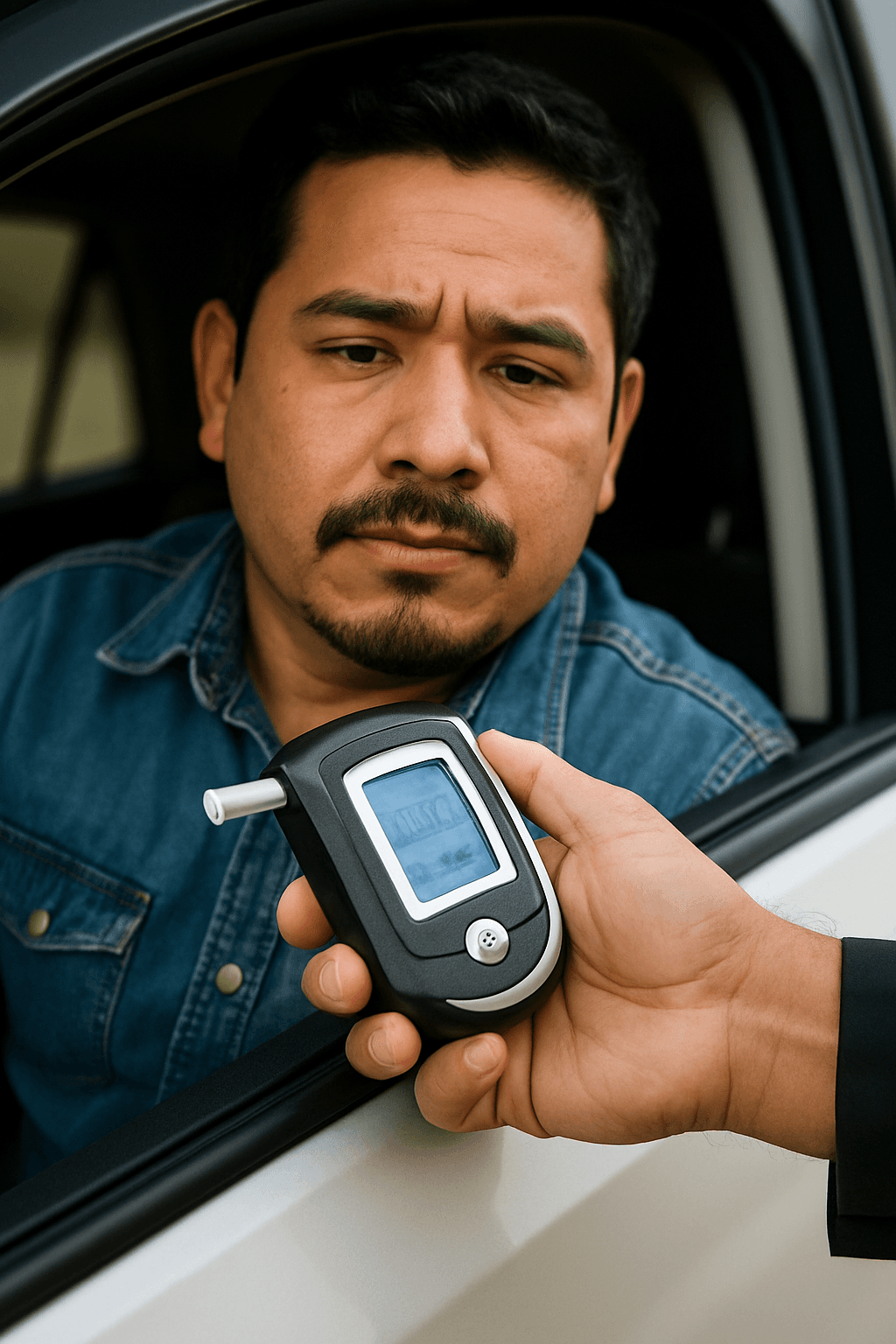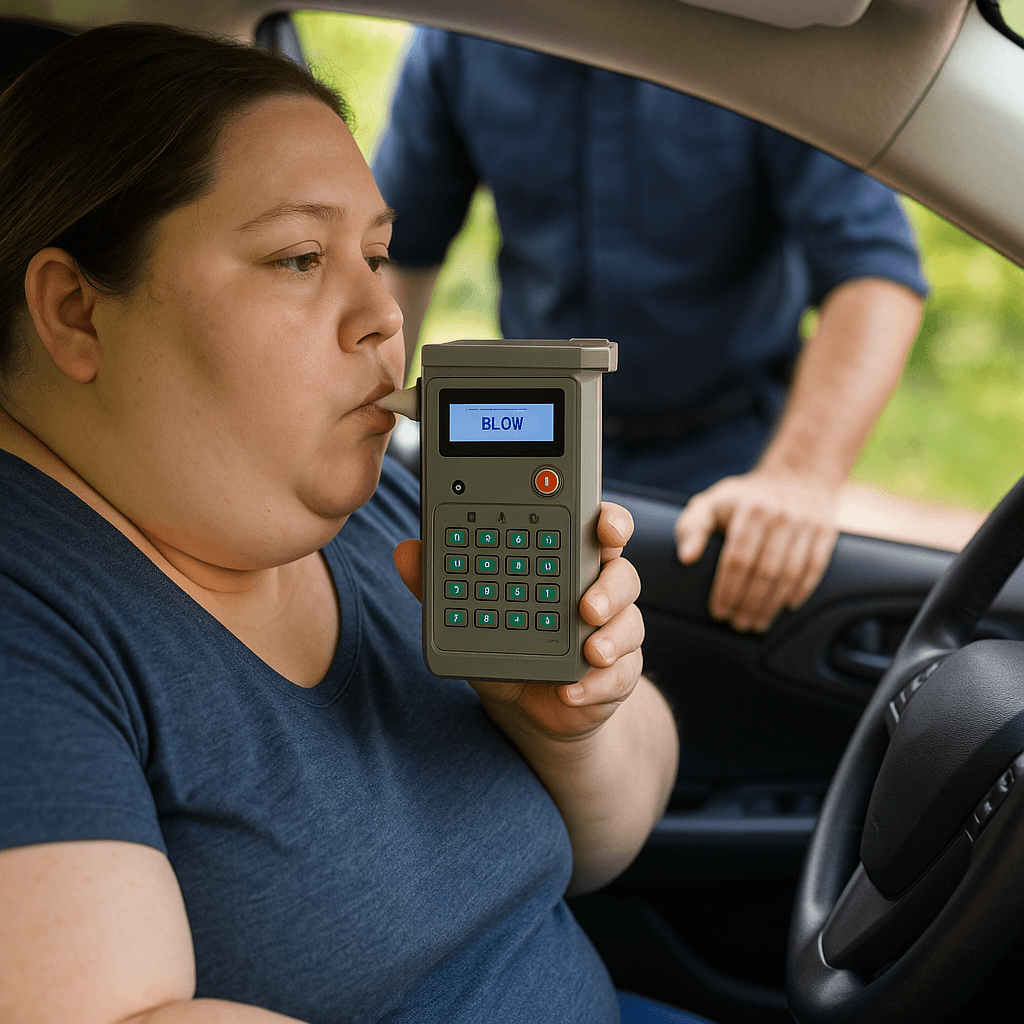
Pennsylvania's §1543 statute defines three distinct tiers of DWLS charges. Your plea determines not only the criminal outcome but whether you qualify for an Occupational Limited License and how long SR-22 filing extends your suspension.
Why Pennsylvania Splits §1543 Into Three Distinct Offenses
Pennsylvania's 75 Pa.C.S. §1543 statute creates three separate criminal offenses under one section number. The tier you're charged with determines whether your case is a summary offense, a misdemeanor, or a third-degree misdemeanor with mandatory minimum jail.
§1543(a) — general DWLS applies when you drove knowing your license was suspended for administrative reasons: unpaid tickets, insurance lapse, points accumulation, or child support arrears. First offense is a summary with $200 minimum fine. No mandatory jail. You may still petition for an Occupational Limited License if your underlying suspension allows it.
§1543(b) — DUI-related DWLS applies when your license was suspended specifically for a DUI conviction or chemical test refusal under 75 Pa.C.S. §1547 or §3804. First offense is a summary with $500 minimum fine and 60 to 90 days additional suspension. Second offense within five years becomes a first-degree misdemeanor with 60 days to six months mandatory jail. OLL petitions are not barred by statute, but judges rarely grant them after a §1543(b) conviction because the violation demonstrates contempt for the DUI suspension.
§1543(c) — habitual offender DWLS targets drivers declared habitual offenders under §1542 or whose licenses were recalled/suspended multiple times under §1960. This is a third-degree misdemeanor on first offense with mandatory 60-day jail minimum. OLL eligibility is legally intact but practically foreclosed because the underlying habitual offender declaration already reflects multiple serious violations.
How Your Plea Affects Occupational Limited License Availability
The Occupational Limited License (OLL) is Pennsylvania's court-issued restricted driving program. Unlike many states, Pennsylvania does not issue OLLs through PennDOT administratively. You must petition the court of common pleas in your county of residence.
If you are convicted under §1543(a) for administrative suspension, your OLL eligibility depends entirely on what caused your original suspension. PennDOT's administrative suspensions for unpaid fines, child support, or failure to respond to citations do not disqualify you from an OLL, but your petition will be denied if you have not resolved the underlying cause. Your §1543(a) conviction adds 60 to 90 days to your suspension period, but it does not categorically bar the OLL pathway.
If you are convicted under §1543(b) for DUI-related DWLS, the statute does not prohibit you from filing an OLL petition. However, judges interpret a §1543(b) violation as evidence that you will not comply with OLL restrictions. The majority of §1543(b) offenders who file OLL petitions after conviction are denied on discretionary grounds. If you are negotiating a plea, ask your attorney whether the prosecutor will agree to reduce the charge to §1543(a) in exchange for guilty plea to the lesser tier. That reduction preserves your practical ability to petition for an OLL.
Pennsylvania also operates a separate program called the Ignition Interlock Limited License (IILL) under 75 Pa.C.S. §3805 for DUI offenders. The IILL is issued by PennDOT, not the court, and becomes available after you serve the mandatory hard suspension period. A §1543(b) conviction extends your hard suspension by an additional 60 to 90 days, which delays IILL eligibility but does not eliminate it. If your underlying suspension was DUI-related, the IILL is the more reliable pathway than the OLL.
Compare car insurance rates in your state
Get quotes from licensed carriers — no obligation, no spam, results in minutes.
Get Your Free Quote✓ No Obligation Required✓ Licensed Carriers Only✓ Available Nationwide✓ Free to Compare
The SR-22 Filing Requirement After a §1543 Conviction
Pennsylvania does not use the term SR-22 in its statutes. The correct term is proof of financial responsibility filing under 75 Pa.C.S. §1786. However, insurance carriers and PennDOT both recognize SR-22 as the industry-standard form name.
A §1543 conviction triggers an SR-22 filing requirement regardless of which tier you were convicted under. This is true even if your original suspension did not require SR-22. For example, if your license was suspended for unpaid tickets and you drove anyway, the §1543(a) conviction now requires SR-22 filing for three years after reinstatement.
If your original suspension already required SR-22 — for example, a DUI suspension under §3804 — the §1543 conviction extends your filing period by an additional three years from the date of your new conviction. Carriers will re-underwrite your policy after the conviction posts to your driving record, and your premium will increase substantially. Most drivers convicted under §1543 see premiums in the $140 to $240 per month range for liability-only coverage.
You must maintain continuous SR-22 coverage for the entire filing period. If your policy cancels or lapses, PennDOT receives an electronic notice from the carrier within three business days under Pennsylvania's Financial Responsibility Reporting system. Your license will be automatically re-suspended, and you will owe a new $50 restoration fee on top of the original reinstatement fees.
Jail, Fines, and Mandatory Minimums by Tier
Pennsylvania §1543 imposes mandatory minimum fines for each tier. Judges may not sentence below these floors even if you plead guilty.
§1543(a) first offense: $200 minimum fine, no jail unless aggravating circumstances exist (accident, injury, eluding). Second offense within five years: $500 minimum fine, possible 60 to 90 days jail at judge's discretion.
§1543(b) first offense: $500 minimum fine, no mandatory jail. Second offense within five years: 60 days to six months mandatory jail, $1,000 minimum fine. You will serve this time in county prison. Work release and house arrest eligibility varies by county.
§1543(c) first offense: 60 days mandatory jail minimum, $500 minimum fine. Judges may sentence above the floor but not below it. The habitual offender declaration that triggered this tier already reflects multiple prior violations, so courts treat §1543(c) cases as serious disregard for public safety.
If your arrest involved an accident, injury to another person, or attempting to flee from police, the prosecutor may file additional charges under separate statutes (reckless endangerment, fleeing or eluding, aggravated assault by vehicle). Those charges carry their own sentencing ranges and often result in consecutive sentences. Do not attempt to negotiate a plea without retained defense counsel if any of these aggravators apply.
How the Conviction Extends Your Total Suspension Period
A §1543 conviction does not replace your original suspension. It stacks on top.
Your original suspension continues to run while the §1543 charge is pending. When you are convicted, PennDOT adds a new suspension period that begins after your original suspension expires. For §1543(a) convictions, the additional period is 60 to 90 days. For §1543(b) convictions, the additional period is 60 to 90 days for first offense and one year for second offense. For §1543(c) convictions, the additional period is one year minimum.
These periods do not include jail time. If you are sentenced to 60 days in county prison, your suspension clock does not advance while you are incarcerated. The suspension resumes when you are released.
If you had multiple underlying suspensions before your §1543 arrest, PennDOT stacks them consecutively. For example, if you were suspended for two years for DUI and then convicted under §1543(b) for driving during that suspension, you now owe the remainder of your DUI suspension plus an additional 60 to 90 days for the DWLS conviction. If your DUI suspension had 18 months remaining at the time of your §1543(b) conviction, your total remaining suspension is approximately 20 to 21 months.
You cannot apply for reinstatement until all stacked suspension periods expire and you satisfy every underlying cause that triggered suspension. This includes completing DUI Alcohol Highway Safety School if your original suspension was DUI-related, paying all outstanding fines and court costs, and filing SR-22 with PennDOT.
What Coverage You Need to Meet Pennsylvania SR-22 Requirements
Pennsylvania requires minimum liability coverage of $15,000 bodily injury per person, $30,000 bodily injury per accident, and $5,000 property damage under 75 Pa.C.S. §1786. Your SR-22 filing certifies to PennDOT that you maintain at least these limits.
If you do not own a vehicle, you need non-owner SR-22 insurance. This is a liability-only policy that covers you when you drive a borrowed or rented vehicle. Non-owner SR-22 policies in Pennsylvania typically cost $85 to $140 per month after a §1543 conviction, depending on your county and underlying violation history.
If you own a vehicle, you need standard SR-22 auto insurance with at least state-minimum liability limits. Most carriers writing SR-22 in Pennsylvania require you to insure the vehicle at the higher of state minimum or the lender's required coverage if you have a car loan. Expect premiums in the $140 to $240 per month range for minimum coverage after a §1543 conviction.
The carriers most likely to write SR-22 coverage in Pennsylvania after a §1543 conviction include Progressive, Geico, Dairyland, Bristol West, The General, and Direct Auto. Not every carrier writes in every county, and some require you to work through an independent agent rather than quoting online. Start quote requests immediately after your conviction posts to your driving record. Policies typically take three to five business days to bind and file with PennDOT.
Court-Issued OLL vs PennDOT-Issued IILL: Which Program Applies to You
Pennsylvania operates two parallel restricted-driving programs. They serve different suspension causes and follow different application pathways.
The Occupational Limited License (OLL) is issued by the court of common pleas under 75 Pa.C.S. §1553. You must file a petition in your county of residence. The petition requires proof of employment or occupational necessity, proof of financial responsibility (SR-22), and payment of court costs. Court costs vary by county but typically range from $200 to $400. The court defines route and time restrictions specific to your approved purposes: work, medical appointments, school, or other court-approved activities. If your underlying suspension was for unpaid fines, child support, points accumulation, or insurance lapse, the OLL is your only hardship option. However, you cannot petition until you resolve the underlying cause. If your suspension was for unpaid fines, you must pay the fines before filing your OLL petition.
The Ignition Interlock Limited License (IILL) is issued by PennDOT under 75 Pa.C.S. §3805. It is available only to drivers whose licenses were suspended for DUI convictions or chemical test refusals. You apply through PennDOT after serving the mandatory hard suspension period, which ranges from 90 days to 18 months depending on your DUI tier and prior offenses. The IILL requires installation of an ignition interlock device (IID) in any vehicle you operate, SR-22 filing, and payment of PennDOT's restoration fee. IID installation costs approximately $75 to $150, and monthly monitoring fees range from $65 to $90. The IILL does not restrict your routes or hours — you may drive anywhere, anytime, as long as the IID is installed and you pass the breath test before starting the vehicle.
If your underlying suspension was DUI-related and you were convicted under §1543(b), the IILL is the more practical pathway. Judges rarely grant OLL petitions after §1543(b) convictions, but PennDOT's IILL program does not involve judicial discretion. As long as you serve the hard suspension period, complete Alcohol Highway Safety School, and meet the technical requirements, PennDOT will issue the IILL.