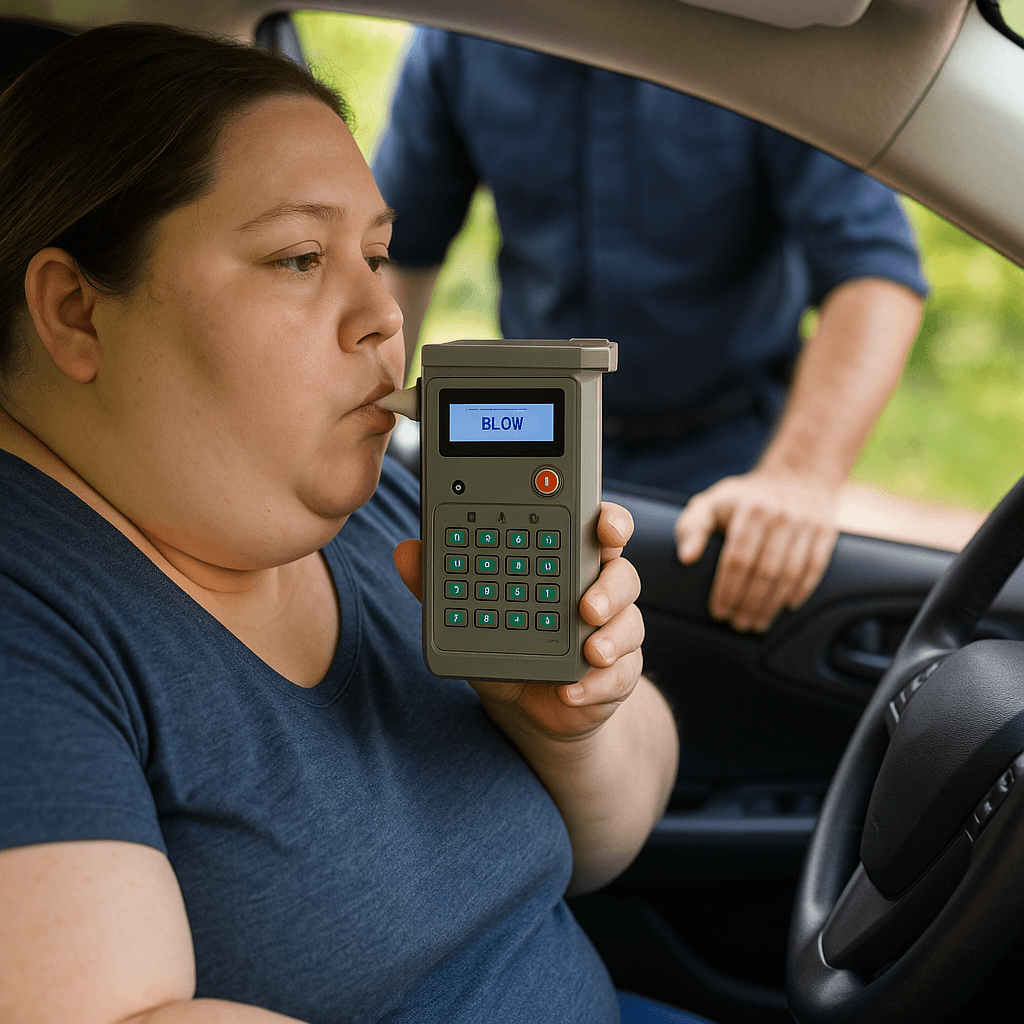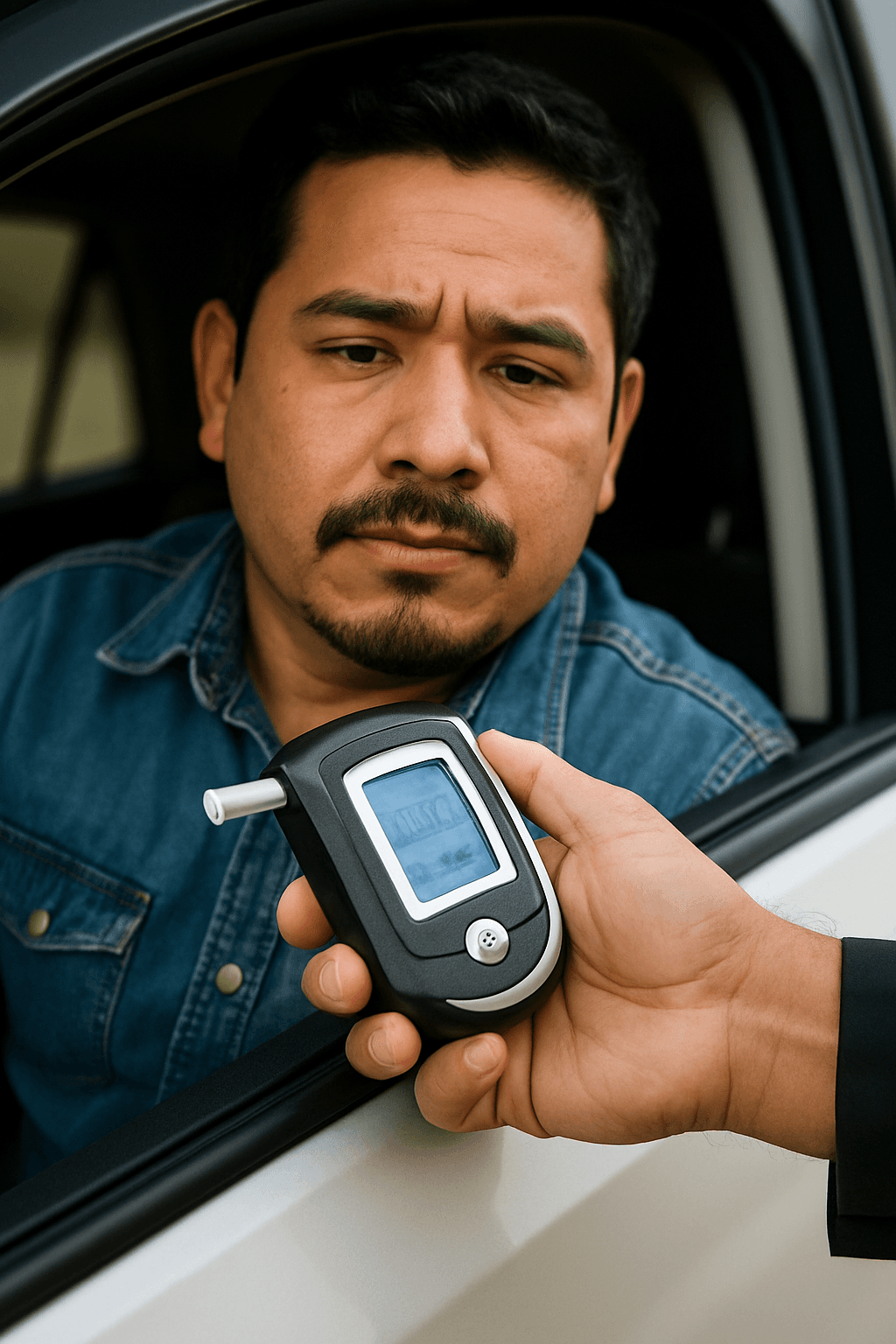
You were caught driving after your license was already suspended in Massachusetts. The court tier you face—criminal or civil—determines whether jail is on the table and whether plea options can reduce the charge.
Massachusetts DWLS Criminal vs Civil Classification
Massachusetts splits Driving While License Suspended into two separate charge tracks. Criminal DWLS applies when your original suspension was for OUI, refusal to take a breath test, or habitual traffic offender (HTO) status under MGL c.90 §23. Civil DWLS applies when the original suspension was for unpaid fines, insurance lapse, SDIP point accumulation, or non-criminal administrative reasons under MGL c.90 §10.
The criminal track carries jail exposure, arraignment in District Court, and a mandatory conviction record visible to employers and insurers for the rest of your life unless sealed. The civil track is handled as a civil motor vehicle infraction—no arraignment, no jail, but still subject to fines and extended suspension stacking. Many drivers caught after an OUI suspension assume they can pay a ticket and move on. They cannot. Criminal DWLS is a misdemeanor with a mandatory minimum 60-day jail sentence on first offense if the underlying suspension was OUI-related.
If you don't know which track applies to you, check the original suspension letter from the RMV or call the RMV's license status line. The original cause determines everything about your current charge tier, plea options, and whether you need defense counsel before your court date.
Why Massachusetts Treats OUI-Related DWLS Differently
The RMV notifies the court when it suspends a license for OUI or breath test refusal. That notification triggers the criminal DWLS pathway automatically if police later pull you over. Melanie's Law (2005) created mandatory minimums for OUI-related driving offenses, including DWLS during an OUI suspension period, to close a loophole where repeat offenders could pay fines and keep driving.
Criminal DWLS under MGL c.90 §23 carries 60 days mandatory minimum jail on first offense, 1 year mandatory minimum on second offense, and 2 years mandatory minimum on third offense. Judges cannot sentence below the mandatory minimum even if you drove for work necessity or medical emergency—the statute removes judicial discretion entirely. Plea negotiations in criminal DWLS cases focus on conviction avoidance (continuance without a finding, pretrial diversion) or charge reduction to a lesser motor vehicle offense, not sentence reduction.
Civil DWLS cases carry no jail exposure. The penalty is a fine up to $1,000 plus court costs and an additional suspension period stacked on top of your original suspension. Many civil DWLS defendants resolve the case without hiring counsel, though representation improves plea outcomes where stacked suspension can be reduced or converted to probation-supervised driving.
Compare car insurance rates in your state
Get quotes from licensed carriers — no obligation, no spam, results in minutes.
Get Your Free Quote✓ No Obligation Required✓ Licensed Carriers Only✓ Available Nationwide✓ Free to Compare
Plea Options by Charge Tier
Criminal DWLS plea options depend on whether you have prior convictions and whether the prosecutor views your case as strong. First-offense criminal DWLS cases with weak facts (unclear suspension notification, police stop legality issues) sometimes resolve as continuance without a finding (CWOF) with probation conditions including ignition interlock device installation, alcohol education program completion, and community service. CWOF is not a conviction and can be sealed after probation ends, but you must comply with every probationary term or the case converts to a conviction with the full mandatory minimum sentence.
Pretrial diversion programs exist in some Massachusetts District Courts but availability varies by county. Essex County and Middlesex County offer diversion for non-OUI criminal DWLS cases where the defendant completes community service, pays restitution, and remains violation-free for 6-12 months. Successful completion results in dismissal. OUI-related criminal DWLS cases are typically ineligible for diversion under local program rules, though some prosecutors will waive the exclusion for first-offense cases with mitigating circumstances.
Civil DWLS plea negotiations focus on fine reduction and suspension duration. Many defendants negotiate a payment plan for the fine in exchange for pleading responsible to the infraction. The RMV adds 30-60 days of suspension on top of your original suspension period for civil DWLS, and this stacking is not negotiable through the court—it is an automatic RMV administrative action triggered by the court's finding of responsibility. Some civil DWLS cases can be reduced to a non-moving violation (equipment violation, paperwork issue) if the defense can show the suspension notification was defective or that the driver had applied for hardship relief before the stop.
Additional Suspension Stacking After DWLS Conviction
The RMV stacks additional suspension time on top of your original suspension whenever you are found responsible for DWLS—criminal or civil. Criminal DWLS convictions add 1 year of suspension on top of the original OUI suspension, and this year does not begin until your original suspension period ends. A 2-year OUI suspension becomes 3 years if you are convicted of criminal DWLS during the suspension window. Civil DWLS findings add 30-60 days depending on whether this is your first DWLS or a repeat offense.
Hardship license eligibility is delayed by the stacked period. If you were 6 months into a 1-year suspension and eligible for hardship relief in another 6 months, a DWLS conviction resets the hardship eligibility clock. You must now serve the new stacked suspension period before the RMV will accept a hardship application. The Board of Appeal on Motor Vehicle Liability Policies and Bonds will not hear OUI hardship petitions while a criminal DWLS case is pending, and most petitions filed within 90 days of a DWLS conviction are denied automatically.
SR-22 filing duration is extended by the stacked suspension. If your original OUI suspension required 3 years of SR-22 filing starting from reinstatement, the DWLS conviction extends that to 4 years measured from the new reinstatement date. Insurers treat DWLS convictions as independent high-risk flags—your premium after reinstatement will reflect both the original OUI and the DWLS, not just the OUI.
Whether You Need a Lawyer for DWLS in Massachusetts
Criminal DWLS cases almost always require defense counsel. The mandatory minimum jail sentence and permanent conviction record make self-representation a poor gamble. Public defenders are available if you meet income eligibility thresholds, and most Massachusetts District Courts conduct indigency screenings at arraignment. Private criminal defense attorneys in Massachusetts typically charge $2,500-$5,000 for first-offense criminal DWLS representation including plea negotiation, motion practice, and trial if needed.
Civil DWLS cases handled as infractions do not carry a right to appointed counsel, but hiring an attorney can reduce the stacked suspension period and negotiate fine payment terms. Many traffic defense attorneys handle civil DWLS cases on flat fees of $500-$1,500. The value calculation depends on how much additional suspension time you face and whether you need driving privileges for work. If you cannot afford to lose another 60 days of driving eligibility, paying $1,000 for representation that reduces the stacked period to 30 days or converts it to probation-supervised driving is cost-justified.
Some civil DWLS defendants represent themselves successfully, especially where the original suspension was for unpaid fines and the defendant can show proof of payment before the court date. Judges in civil motor vehicle sessions are accustomed to unrepresented defendants and will explain plea options during the hearing. Criminal DWLS defendants who appear without counsel at arraignment are strongly advised by most judges to request a continuance and consult with a lawyer before entering a plea—once you plead guilty, the mandatory minimum applies with no recourse.
Reinstatement Path After DWLS Conviction
Reinstatement from DWLS requires resolving three separate layers: the original suspension cause, the DWLS conviction itself, and the stacked administrative suspension added by the RMV. For OUI-related criminal DWLS, this means completing the Driver Alcohol Education program, serving the full suspension period including the stacked year, paying the OUI reinstatement fee ($500 first offense, $700 second offense per MGL c.90 §24), paying a separate $100 base reinstatement fee, and filing proof of future financial responsibility with the RMV.
The RMV will not reinstate your license until all three layers are resolved. Many drivers pay the reinstatement fees and file SR-22 insurance only to learn their license is still suspended because the DWLS court case shows an unpaid fine or uncompleted community service hours. Check your RMV driving record online at mass.gov/rmv before submitting reinstatement paperwork—the record will list every outstanding hold.
SR-22 filing is required after almost all DWLS convictions in Massachusetts, even where the original suspension did not require SR-22. DWLS is treated by the RMV as proof of high-risk behavior independent of the original cause. SR-22 insurance after DWLS typically costs $140-$220/month for liability-only coverage in Massachusetts, reflecting both the original violation and the DWLS flag. Filing must continue for the full required period—typically 3 years measured from reinstatement—or the RMV suspends your license again and you restart the entire process.
How Insurers Treat DWLS Convictions
Insurance carriers in Massachusetts view DWLS as a separate underwriting event heavier than many drivers expect. The industry logic: you violated the law twice—once to trigger the suspension, once to drive anyway. That decision pattern signals higher claim risk regardless of whether the DWLS stop involved an accident or not. GEICO, Progressive, and Bristol West write post-DWLS policies in Massachusetts but classify DWLS applicants in high-risk or non-standard tiers with premiums 180-250% higher than standard-tier rates.
Many standard-tier carriers (State Farm, Liberty Mutual, Amica) will non-renew your existing policy if you are convicted of DWLS during the policy term. Non-renewal forces you into the non-standard market where carriers like National General and Bristol West specialize in high-risk drivers. Non-standard policies often require 6-month payment-in-full or large down payments, making the upfront cost barrier higher than drivers expect when budgeting for reinstatement.
Your premium will not drop back to standard-tier rates until the DWLS conviction is at least 3 years old and you have maintained continuous coverage without additional violations during that window. Some carriers re-tier at 3 years; others require 5 years. If you accumulate another moving violation or lapse in coverage during the SR-22 filing period, the clock resets and you remain in the high-risk tier indefinitely.