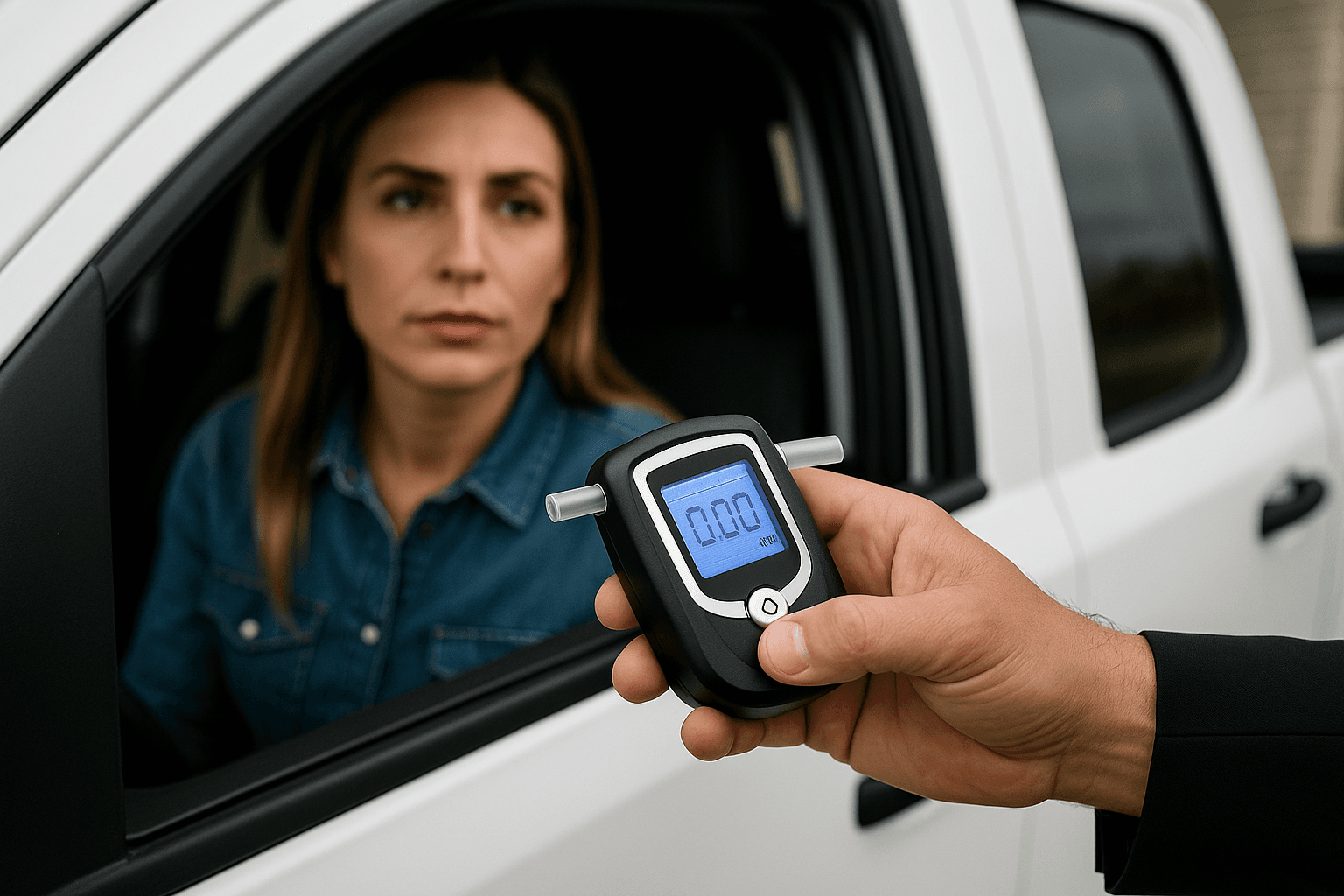
You were caught driving while your SR-22 filing had lapsed and your license was already suspended. Now you face a DWLS charge on top of the original suspension cause, with SR-22 filing periods extended and reinstatement fees compounded.
How SR-22 Lapse Plus DWLS Creates a Double Suspension Extension
The moment your SR-22 filing lapsed, your state's DMV received an SR-26 cancellation notice from your insurance carrier. This triggered an immediate administrative suspension in most states, typically 30 to 90 days depending on your jurisdiction. Your license was suspended for the lapse before you were ever pulled over.
When you were caught driving during that lapse-triggered suspension, law enforcement charged you with Driving While License Suspended. This is a criminal misdemeanor charge in most states, not a civil administrative penalty. The DWLS conviction adds its own suspension period on top of the lapse suspension, typically 30 to 180 days depending on your state and whether this is your first DWLS offense.
You now serve both periods. The lapse suspension runs first. The DWLS suspension stacks after the lapse period ends or runs concurrently in some states, but extends your total time off the road. Your SR-22 filing clock also resets: instead of completing your original 3-year requirement, you now face an extended filing period of 4 to 5 years in most states because the DWLS conviction itself often requires SR-22 filing even when the underlying cause did not.
Most drivers assume the lapse suspension is the only consequence. The DWLS charge is the costlier penalty. Court fines for DWLS typically range from $500 to $2,500 for a first offense. Second or third DWLS convictions escalate to felony charges in states like Florida, Texas, and Ohio, carrying mandatory jail time and suspensions measured in years, not months.
Why Insurance Carriers Treat DWLS During Lapse Worse Than the Original Cause
Underwriters classify DWLS during an SR-22 lapse as a dual-noncompliance flag. You failed to maintain required coverage and then operated a vehicle while suspended. This combination signals higher claim likelihood than a single DUI or a single uninsured suspension.
Premium increases after DWLS during lapse typically exceed increases from the original suspension cause by 40 to 80 percent. If your original DUI conviction pushed your monthly premium from $120 to $280, the DWLS conviction during lapse can push it to $400 to $500 per month. High-risk carriers view the lapse as evidence of financial instability and the DWLS as evidence of disregard for legal consequences.
Some carriers will not write new policies for drivers with DWLS convictions during SR-22 lapses until the suspension is fully resolved and at least 12 months have passed since reinstatement. You may be limited to assigned-risk pools or state-mandated coverage programs during this period, which carry premiums 150 to 250 percent higher than voluntary-market rates.
The filing period extension compounds the cost. If your original SR-22 requirement was 3 years at $280 per month, your total cost was approximately $10,080. After DWLS during lapse, your extended 5-year filing period at $450 per month totals approximately $27,000. The difference is not marginal.
Compare car insurance rates in your state
Get quotes from licensed carriers — no obligation, no spam, results in minutes.
Get Your Free Quote✓ No Obligation Required✓ Licensed Carriers Only✓ Available Nationwide✓ Free to Compare
What Happens to Your Original Suspension Cause Requirements
Your original suspension cause requirements remain in effect and must still be satisfied before reinstatement. If your license was suspended for DUI and you were required to complete alcohol education classes, install an ignition interlock device, and file SR-22, those requirements do not disappear because of the DWLS charge. They remain on your reinstatement checklist.
The DWLS conviction adds new requirements on top of the original list. You must now resolve the criminal charge, which typically requires appearing in court, possibly hiring defense counsel, paying court fines and fees, and serving any probation or jail sentence imposed. You must serve both the lapse suspension and the DWLS suspension. You must file SR-22 for the extended period. You must pay reinstatement fees for both the original cause and the DWLS conviction separately in most states.
In states like California, Georgia, and Illinois, each suspension cause carries its own reinstatement fee. If your DUI reinstatement fee was $125 and your DWLS reinstatement fee is $250, you pay both at the time of reinstatement: $375 total. In Florida, DWLS convictions during SR-22 lapses often trigger mandatory IID installation even when the original suspension cause did not require it, adding $70 to $150 per month in device lease and calibration costs for 6 to 12 months.
Hardship or occupational licenses are typically unavailable after DWLS convictions in most states. Texas denies occupational license eligibility for DWLS convictions during the first 90 days of the DWLS suspension. Ohio and Michigan deny work permits entirely for drivers with DWLS convictions involving alcohol-related original causes. You will serve the full suspension period without driving privileges in most cases.
How to Navigate the Criminal DWLS Charge and Avoid Worse Outcomes
Appear in court for your DWLS arraignment. Failing to appear triggers a bench warrant and adds a Failure to Appear charge, which extends your suspension further and may result in arrest. Bring proof of your current address, employment documentation if you have a job, and any evidence showing you have since obtained valid SR-22 coverage.
Consider hiring a traffic defense attorney for DWLS charges, especially if this is your second DWLS offense or if your original suspension cause was DUI-related. Prosecutors in many jurisdictions will reduce DWLS charges to lesser violations like Driving Without a Valid License or No Operator's License if you demonstrate compliance efforts: proof of SR-22 filing, completion of any required courses, and payment of outstanding fines. A reduction avoids the harsher insurance consequences of a DWLS conviction.
Negotiate payment plans for fines and fees at sentencing. Most courts allow installment payments for fines exceeding $500. Missing a payment can result in a new suspension for nonpayment of court debt, restarting the cycle. Set up automatic payments if your court offers electronic payment options.
File SR-22 coverage immediately after your court appearance, even if your suspension has not yet ended. Carriers require 3 to 10 business days to process SR-22 filings and submit forms to the DMV. Starting the filing clock early ensures your SR-22 is active on the day your suspension eligibility ends. Do not wait until the last week of your suspension to call carriers.
What Your Reinstatement Process Looks Like After Both Convictions
Reinstatement after DWLS during SR-22 lapse requires satisfying the original suspension requirements, the lapse suspension requirements, and the DWLS conviction requirements simultaneously. In most states, the checklist includes: completing the full suspension period for both the lapse and the DWLS conviction, paying both reinstatement fees, filing SR-22 for the extended period, resolving all outstanding court fines and fees from the DWLS case, and completing any alcohol or driver improvement courses required by the original cause.
Some states require a formal reinstatement hearing after multiple suspensions. Georgia, Virginia, and North Carolina require drivers with two or more suspension causes within 3 years to appear before a DMV hearing officer and demonstrate proof of financial responsibility, stable employment, and compliance with all court orders before reinstatement is granted. These hearings are not automatic approvals. Officers can deny reinstatement and require additional waiting periods if documentation is incomplete.
Timeline from DWLS arrest to full reinstatement typically ranges from 9 to 18 months depending on your state and the severity of your original cause. DUI-related original causes with DWLS convictions push timelines toward the upper end. Unpaid-fines original causes with first-offense DWLS convictions trend toward the lower end. Budget for attorney fees, court costs, reinstatement fees, SR-22 filing fees, and premium increases totaling $5,000 to $12,000 depending on your state and insurance tier.
Do not drive during the reinstatement process. A second DWLS conviction during the same suspension period escalates to felony charges in most states, carries mandatory jail sentences of 30 to 180 days, and extends your suspension by 1 to 3 years. The financial and legal consequences of a second DWLS are severe enough that rideshare, public transit, or relying on family transport is always the cheaper option.
How to Find SR-22 Coverage After DWLS During Lapse
Not all carriers write policies for drivers with DWLS convictions during SR-22 lapses. Standard-market carriers like State Farm, Allstate, and GEICO typically decline applications from drivers with active DWLS convictions or convictions within the past 12 months. You will need to work with non-standard auto insurance carriers that specialize in high-risk drivers.
Non-standard carriers like The General, Bristol West, Acceptance Insurance, and National General write policies for drivers with multiple violations and suspension histories. Monthly premiums from non-standard carriers for DWLS during SR-22 lapse typically range from $350 to $600 depending on your state, age, and vehicle. These carriers also charge SR-22 filing fees of $25 to $50 at policy inception and annually at renewal.
Some drivers qualify for non-owner SR-22 policies if they do not own a vehicle and need to maintain filing compliance during their suspension. Non-owner policies provide liability coverage when you drive a borrowed or rented vehicle and satisfy state SR-22 requirements at lower monthly premiums, typically $80 to $150 per month. Non-owner SR-22 is not valid if you own a registered vehicle in your name or regularly drive a household vehicle.
Compare quotes from at least three non-standard carriers. Premium variation for high-risk drivers is significant. One carrier may quote $450 per month while another quotes $320 for identical coverage limits. Use your state's minimum liability limits to reduce premium costs during the filing period, then increase coverage limits after reinstatement when standard-market carriers become available again.