California's driving-while-suspended statute splits into five distinct tiers under Vehicle Code §14601. The tier you face—and the penalties attached—depend entirely on what triggered your original suspension, not just the act of driving itself.
California's Five-Tier DWLS Structure Under Vehicle Code §14601
California Vehicle Code §14601 does not create a single driving-while-suspended offense. It defines five separate criminal violations, each tied to a specific original suspension cause: §14601.1 (DUI-related suspension), §14601.2 (refusal to submit to chemical test), §14601.3 (habitual traffic offender), §14601.4 (unsatisfied judgment or failure to provide proof of financial responsibility after an accident), and §14601.5 (other causes, including unpaid fines and negligent operator suspensions). The subdivision matters because each carries distinct misdemeanor or potential felony classification, jail exposure, and fine ranges.
Most DWLS arrests fall under §14601.1 or §14601.2 (DUI-related causes) or §14601.5 (the catch-all for points, fines, and failure-to-appear suspensions). §14601.1 first offense is a misdemeanor with 5 days to 6 months county jail and $300–$1,000 fine. §14601.2 first offense carries mandatory 10 days jail (not discretionary). §14601.5 first offense is typically punished more leniently: up to 6 months jail but often reduced to probation and fines if no accident or aggravators.
The trap: when the officer writes the citation, the charging subdivision reflects the DMV suspension record on file at the time of the traffic stop. If your suspension was DUI-related but you didn't realize it was still active, you face the harsher §14601.1 penalties even if you thought you'd resolved the original case. If your suspension was for unpaid tickets, you're charged under §14601.5, which offers more negotiation room in court. Knowing which subdivision you're charged with is the first step in understanding your exposure.
DUI-Triggered DWLS: §14601.1 and §14601.2 Mandatory Jail and Extended SR-22
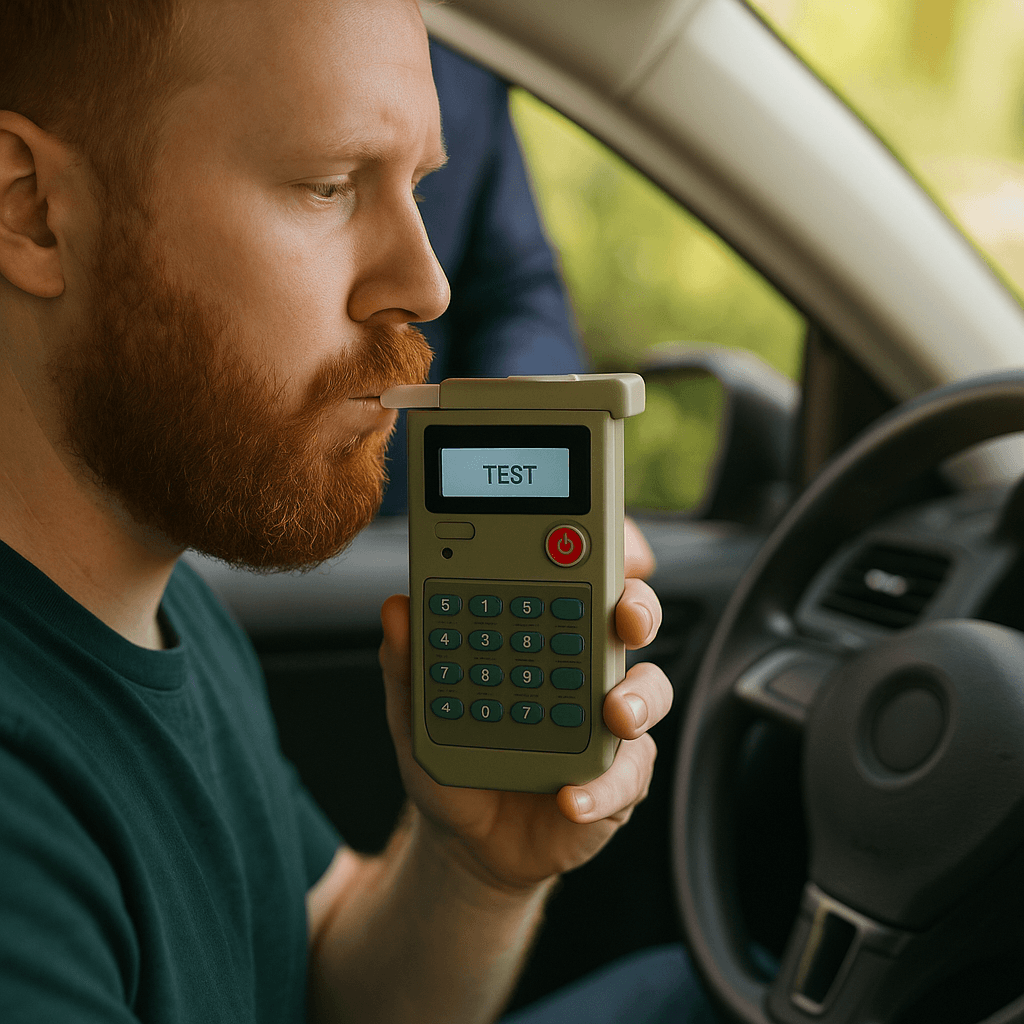
Vehicle Code §14601.1 applies when your license was suspended or revoked for a DUI conviction or administrative per se (APS) suspension under VC §13353. First-offense penalty: 5 days to 6 months county jail, $300–$1,000 fine, and vehicle impoundment for up to 30 days under VC §14602.6. California judges retain discretion to substitute jail time with community service or work release, but the 5-day minimum is a sentencing floor. Second or subsequent violations within 5 years escalate to mandatory minimums: 10 days jail minimum for second offense, 30 days for third.
§14601.2 is harsher still. It applies when your license was suspended for refusing a chemical test under VC §13353. First-offense penalty: mandatory 10 days county jail (no discretion to reduce), $300–$1,000 fine, and 30-day vehicle impound. The mandatory jail language means judges cannot substitute community service or reduce the sentence below 10 days. Refusal-based suspensions carry heavier DWLS penalties than BAC-based suspensions even when both stem from the same DUI arrest.
SR-22 filing is mandatory for reinstatement after any §14601.1 or §14601.2 conviction. The filing period extends beyond the original DUI requirement: California typically requires 3 years of continuous SR-22 coverage from the reinstatement date. A DWLS conviction restarts that 3-year clock even if you were halfway through your original filing period. Insurance carriers treat §14601.1 and §14601.2 convictions as separate underwriting events, compounding the premium increase from the original DUI.
Compare car insurance rates in your state
Get quotes from licensed carriers — no obligation, no spam, results in minutes.
Get Your Free Quote✓ No Obligation Required✓ Licensed Carriers Only✓ Available Nationwide✓ Free to Compare
Points, Fines, and Negligent Operator DWLS: §14601.5 Lighter Tier
Vehicle Code §14601.5 is California's catch-all DWLS statute. It applies when your license was suspended for reasons other than DUI, refusal, habitual offender status, or uninsured accident liability. Common §14601.5 triggers: negligent operator suspension (point accumulation under VC §12810), failure to appear in court for a traffic citation (VC §40508), unpaid fines (VC §40509), failure to pay child support, or administrative suspension under the California Negligent Operator Treatment System (NOTS).
First-offense penalty under §14601.5: up to 6 months county jail and/or $300–$1,000 fine. Unlike §14601.1 and §14601.2, §14601.5 has no mandatory minimum jail sentence. Judges exercise broad discretion, and first-time §14601.5 offenses are often resolved with probation, community service, and fines rather than custody. Prosecutors negotiate more readily on §14601.5 charges because the underlying suspension cause is typically civil (unpaid tickets, points) rather than criminal (DUI).
SR-22 is not automatically required for all §14601.5 convictions. If your original suspension was for negligent operator status, SR-22 may be required; if it was for unpaid fines or failure to appear, SR-22 is typically not a reinstatement condition. The DMV evaluates SR-22 necessity based on the original suspension cause, not the DWLS conviction itself. This creates a significant cost advantage for §14601.5 drivers compared to §14601.1 and §14601.2 drivers, who face extended mandatory SR-22 filing regardless of the original DUI timeline.
Habitual Traffic Offender and Unsatisfied Judgment Tiers: §14601.3 and §14601.4
Vehicle Code §14601.3 applies when your license was suspended or revoked as a habitual traffic offender (HTO) under VC §14601.3(a). California designates drivers as HTO when they accumulate a specified pattern of serious violations within a defined period. First-offense penalty: 30 days to 1 year county jail, $1,000–$2,000 fine, and mandatory 30-day vehicle impound. §14601.3 is a wobbler, meaning prosecutors can charge it as a misdemeanor or a felony depending on your prior record and the circumstances of the stop. Felony §14601.3 carries 16 months to 3 years state prison.
Vehicle Code §14601.4 applies when your license was suspended for failure to satisfy a judgment after an accident (proof of financial responsibility requirement under VC §16000 et seq.) or failure to file an SR-22 after being ordered to do so. First-offense penalty: up to 6 months county jail and/or $300–$1,000 fine, similar to §14601.5. However, §14601.4 triggers automatic SR-22 filing requirements for reinstatement because the original suspension was tied to financial responsibility laws.
Both §14601.3 and §14601.4 are less common than §14601.1, §14601.2, and §14601.5, but they carry heavier collateral consequences. HTO designation under §14601.3 extends your total suspension period by years, not months, and disqualifies you from hardship or restricted license eligibility during the HTO suspension. §14601.4 drivers face immediate SR-22 filing as a reinstatement precondition, and carriers underwrite §14601.4 convictions as high-risk events comparable to DUI.
Restricted License Eligibility After DWLS: IID Still Required for DUI Tiers
California restricted license (hardship license) eligibility after a DWLS conviction depends on which VC §14601 subdivision you were charged under and the status of your original suspension. If your DWLS charge was under §14601.1 or §14601.2 (DUI-related), the DMV treats the DWLS conviction as an additional DUI program compliance failure. You remain eligible for a restricted license under VC §13353.3 only if you complete or re-enroll in your DUI program, install an ignition interlock device (IID), and file SR-22. The DWLS conviction does not disqualify you from restricted driving, but it extends the IID requirement period and restarts your SR-22 clock.
If your DWLS charge was under §14601.5 (points, fines, or negligent operator suspension), restricted license eligibility depends on whether you've resolved the original suspension cause. Unpaid-fine suspensions under VC §40509 do not have a hardship pathway—you must pay the fines to lift the suspension. Negligent operator suspensions may qualify for restricted driving after you complete a DMV reexamination and demonstrate need, but DWLS convictions complicate the reexamination hearing because they introduce a recent judgment lapse.
The procedural sequence matters. You cannot apply for a restricted license until the criminal DWLS case resolves. If you're convicted of §14601.1 and sentenced to 30 days jail, your restricted license application clock starts after you serve the sentence and satisfy the court's probation conditions. If you're sentenced to probation without custody, the application clock starts when probation is granted. The DMV will not process a restricted license application while an active DWLS criminal charge is pending in court.
Reinstatement Cost Stack: Criminal Fines, Extended SR-22, and DMV Fees
Total reinstatement cost after a DWLS conviction in California stacks three layers: criminal court penalties, DMV reinstatement fees, and extended SR-22 insurance premiums. Criminal fines range from $300–$1,000 for first-offense misdemeanor DWLS under most subdivisions, plus court fees and assessments that typically double the base fine. A $500 fine becomes $1,200–$1,500 after state penalty assessments, county fees, and court operations surcharges. If your vehicle was impounded under VC §14602.6 (mandatory for §14601.1 and §14601.2), add $1,500–$2,500 towing, storage, and release fees.
DMV reinstatement after DWLS requires satisfying both the original suspension cause and the DWLS suspension. California's base reissue fee is $55 under VC §14904, but additional fees apply depending on the original cause. DUI-related suspensions add $125 for restricted license issuance. Negligent operator suspensions may require reexamination fees. Unpaid-fine suspensions require full payment of the underlying citation amount plus late penalties before reinstatement is processed. Total DMV costs typically range $180–$400.
SR-22 filing extends the insurance cost significantly. California requires 3 years of continuous SR-22 coverage from the reinstatement date for DUI-related DWLS convictions. Monthly premiums for drivers with a DUI plus DWLS conviction typically range $180–$280/month for minimum liability coverage, compared to $85–$140/month for clean-record drivers in California. Over the 3-year SR-22 period, total insurance cost is approximately $6,500–$10,000. Carriers view DWLS as a separate high-risk event, and premium increases persist for 3–5 years after the conviction date.
Insurance Carriers Writing After Multi-Tier DWLS Convictions in California
Standard-market carriers (State Farm, Allstate, USAA) typically decline to write policies for drivers with a DUI-related DWLS conviction under §14601.1 or §14601.2 until 3–5 years post-conviction. Non-standard carriers specialize in multi-violation cases and SR-22 filing. Bristol West writes §14601.1 and §14601.2 drivers immediately after conviction, requiring SR-22 filing and IID proof before binding coverage. Monthly premiums for Bristol West liability-only policies with DUI plus DWLS range $190–$260/month in California.
Dairyland and Infinity also write DWLS-convicted drivers with SR-22 filing requirements. Dairyland offers non-owner SR-22 policies for drivers who do not own a vehicle but need proof of financial responsibility for restricted license applications. Monthly non-owner premiums range $80–$120/month. Infinity focuses on liability-only coverage for high-risk drivers and writes in California's urban counties where DWLS conviction rates are highest.
Progressive and Geico write selective DWLS cases depending on the subdivision. §14601.5 drivers (fines, points, negligent operator) may receive quotes from Progressive after 12 months post-conviction if no other major violations appear on the record. §14601.1 and §14601.2 drivers are typically referred to Progressive's non-standard tier or declined entirely. The General writes all DWLS tiers but prices §14601.1 and §14601.2 drivers at the highest bracket, with monthly premiums reaching $300+/month for minimum liability in some California zip codes.