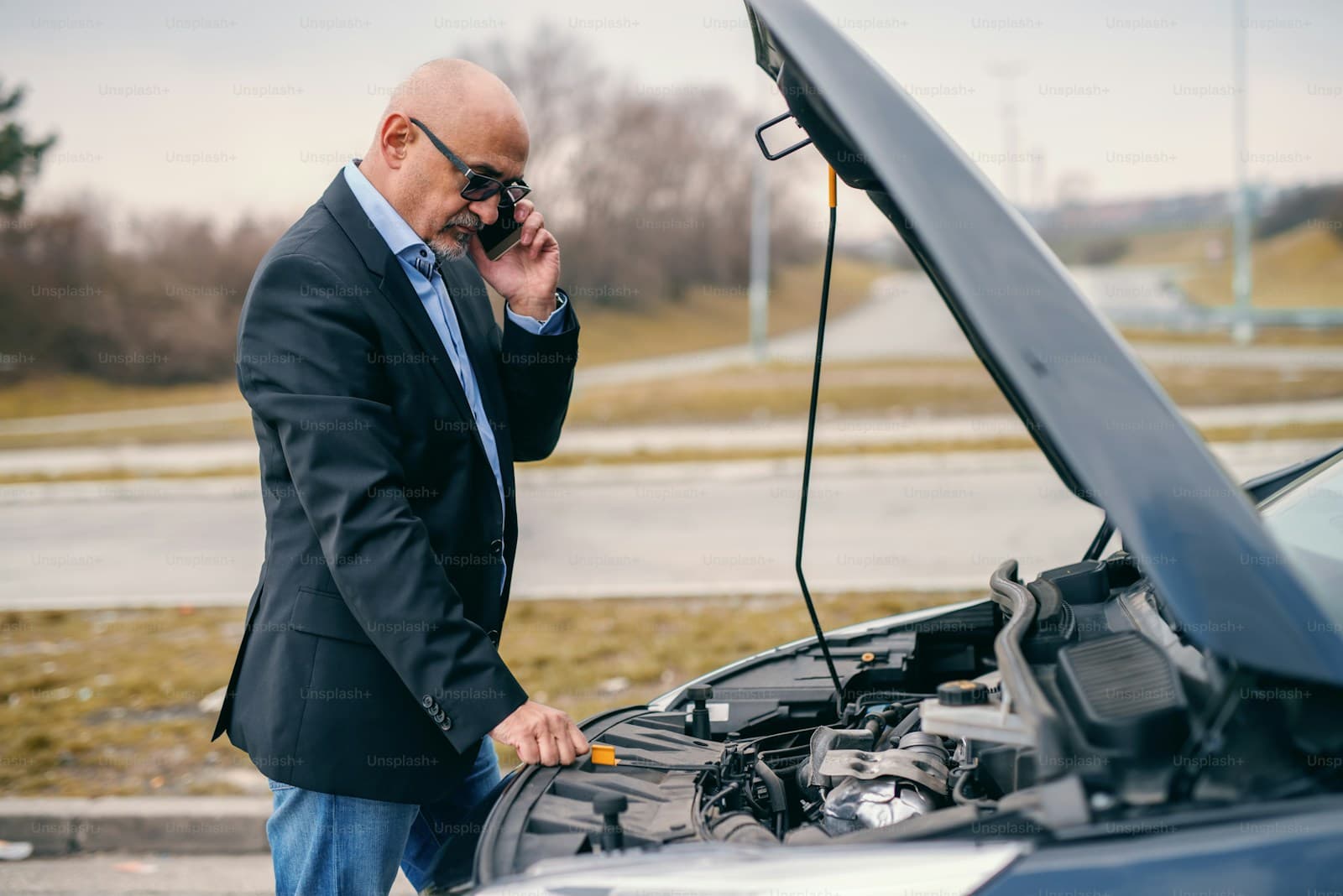
Alabama prosecutes driving on a suspended license as a misdemeanor for first offenses and felony for repeats, with mandatory jail time triggered at the second conviction. The original suspension cause determines whether your DWLS charge carries additional mandatory suspension periods.
How Alabama Classifies Driving While Suspended as Misdemeanor or Felony
Alabama Code § 32-6-19 treats first-offense driving on a suspended license as a Class C misdemeanor, carrying up to three months in jail and fines up to $500. The statute makes no distinction based on your original suspension cause at the misdemeanor tier—whether your license was suspended for DUI, points accumulation, uninsured operation, or unpaid tickets, the DWLS charge itself is prosecuted identically for a first offense.
Second and subsequent DWLS convictions within five years escalate to felony territory under Alabama's habitual offender enhancement statutes. A second conviction becomes a Class B misdemeanor with mandatory minimum jail time of 48 hours and maximum one year. Third and subsequent convictions are prosecuted as felonies, carrying one to five years in state prison. The five-year lookback window runs from the date of each prior conviction, not arrest date.
The classification matters because felony DWLS triggers collateral consequences beyond jail: felony conviction disqualifies you from most commercial driver licenses permanently, bars firearm ownership, and creates employment barriers in Alabama's background-check-heavy sectors including healthcare, education, and professional licensing. Prosecutors typically offer plea deals reducing second-offense DWLS to misdemeanor if you hire counsel early and demonstrate enrollment in hardship license application or SR-22 filing compliance.
Mandatory Jail Time Thresholds for DWLS Convictions in Alabama
Alabama judges retain discretion on first-offense DWLS jail sentences—probation, community service, or suspended sentences are common outcomes for defendants with clean records who demonstrate hardship license application progress or SR-22 filing compliance before sentencing. Judges consider employment verification, dependent care responsibilities, and whether you were driving to work or court-mandated obligations when stopped.
The mandatory jail floor appears at your second DWLS conviction: Alabama Code § 32-6-19(c) requires 48 consecutive hours in county jail, with no provision for work release, electronic monitoring, or community service substitution for that initial 48-hour block. After serving the mandatory minimum, judges may suspend the remainder of a one-year maximum sentence conditioned on compliance terms.
Third-offense DWLS enters felony sentencing guidelines with a mandatory minimum of one year and maximum five years in state prison, served through the Alabama Department of Corrections rather than county jail. Aggravating factors—DWLS while committing another traffic offense, DWLS in a school zone, DWLS with a minor passenger, or DWLS after a DUI-related suspension—allow prosecutors to seek the upper range of sentencing even on first offenses. Defendants facing aggravated DWLS should retain criminal defense counsel familiar with Alabama traffic court plea negotiation.
Compare car insurance rates in your state
Get quotes from licensed carriers — no obligation, no spam, results in minutes.
Get Your Free Quote✓ No Obligation Required✓ Licensed Carriers Only✓ Available Nationwide✓ Free to Compare
Additional Suspension Period Stacked on Top of Your Original Term
Alabama Law Enforcement Agency (ALEA) Driver License Division administers an additional administrative suspension period triggered automatically upon DWLS conviction, separate from the criminal court sentence. This administrative suspension adds 90 days for first-offense DWLS and 180 days for second and subsequent offenses, running consecutively after your original suspension term expires, not concurrently.
The stacking structure creates a compounding problem: if your original suspension was 90 days for a points accumulation violation and you were caught driving on day 30, your DWLS conviction adds another 90 days starting after the original 90-day term completes. You now serve 180 days total before reinstatement eligibility, plus any additional time required to satisfy the original suspension cause requirements.
DWLS convictions stemming from DUI-related suspensions face heavier stacking. Alabama Code § 32-5A-195 allows ALEA to extend DUI-related suspensions by one year when a driver is convicted of DWLS during the DUI suspension period. This extension is discretionary but routinely applied in practice, particularly when the DWLS occurred within the first six months of the original DUI suspension. The extension runs on top of both the original DUI suspension and the standard 90-180 day DWLS administrative suspension, creating multi-year total suspension periods before reinstatement eligibility.
Hardship license eligibility is typically revoked upon DWLS conviction. Alabama circuit courts that had granted restricted licenses for work, school, or medical travel withdraw those privileges immediately upon receiving notice of a DWLS charge, even before conviction. Reinstatement of hardship privileges after DWLS conviction requires a new petition with proof of SR-22 filing, ignition interlock device installation for DUI-related cases, and typically a waiting period of 30-90 days from the DWLS conviction date depending on the judge's discretion.
SR-22 Filing Requirement and Extended Duration After DWLS
Alabama requires SR-22 certificate of financial responsibility filing for all DWLS convictions, regardless of whether your original suspension cause triggered SR-22. If your license was suspended for unpaid tickets or points accumulation—violations that ordinarily do not require SR-22—your DWLS conviction adds that requirement and extends the filing period by three years from your conviction date.
The SR-22 filing period for DWLS convictions runs independently of any SR-22 period triggered by your original suspension cause. If you were already filing SR-22 for a DUI suspension with two years remaining, your DWLS conviction resets the clock to three full years from the DWLS conviction date. You cannot run the periods concurrently. Alabama Department of Insurance monitors continuous SR-22 coverage and reports any lapse to ALEA, which automatically suspends your license again for the full remaining filing period plus an additional suspension penalty.
SR-22 filing costs vary by carrier and your risk tier, but expect monthly premiums between $140 and $260 for minimum liability coverage (Alabama requires 25/50/25 limits: $25,000 bodily injury per person, $50,000 per accident, $25,000 property damage). Carriers writing SR-22 policies in Alabama after DWLS convictions include The General, Bristol West, Dairyland, GAINSCO, and Direct Auto in the non-standard tier. Standard carriers like State Farm and Progressive write SR-22 policies but typically decline DWLS-convicted drivers or price them into non-standard subsidiaries.
Non-owner SR-22 policies cover drivers who don't own a vehicle but need to satisfy Alabama's SR-22 filing requirement for reinstatement. Monthly premiums for non-owner SR-22 after DWLS conviction typically range $85 to $140. Non-owner policies meet ALEA's filing requirement but provide no coverage when you drive a borrowed or household vehicle—you must carry standard SR-22 auto insurance when you resume vehicle ownership or regular access to a household car.
Criminal Court Process and Defense Counsel Considerations
DWLS charges are prosecuted through Alabama district courts, with arraignment typically scheduled 30-45 days after citation. You receive a summons with a court date; failure to appear triggers a bench warrant and an additional failure-to-appear charge that carries its own suspension penalty and criminal consequence.
Retaining criminal defense counsel is advisable for second-offense DWLS or any DWLS charge involving aggravating factors. Alabama prosecutors have wide discretion in plea negotiations, particularly for defendants who demonstrate proactive compliance efforts before arraignment. Presenting proof of SR-22 filing, hardship license application submission, payment of outstanding fines related to the original suspension, or enrollment in court-ordered programs can shift plea offers from jail-mandatory to probation-eligible outcomes.
Public defenders are available for indigent defendants facing jail-mandatory DWLS charges but are assigned only after you appear at arraignment and complete a financial affidavit demonstrating inability to afford private counsel. Hiring private counsel before arraignment allows negotiation with the prosecutor before your first court appearance, when plea deals are most flexible. Expect attorney fees between $750 and $2,500 for misdemeanor DWLS representation through trial; felony DWLS cases start at $3,500.
Plea agreements for first-offense DWLS often include deferred prosecution or pretrial diversion terms: you plead guilty, sentencing is deferred for 6-12 months, and if you complete probation terms without new violations, the charge is dismissed or reduced to a non-moving violation. Probation terms typically require monthly reporting, SR-22 filing proof, completion of a driver improvement course, and payment of court costs and fines totaling $500-$1,200. Violating probation terms reinstates the original DWLS charge at full sentencing range.
Total Cost Stack for DWLS Conviction and Reinstatement
Alabama's DWLS cost structure layers criminal court fees, extended SR-22 premiums, and reinstatement fees into a multi-year financial obligation. Court costs and fines for first-offense misdemeanor DWLS typically total $500-$1,200, paid in installments through the court's payment plan if you demonstrate financial hardship. Second-offense and felony DWLS fines range $1,500-$5,000 plus restitution if your DWLS incident involved an accident.
SR-22 insurance premiums for the mandatory three-year filing period total approximately $5,000-$9,360 at the low end (non-owner policies) and $10,080-$18,720 for standard coverage at non-standard-tier pricing. Premiums decrease after the first year if you maintain continuous coverage without lapse and avoid new violations, but expect to pay elevated rates for the full three-year filing period.
ALEA charges a $275 base reinstatement fee to restore your license after completing your stacked suspension period. If your original suspension was DUI-related, add an additional $200 DUI-specific reinstatement fee. If your DWLS conviction occurred while you owed unpaid traffic fines or child support arrears, those balances must be satisfied in full before ALEA processes reinstatement—outstanding debt blocks reinstatement application submission in Alabama's online portal.
Ignition interlock device installation and monitoring adds $75-$125 monthly for DUI-related DWLS cases where hardship license reinstatement requires IID. Alabama Code § 32-5A-191 mandates IID for any restricted license granted after a DUI suspension, and that requirement extends through your DWLS-stacked suspension period if you petition for hardship driving privileges after conviction. Expect $200-$300 installation fees plus 12-36 months of monitoring fees depending on your total suspension length.
Insurance Industry Treatment of DWLS Compared to Original Suspension Cause
Insurance carriers treat DWLS convictions as a more severe underwriting flag than most original suspension causes because DWLS signals deliberate non-compliance with legal restrictions. A driver suspended for points accumulation who then drives anyway demonstrates higher risk tolerance than a driver suspended for the same points who complies with the suspension and reinstates properly.
Carriers use violation codes reported through Alabama's electronic reporting system to assign risk tiers. DWLS convictions typically move you into non-standard or high-risk tiers even if your original suspension cause would have kept you in standard tiers. For example: a driver suspended for uninsured operation (a standard-tier violation if corrected promptly) who is then convicted of DWLS will be declined by standard carriers and routed to non-standard subsidiaries or specialty high-risk carriers.
Premium increases persist for three to five years from the DWLS conviction date, independent of your SR-22 filing period. Even after your three-year SR-22 requirement ends, carriers continue rating you with the DWLS conviction on your motor vehicle record until it ages past their lookback window—typically five years in Alabama. Shopping for new coverage during this period rarely produces rate reductions because all carriers access the same Alabama Law Enforcement Agency driving record data.
Non-standard carriers that actively write policies for DWLS-convicted drivers in Alabama include The General, Bristol West, Dairyland, GAINSCO, and Direct Auto. These carriers specialize in high-risk driver segments and maintain underwriting appetite for DWLS violations that standard-tier carriers decline automatically. Expect application questions about your original suspension cause, DWLS conviction details, current license status, and any pending criminal charges—answers are verified against state records and misrepresentation voids coverage retroactively.